Home › Wildlife Removal › Dead Animal Removal
Odor location · Careful retrieval · Full sanitization
Dead Animal Smell? We Find It, Remove It, and Sanitize
A dead animal in a wall, attic, or crawl space announces itself with a smell you can't ignore and can't find. Locating the carcass is the actual skill in this job: the odor drifts with airflow, the animal died somewhere hidden, and guessing wrong means holes in the wrong walls. Acorn Wildlife locates, retrieves, sanitizes, and then answers the question that matters most: how did it get in, and how do we make sure this never happens again.
Short answer: Acorn Wildlife locates dead animals by combining odor strength, fly activity, airflow patterns, and inspection cameras, then retrieves the carcass through the smallest opening that reaches it, sanitizes and deodorizes the cavity, and seals the entry point the animal used.
How Do You Find a Dead Animal You Can't See?
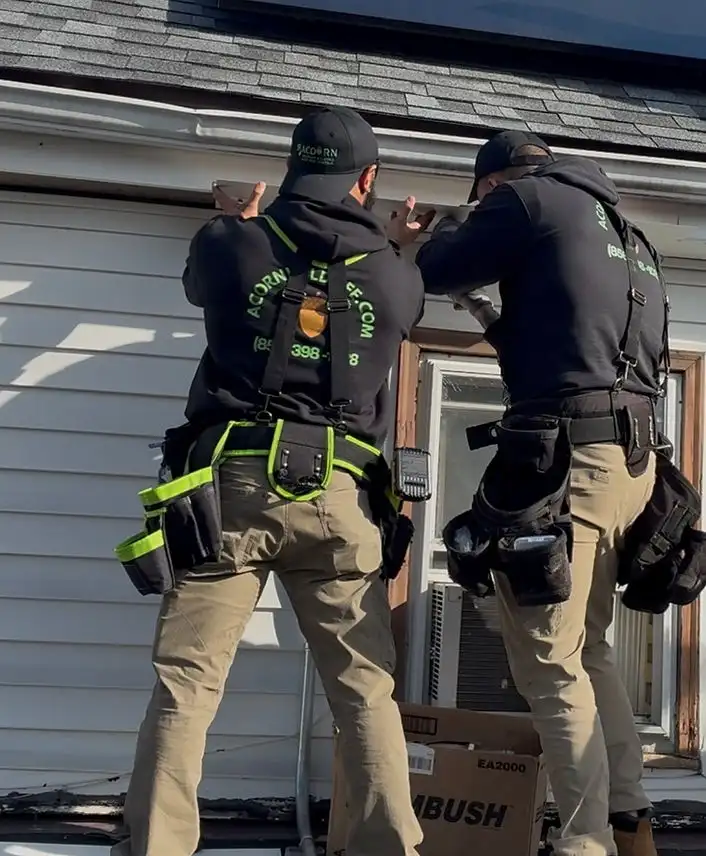
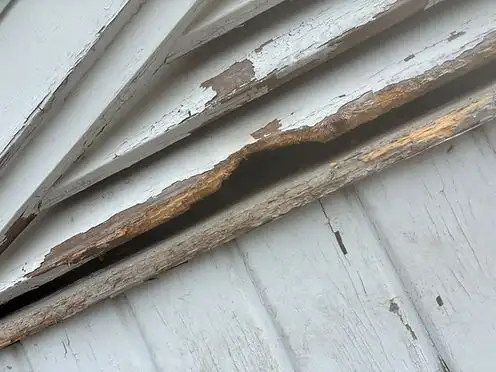
Here's the honest version of the process, because this is the part of the job homeowners are really paying for. Decomposition odor rides air currents, so the room that smells worst is often not the room the animal died in: a carcass in a wall cavity can vent through an outlet two rooms away, and attic odor pours down whichever wall bay carries the plumbing. We work against that by mapping smell intensity at outlets, switches, and trim gaps (where wall cavities leak air), by checking the spots animals actually die (near heat sources, at the bottom of wall voids, along rodent travel routes), and by watching the insects, who found the carcass before we did. When the search narrows to one or two stud bays, a camera through a drill hole confirms it before any real opening is made.
We'll also tell you honestly when the animal died somewhere unreachable, because it happens. A mouse deep in a soffit or under a slab sometimes can't be retrieved at reasonable cost, and the right call is odor management while nature finishes the timeline. We'd rather say that plainly at the inspection than sell you exploratory demolition.
Short answer: Methodically. Odor is strongest at the source but drifts with your home's airflow, so we track it room by room, watch for fly and beetle activity, check warm cavities first, and confirm with an inspection camera through a small hole before anything gets opened. Guessing is how walls get cut in the wrong places.
How Long Will the Smell Last If I Do Nothing?
The most common backstory deserves its own honest mention: rodent poison. A poisoned rat or mouse retreats into a wall cavity to die, which is why our animals in walls page pleads with homeowners not to use rodenticide indoors. If the smell showed up a week after bait went down, the mystery is solved; now it's a retrieval job. And if you're smelling musk rather than decomposition, that's a live skunk, not a dead anything: see skunk removal or our deck and shed page.
Retrieval, Sanitizing, and the Repair
Once the location is confirmed, the rest is careful, respectful work in three steps.
1. The Smallest Opening That Works
Wall-cavity retrievals get a clean, rectangular cut sized to reach the carcass, positioned where a patch will be least visible. Attic and crawl space retrievals usually need no cutting at all. The animal is removed in sealed bags along with contaminated insulation and nesting material around it, and disposed of properly.
2. Sanitize and Deodorize
Removing the carcass doesn't remove the fluids it left in the cavity, and that residue keeps smelling. We treat the cavity and surrounding materials with an enzymatic cleaner that breaks down the organic residue rather than perfuming over it, and heavily soiled insulation comes out. Large-scale contamination gets quoted with our attic cleanup and sanitization service.
3. Find the Door It Used
A dead animal inside your structure means a live animal got inside your structure, and the entry point is still open. The included inspection maps it, and our exclusion repairs close it under the Acorn Seal-Tight Warranty. Skipping this step is how the same house ends up on this page twice. If rodents were the tenants, a rodent control program handles the survivors before they repeat the story.
Free · No obligation
Every Acorn Job Starts With a Free Inspection
Before we quote a dollar of work, a licensed technician walks the whole property — roofline, soffits, vents, chimney, the full foundation line, the attic or crawl space, the decks and the yard — and finds every opening an animal is using, plus the ones it would use next. It takes as long as it takes: often an hour, sometimes two. There is no charge for the visit.
✓ Free whether or not you hire us
✓ No call-out fee, no minimum, no signature on the day
✓ Every entry point photographed and shown to you
✓ A written quote priced off what was actually found
Ready to Breathe Normally Again?
Located, removed, sanitized, and sealed. One visit starts it: same-week inspection.