Home › Wildlife Removal › Red Squirrel Removal
Smallest attic squirrel · Loud & territorial · Tight sealing
Red Squirrel Removal in South Jersey
Red squirrels are the smallest and by some distance the noisiest of the tree squirrels that get into South Jersey attics. They are fiercely territorial, they cache food in insulation, and because they are so much smaller than a gray squirrel they exploit gaps that a standard exclusion job would call sealed. Acorn Wildlife removes them and seals to the tighter standard they require.
Short answer: Red squirrels are removed with one-way doors and hands-on removal during baby season, then sealed out to a tighter tolerance than gray squirrels need. Getting the identification right matters, because a gap that stops a gray squirrel will not necessarily stop a red one.
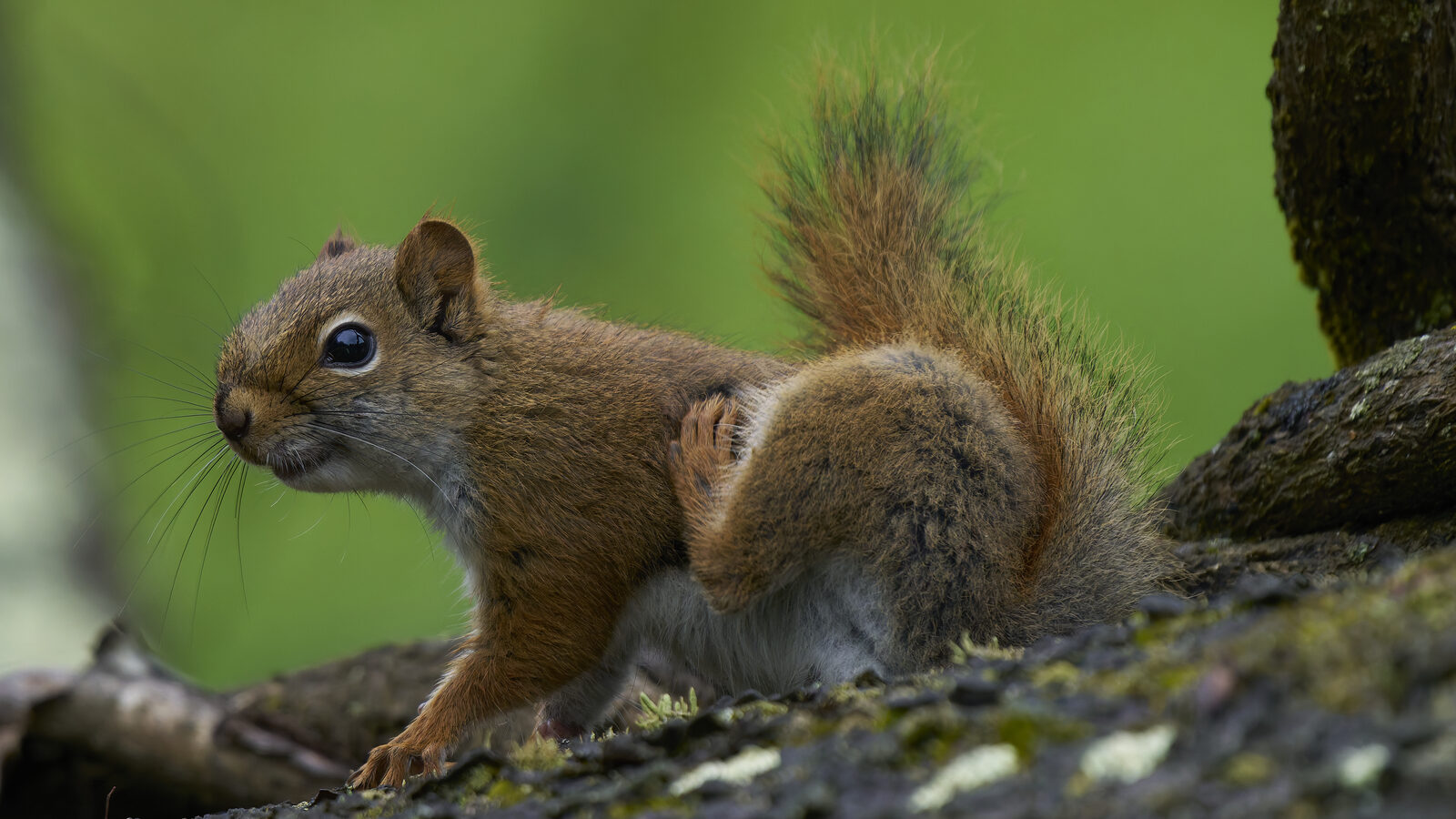
Is It a Red Squirrel?
Short answer: Red squirrels are noticeably smaller than gray squirrels, rusty red along the back with a white belly and a white ring around the eye, and much louder. If you are hearing a long scolding chatter from a single very vocal animal, that is a red squirrel.
Size
Roughly half the weight of a gray squirrel, with a proportionally smaller and less bushy tail. The size difference is what makes them an exclusion problem.
Colour
Rusty red to olive-red on the back, clean white or cream underneath, with a distinct white eye ring. Grays are salt-and-pepper with a pale belly.
The Noise
Loud, sustained, scolding chatter, plus thumping and rolling sounds in the attic as they move cached nuts and cones around.
Caches
Piles of stripped cone scales, acorn shells, and stored nuts tucked into insulation. Grays scatter-hoard outdoors; reds build one large larder, often in your attic.
Red squirrels favour conifers and mixed woodland, which in South Jersey means they cluster around pine stands, the Pinelands edge, and the older properties with mature evergreens. If you are in Medford, Marlton, or the Winslow and Waterford side of the county with pines close to the house, a red squirrel is a genuine possibility rather than an unusual one.
Why They Are a Harder Exclusion Job
Everything difficult about red squirrels comes from their size and their temperament. A gray squirrel needs an opening of roughly a golf ball's diameter. A red squirrel works with considerably less, and will enlarge a gap that a gray would have ignored. Exclusion built to a gray squirrel standard can therefore be perfectly good work and still fail.
They are also relentless. Red squirrels are aggressively territorial and highly motivated to return to a cache site, so a job that leaves a single marginal gap on the far elevation will be found. We seal the whole envelope for that reason, not just the entry point in use.
Two specific problems follow them indoors. They store food in insulation, which means soiled and compacted insulation and a pantry that attracts other things. And like all squirrels they gnaw to manage their teeth, with wiring the expensive version of that. Attic cleanup after removal is usually part of the conversation for red squirrels specifically because of the caching.
How Acorn Removes Red Squirrels
Identify First
Red, gray, and flying squirrel jobs differ in timing, in sealing tolerance, and in whether you are dealing with a colony or an individual. Daytime chatter and thumping points to red or gray; strictly nocturnal activity points to flying squirrels. We confirm before quoting.
Full Envelope Inspection
Roofline to foundation, every elevation, at the tighter tolerance red squirrels demand: soffit returns, fascia gaps, roof-edge and drip-edge lift, gable and ridge venting, dormer junctions, and anywhere a branch gives roof access.
One-Way Removal, and Babies by Hand
Adults leave through one-way doors set on the confirmed entry points. During spring and late summer litters, young are removed by hand and kept with the mother, because a one-way door on a nest with dependent young leaves them to die in your ceiling. That is both inhumane and, in short order, an odour problem.
Seal to the Red Squirrel Standard
Repairs use steel and hardware cloth rather than foam or sealant alone, closed to a tolerance that accounts for how small a red squirrel is and how determined it will be. That is our standard exclusion work, backed by the Acorn Seal-Tight Warranty, with specific attention to roofline and fascia and vent screening.
Then the Attic
Caches, droppings, and soiled insulation are dealt with afterwards. With red squirrels this is rarely optional, because a larder left in place is an ongoing attractant for mice and insects.
Red Squirrel Removal Near You
Red Squirrel FAQs
How do I know it is not just a small gray squirrel?
Why does my attic sound like something is rolling around?
We had squirrels sealed out before and they are back. What went wrong?
Is there a season when you cannot exclude them?
Do I really need the attic cleaned afterwards?
Loud Chatter and Rolling Sounds Overhead?
Same-week inspection, the squirrel correctly identified, and sealing built to the tighter standard a red squirrel actually requires.