Home › Wildlife Exclusion › Roofline & Fascia Repairs
Steel & flashing · Painted to match · Seal-Tight Warranty
Roofline & Fascia: Sealing the Number One Wildlife Entry Point
The roof edge is where most South Jersey wildlife jobs begin, which is why this page exists as part of our full wildlife exclusion service. Where your shingles meet the fascia board there's a builder's gap, and where fascia wood has softened with age there's an invitation. Acorn Wildlife rebuilds and seals the roof edge with steel and proper flashing, then warranties the work.
Short answer: Raccoons and squirrels enter most homes at the roof edge: the construction gap between the shingle line and the fascia, softened fascia boards, and lifted drip edge. Acorn Wildlife seals the full roofline with steel drip-edge flashing and hardware cloth, replaces rotted wood, and backs the repair with the Acorn Seal-Tight Warranty.
Which Animals Get in at the Roofline?
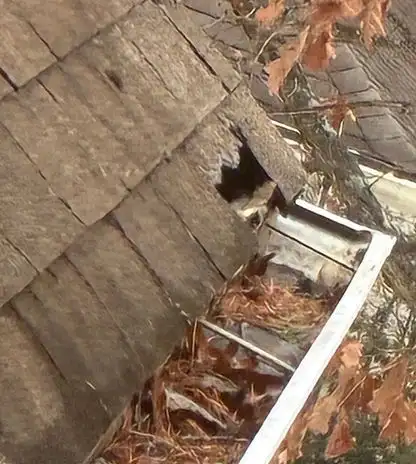
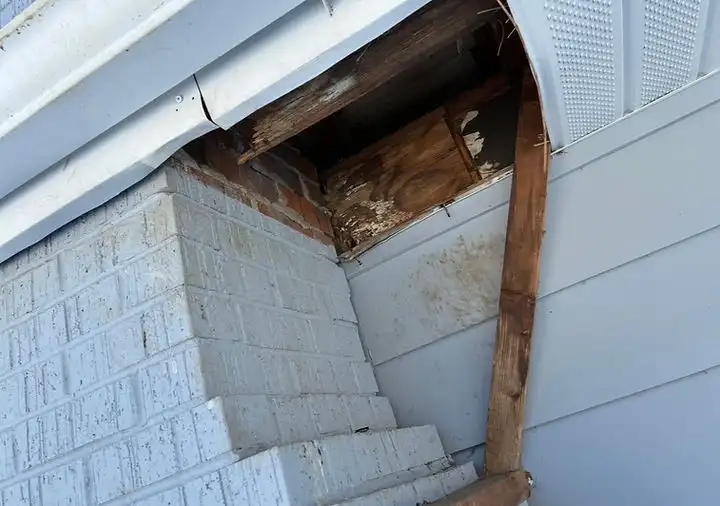
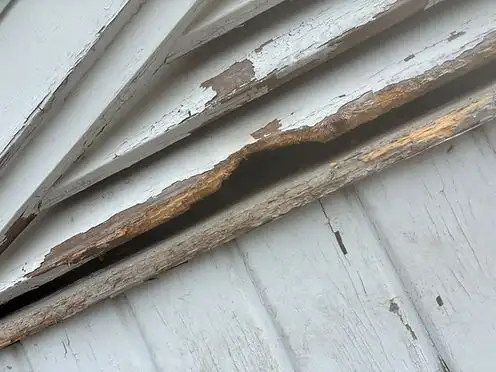
The mechanics are simple once you see them. Most roofs have a small "construction gap" where the roof decking ends short of the fascia board, hidden behind the gutter. On a young roof it's sealed by the drip edge; on an aging one, the metal lifts, the wood behind the gutter stays damp, and the gap becomes soft enough for a raccoon to pull open or a squirrel to chew through in an afternoon. Once opened, the hole advertises itself: flying squirrels and bats use openings a fraction of that size, and mice follow the scent trails upward. If you're hearing the results overhead, our attic noise guide identifies who's using the door.
Short answer: Raccoons and gray squirrels are the primary roofline animals: raccoons pry and tear the gap open wider, squirrels gnaw softened fascia into a doorway. Flying squirrels, bats, and mice follow through gaps the bigger animals made or that age opened on its own. One roof edge can serve them all in a single year.
What the Evidence Looks Like from the Ground
✓ Dark rub marks or smudges at one spot along the gutter line, from fur and repeated traffic
✓ Chewed or splintered fascia edges, often just above a downspout or tree limb (the animal's ladder)
✓ A visibly lifted or wavy gutter section where a raccoon has been pulling
✓ Water staining on fascia or soffit paint: damp wood is soft wood, and soft wood is an entry in progress
✓ Noise overhead at dusk or dawn, the confirmation the doorway is active
How Acorn Repairs a Roofline Entry
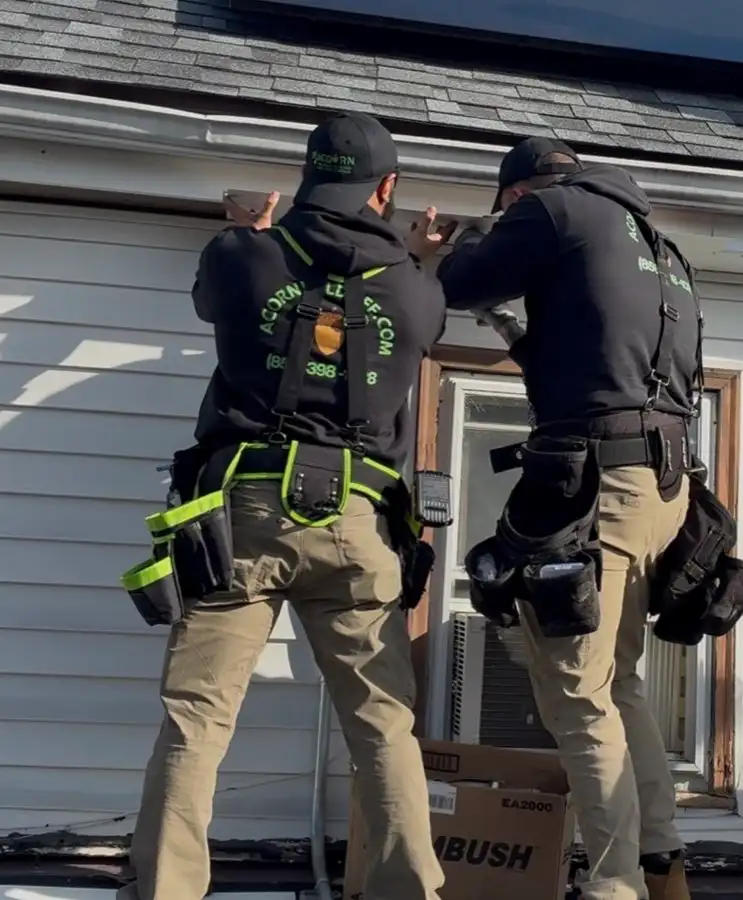
A real Acorn repair: damaged material out, steel in, painted to match.
The order matters as much as the materials. Nothing gets sealed until the attic is confirmed empty or a one-way door is mounted over the active entry, because sealing an animal inside creates a worse problem than the one you started with. Then the repair runs the full roof edge, not just the hole: an animal that finds its door closed simply walks the gutter line testing the rest, so a one-spot patch is a one-season fix. Materials are boring on purpose: 16-gauge galvanized hardware cloth, aluminum or steel drip-edge flashing, exterior-grade fasteners, and paint matched to your trim so the repair disappears. This is the same steel-first standard we apply at the soffits and eaves, vents, chimney caps, and foundation.
Free · No obligation
Every Acorn Job Starts With a Free Inspection
Before we quote a dollar of work, a licensed technician walks the whole property — roofline, soffits, vents, chimney, the full foundation line, the attic or crawl space, the decks and the yard — and finds every opening an animal is using, plus the ones it would use next. It takes as long as it takes: often an hour, sometimes two. There is no charge for the visit.
✓ Free whether or not you hire us
✓ No call-out fee, no minimum, no signature on the day
✓ Every entry point photographed and shown to you
✓ A written quote priced off what was actually found
Ready to Close the Front Door?
Free photo-documented inspection, steel-and-flashing repair, Seal-Tight Warranty. Same-week scheduling.