Home › Wildlife Removal › Mole Control
Lawn tunnels · Mole vs. vole ID · Monitored trapping
Mole Control in South Jersey
Moles are the only animal on our list that never touches your house, and they still generate some of our angriest calls, because they can turn a lawn you have babied for years into a relief map in a week. Acorn Wildlife runs mole trapping programs across Camden, Burlington, Gloucester, Mercer, and Cumberland counties, and we start every one the same way: making sure you actually have moles and not voles, because the fixes are completely different.
Short answer: We control moles with a monitored trapping program placed in their active runways, the only method university turf programs consistently endorse. Before trapping, we confirm mole versus vole, because the raised-tunnel digger and the plant-eating surface runner need entirely different programs. Most lawns are clear within 2 to 4 weeks.
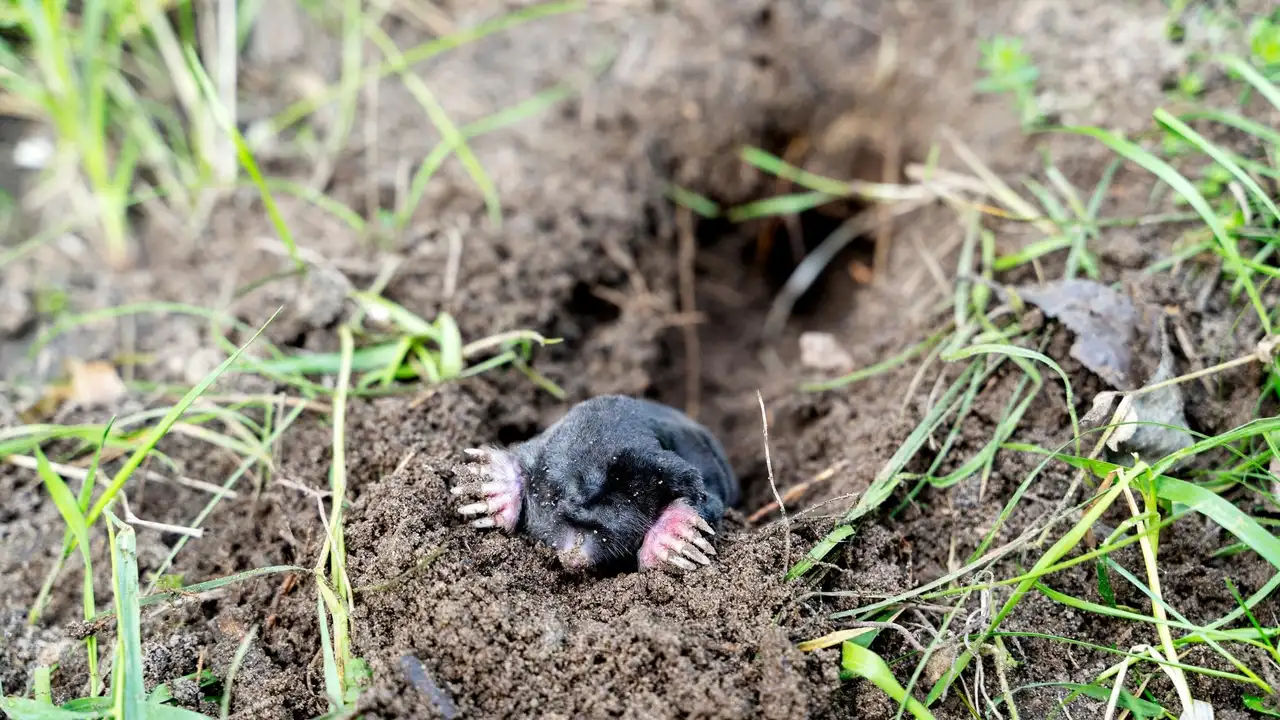
How Do I Know It's Moles?
Short answer: Moles leave raised, rounded ridges snaking across the lawn, spongy turf that sinks underfoot, and volcano-shaped soil mounds with no visible entry hole. The grass along a mole tunnel dies from root disturbance, not from being eaten. If plants are being eaten, you are in vole territory.
Raised Ridges
Rounded surface tunnels you can trace across the yard, pushed up from below. These are feeding runs; a few of them carry all the traffic.
Molehills
Conical mounds of fluffed soil, like tiny volcanoes, with no open hole. Excavated dirt from deep tunnels, and the classic mole signature.
Spongy Turf
Ground that gives underfoot along tunnel lines, and stripes of browning grass over the runs as roots are lifted away from soil contact.
The Timing
Damage surges in spring and fall when soil is moist and earthworms are shallow, and it can appear overnight. One mole digs up to 100 feet of tunnel a day.
Moles thrive in exactly the irrigated, well-fed lawns South Jersey homeowners are proudest of, because watered soil means shallow earthworms. A mole invasion is, annoyingly, a compliment to your turf.
Mole or Vole? Get This Wrong and Nothing Works
If this table just told you that you have voles, our vole control program is the right door, and we will make the same call honestly at your inspection. It is common to have both at once, since voles happily use mole tunnels.
How Acorn Gets Moles Out of a Lawn
The uncomfortable truth about mole control is that almost everything sold for it does not work: grub killers, sonic spikes, castor pellets, chewing-gum tricks. Rutgers and other university turf programs land in the same place we do. Trapping the active runways is the method with evidence behind it.


Finding the Active Runs
First visit, we press down sections of ridge across the yard and mark them. Tunnels pushed back up within a day or two are active highways; everything else is abandoned spur. Traps only go where the traffic is, which is the entire skill of mole work.
The Monitored Trapping Program
Professional mole traps are set in the confirmed runs and checked on a schedule, with locations adjusted as activity shifts. A typical South Jersey lawn holds 1 to 3 moles at a time, not the dozen the damage suggests, so most properties clear in 2 to 4 weeks.
The Honest Notes
Two things we tell every mole customer. Grub treatments do not remove moles, because their main food is earthworms, and no lawn should want fewer earthworms. And moles can recolonize from neighboring properties over time; when they do, a maintenance visit catches the newcomer in days, and we will tell you that up front rather than sell trapping as a forever guarantee.
Can You Seal Out a Mole? The Honest Answer
Mostly no, and we will not pretend otherwise. Lawns cannot be excluded the way attics can, which is why mole work is a trapping program rather than a sealing job. Where physical barriers genuinely help is at the edges that matter: buried hardware cloth around raised garden beds, and along the same deck and foundation lines we protect for other diggers, since vacant mole and groundhog tunnels invite voles, shrews, and snakes to the yard party. That barrier work is warrantied like all our exclusion: the Acorn Seal-Tight Warranty covers any structure barrier we build.
See how we build buried barriers on the foundation and crawl space page and the full system on our wildlife exclusion page. And if the tunnels run toward the house and something is now scratching in the crawl space, start at wildlife in basements and crawl spaces.
Mole Control Near You
Mole FAQs
How many moles are ruining my lawn?
Will killing the grubs get rid of the moles?
Do sonic spikes or castor oil pellets work?
Are moles dangerous, or bad for the lawn long-term?
How fast will my lawn look normal again?
Free · No obligation
Every Acorn Job Starts With a Free Inspection
Before we quote a dollar of work, a licensed technician walks the whole property — roofline, soffits, vents, chimney, the full foundation line, the attic or crawl space, the decks and the yard — and finds every opening an animal is using, plus the ones it would use next. It takes as long as it takes: often an hour, sometimes two. There is no charge for the visit.
✓ Free whether or not you hire us
✓ No call-out fee, no minimum, no signature on the day
✓ Every entry point photographed and shown to you
✓ A written quote priced off what was actually found
Ready to Reclaim the Lawn?
Same-week runway survey, honest mole-or-vole ID, and a trapping program that clears it.