Home › Wildlife Removal › Skunk Trapping
No-spray trapping · Under-deck specialists · Warrantied
Skunk Removal & Trapping in South Jersey
Every skunk call starts with the same question, so here is the answer up front: no, trapping a skunk does not have to end in a spray. Acorn Wildlife uses covered traps and slow, calm handling, and spray events on our jobs are rare. We trap and remove skunks from under decks, sheds, and porches across Camden, Burlington, Gloucester, Mercer, and Cumberland counties, then seal the space so the den never re-rents.
Short answer: We trap skunks in fully covered live traps set at the den entrance, which keeps the skunk calm and its tail down, then remove the animal and seal the deck or shed with a buried barrier. Skunks only spray what they can see and aim at, and a covered trap removes both.
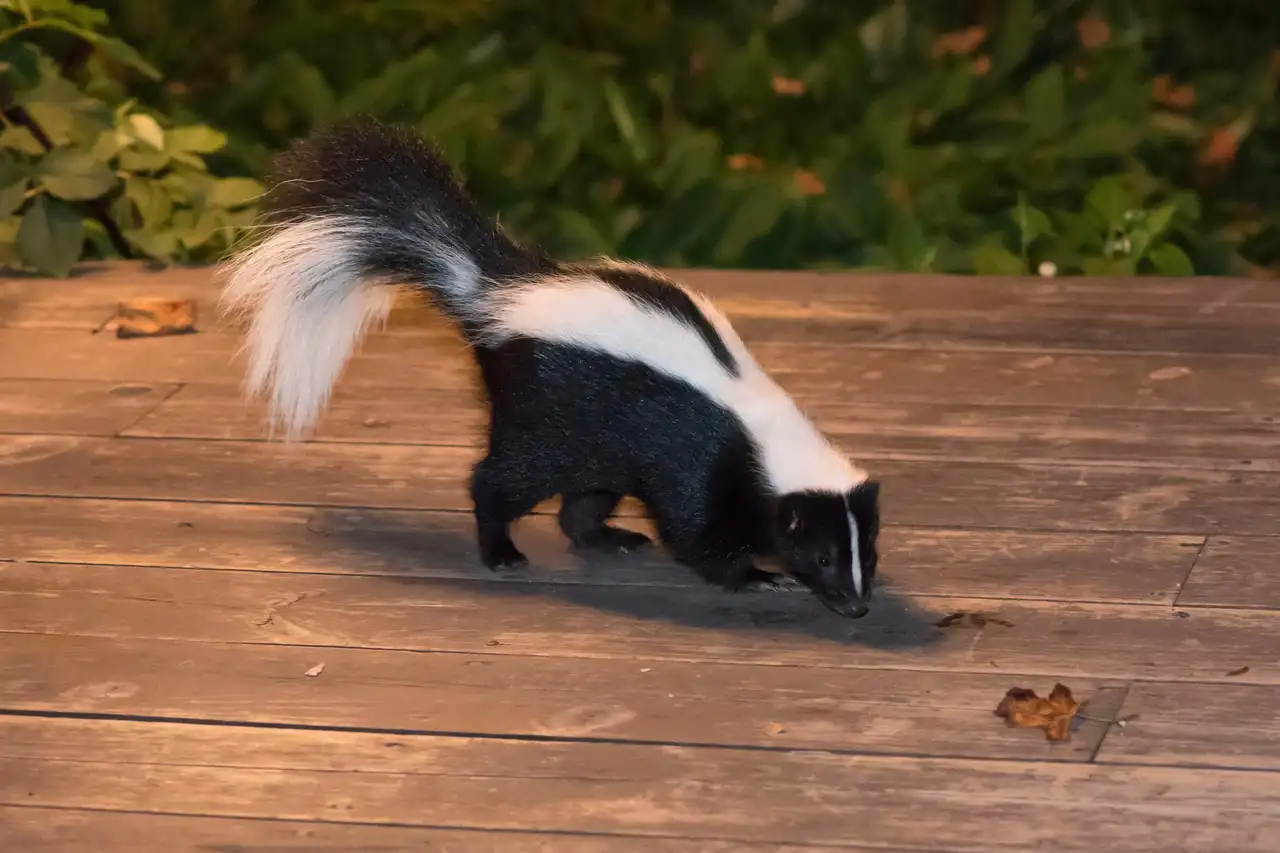
How Do I Know It's a Skunk?
Short answer: Trust your nose and the lawn. A faint musky odor that comes and goes at night, shallow cone-shaped holes dug in the grass, a 4 to 6 inch opening under a deck or shed with freshly kicked-out soil, and a slow black-and-white visitor at dusk all point one way: a skunk has moved in underneath something.
The Smell
Persistent faint musk near the deck means a den, not a passing visit. A sudden strong blast usually means a dog found the skunk first.
Lawn Damage
Dozens of shallow, cone-shaped holes dug overnight. Skunks grub-hunt in turf, and a grub-heavy lawn is a skunk buffet.
The Den Entrance
A tidy 4 to 6 inch hole under deck skirting, a shed slab, or a porch, with soil kicked out behind it. Skunks dig less than groundhogs and often adopt old burrows.
Sightings & Sounds
A waddling dusk commute, light scratching under the floorboards, and in spring, faint chittering that means kits are down there too.
Under-deck tenant but no smell? It may be an opossum or groundhog instead. Our under-deck and shed guide shows how to tell the three apart before anyone crawls under anything.
How Acorn Traps Skunks Without the Spray
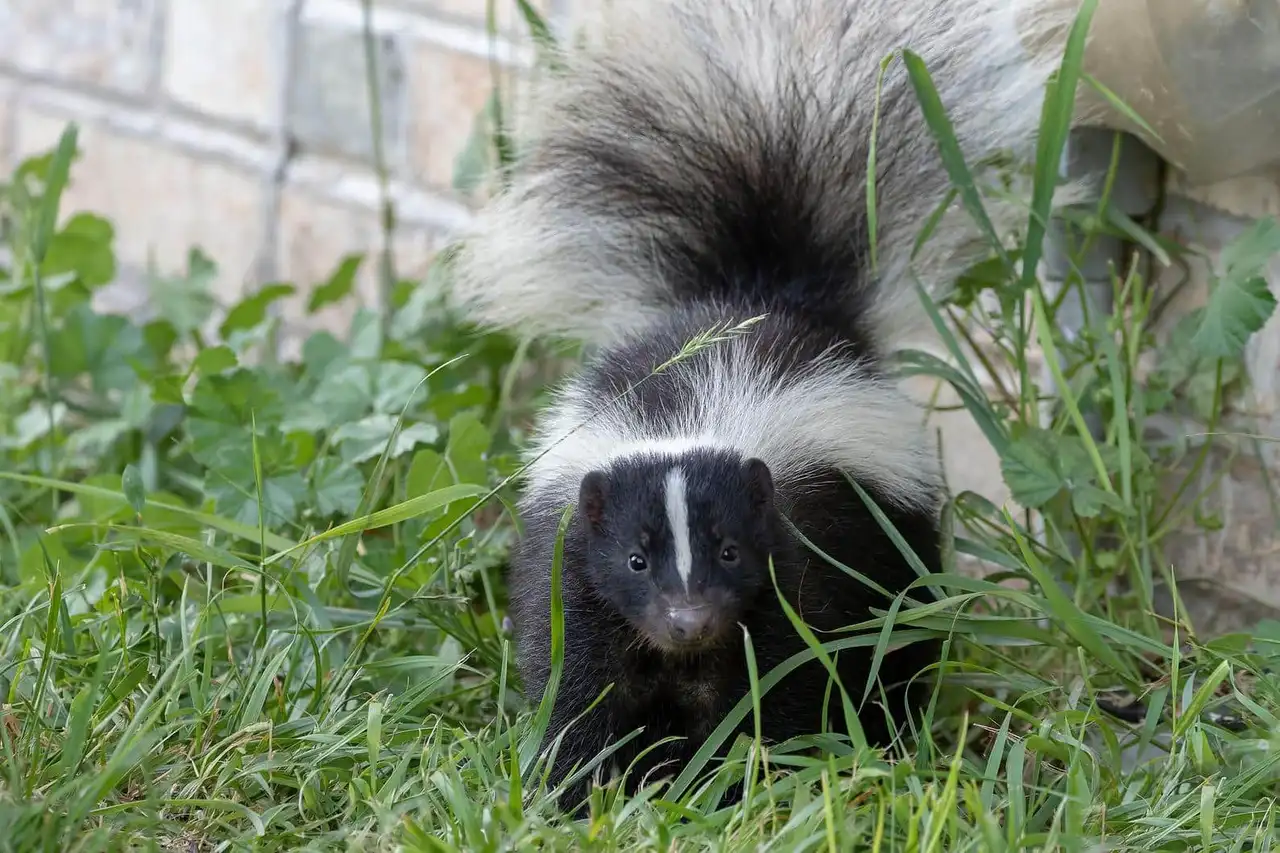
Skunks spray as a last resort, at a target they can see, with maybe five or six shots before they need days to reload. Our whole method is built on that biology: no sight lines, no startle, no spray.

Covered Live Traps
We set fully enclosed or blanket-covered traps directly on the den's commute path. Inside a dark covered trap, a skunk settles down fast. Carried smoothly by a technician who moves slowly and talks quietly, it stays calm to the truck. This is the no-spray method, and it works because it respects how the animal actually behaves.
Kit Season (Spring into Early Summer)
Skunk kits are born under South Jersey decks from roughly May into June and cannot follow their mother out for weeks. We check every den for kits before trapping, and remove families together rather than stranding babies under your floor. It adds a visit; it prevents the dead-litter outcome that turns a smell problem into an excavation.
What New Jersey Law Requires
Skunks are a rabies-vector species in New Jersey, which puts real legal limits on relocating them. We are straight with you about what NJDEP rules require and what the options are. It is also the reason skunk work belongs with a licensed operator (NJDEP #92411B): the rules exist because rabies is a genuine public-health concern with this species.
Skunks Under Decks: Why They Chose Yours
Deck dens are also why the smell gets indoors. A skunk that sprays or scent-marks under the deck is venting into your floor cavity and HVAC intake. And February deserves a special mention: skunk mating season, when males spray over disputes and homeowners across South Jersey call us convinced something died in the crawl space. If your deck smells every February, you have a winter tenant, and this page is for you.
Sealing Skunks Out for Good
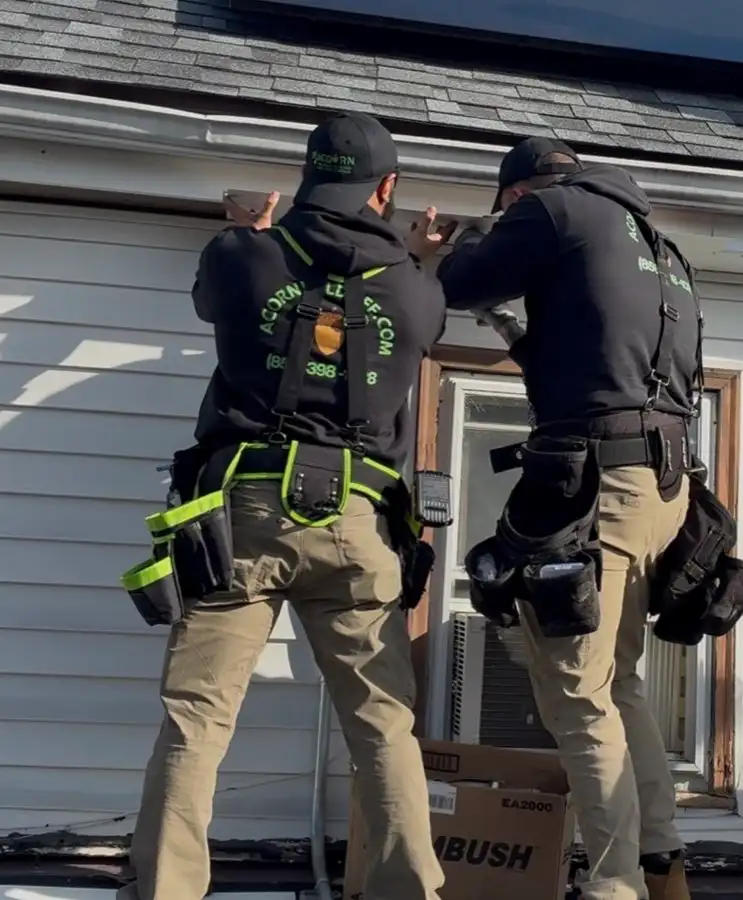
Skunks are diggers, so surface-level skirting is not a fix. We install hardware-cloth barriers with a buried apron that turns outward underground, so a digging skunk hits mesh no matter the angle. The work carries the Acorn Seal-Tight Warranty: if animals get back in through a barrier we built, we come back at no charge.
✓ Buried hardware-cloth apron along deck and shed perimeters, angled out 8 to 12 inches
✓ Existing burrow entrances sealed only after the den is confirmed empty
✓ Crawl space vents and porch gaps rebuilt in metal
✓ Grub treatment and food-source notes in your report, because the lawn is half the attraction
Ground-level exclusion methods are detailed on the foundation and crawl space page and our full wildlife exclusion page. Related reading: animals under decks and sheds.
Skunk Trapping Near You
Skunk FAQs
What if the skunk sprays in the trap?
My dog got sprayed. What actually works?
Are skunks a rabies risk in New Jersey?
Can I just seal the deck myself once I stop seeing it?
How fast can you get a skunk out?
Free · No obligation
Every Acorn Job Starts With a Free Inspection
Before we quote a dollar of work, a licensed technician walks the whole property — roofline, soffits, vents, chimney, the full foundation line, the attic or crawl space, the decks and the yard — and finds every opening an animal is using, plus the ones it would use next. It takes as long as it takes: often an hour, sometimes two. There is no charge for the visit.
✓ Free whether or not you hire us
✓ No call-out fee, no minimum, no signature on the day
✓ Every entry point photographed and shown to you
✓ A written quote priced off what was actually found
Ready for a Skunk-Free Deck?
Free same-week inspection, covered no-spray trapping, and a buried barrier that ends it.