Home › Wildlife Removal › Yellow Jacket Removal
Ground nests · Wall voids · Late-summer peak
Yellow Jacket Removal in South Jersey
Yellow jackets are the reason August cookouts end badly. They nest out of sight, in a hole in the lawn or inside a wall void, build to thousands of workers by late summer, and defend the nest with a persistence no other stinging insect in New Jersey matches. Acorn Wildlife removes yellow jacket nests across Camden, Burlington, Gloucester, Mercer, and Cumberland counties, including the ones inside the structure.
Short answer: Yellow jackets are removed by treating the nest at its actual location, which first has to be found, because the entrance you can see is often not where the nest sits. Ground nests and wall-void nests are different jobs. Sealing the entrance of a live wall nest is the one thing you must not do.
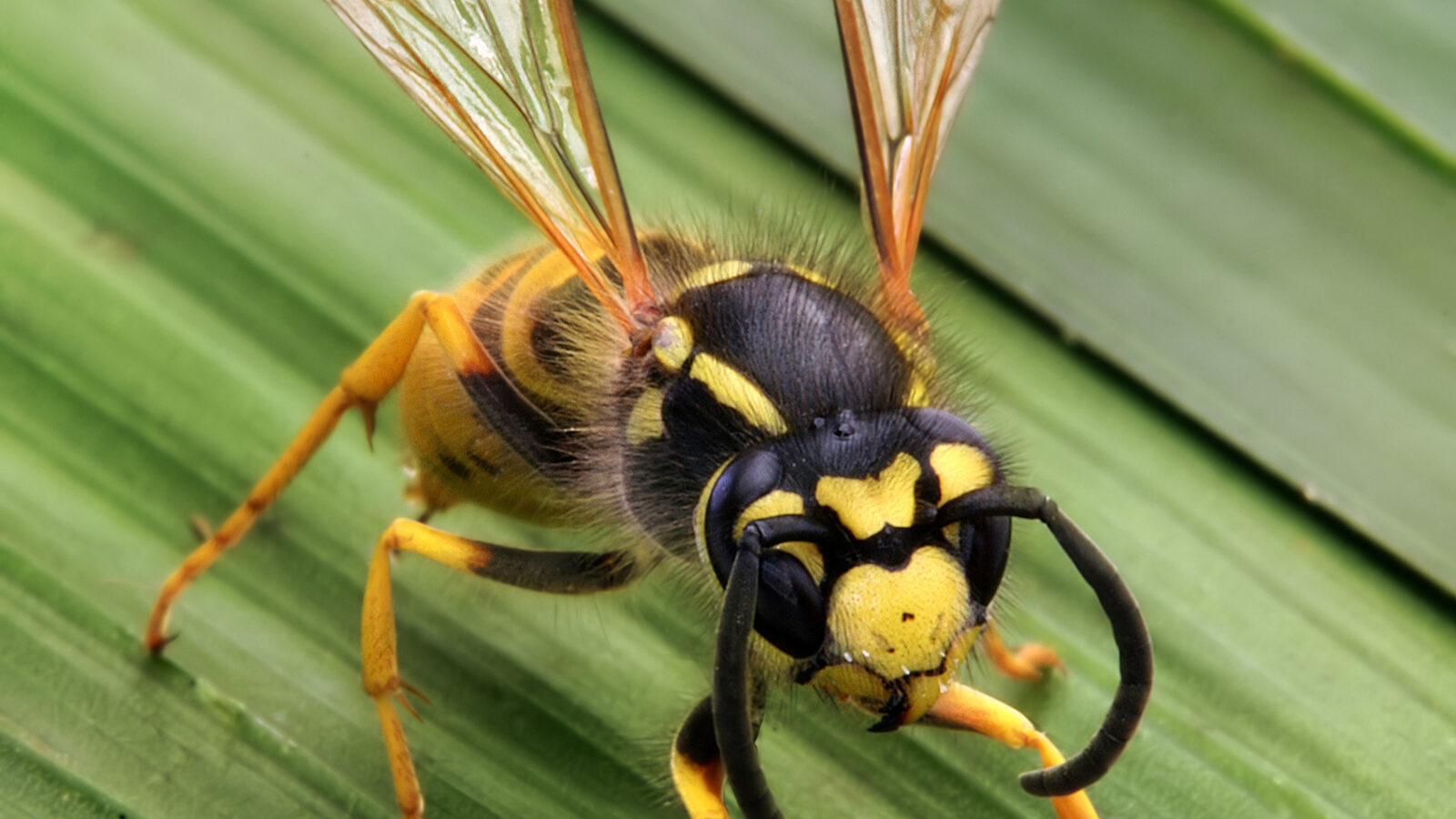
How Do I Know They Are Yellow Jackets?
Short answer: If you see fast, direct traffic going into a single hole in the ground, a gap in the siding, or a soffit corner, and you cannot see a nest at all, it is almost certainly yellow jackets. They are the stinging insect that scavenges at your table, and the only common one that nests underground.
Hidden Nest, Visible Traffic
A steady stream in and out of one small opening. The nest itself is underground or inside a void, so there is nothing to see.
The Insect
Smooth and hairless, bright yellow and black, shorter and stockier than a paper wasp, and it flies fast and straight rather than dangling its legs.
It Scavenges
The one that lands on your soda can, your meat, and the garbage bin. Honey bees and paper wasps do not do this. By late summer it is relentless.
Late-Summer Peak
Colonies build all season and are largest and most defensive in August and September, which is exactly when most people discover them.
Two nest locations account for nearly every call we take. Ground nests go into an abandoned rodent burrow, a void under a shed or step, or a gap beside a patio slab, and they are commonly found by a lawnmower, which is the worst possible way to find one. Structural nests go into wall voids, soffits, and behind siding, entering through exactly the gaps we already seal for wildlife. Those are the ones that need care.
Why You Must Not Seal the Hole
This is the most important thing on this page. When yellow jackets are nesting in a wall void and the homeowner plugs the entry gap, the colony does not die politely inside the wall. Yellow jackets under pressure chew, and they chew toward warmth and light, which means through drywall, around outlet boxes, and past light fixtures into the room.
We have seen the result of that more than once, and it turns an outdoor problem into an indoor emergency with a family in the house. The entrance gets sealed after the colony is dealt with, never before. The same logic applies to expanding foam, caulk, and a rag stuffed in the gap.
The related mistake is pouring petrol, bleach, or boiling water into a ground nest. It is dangerous, it contaminates soil around your home, it is illegal as a pesticide use, and it routinely fails to reach the nest chamber, leaving you with an angry colony and a poisoned lawn.
How Acorn Handles Yellow Jackets
Find Where the Nest Actually Is
The gap they enter is frequently not where the nest sits. Yellow jackets will travel some distance inside a wall cavity between the entry point and the nest, and treating the entrance alone leaves the colony intact. We watch the traffic, work out the real location, and treat there.
Ground Nests
Ground nests are treated at the burrow entrance, usually at dusk or dawn when the colony is home and least active. The site is then marked so nobody mows over it before the activity fully stops.
Structural Nests
Wall and soffit nests are the reason a wildlife exclusion company is a sensible call for this. These nests sit in the same voids raccoons, squirrels, and bats use, reached through the same failed soffit returns and siding gaps, and we already know how to get into those spaces and close them properly afterwards.
Then Close the Void
Once the colony is out, the entry point is sealed and repaired, which is ordinary exclusion carpentry and carries the same warranty. A void that held a nest this year is a good void, and it will be found again next year if it is left open.
The Honest Notes
Old nests are not reused: next spring's queen starts somewhere new, so the value of sealing is in taking that particular cavity out of circulation rather than in the nest itself. And a nest genuinely out of the way at the back of a property in September will die off with hard frost, which we will tell you rather than sell you a removal you do not need.
Yellow Jacket Removal Near You
Yellow Jacket FAQs
How dangerous are yellow jackets really?
There is a hole in my lawn with wasps going in and out. What do I do right now?
Can I just wait for frost?
They are getting into the wall but I never see a nest. Is that normal?
Will they come back to the same spot next year?
Yellow Jackets in the Lawn or the Wall?
Same-week service, the real nest location found rather than guessed, and the void sealed afterwards so it is not chosen again.