Home › Wildlife Removal › Animals in the Attic
Noise ID · Humane removal · Warrantied sealing
What's Living in Your Attic? Sounds, Signs, and How We Get It Out
Attic noise is the number one call Acorn Wildlife gets across Camden, Burlington, Gloucester, Mercer, and Cumberland counties. The good news: the noise itself tells us most of what we need to know before we ever climb a ladder. This page walks you through the same identification process Brandon uses on every call, what each animal does to an attic over time, and exactly how removal works.
Short answer: Attic noises almost always come from raccoons, squirrels, flying squirrels, mice, rats, or bats. The time of day and the character of the sound identify the animal with surprising accuracy. Acorn Wildlife confirms it with an inspection, removes the animal humanely, seals every entry point, and warranties the repairs.
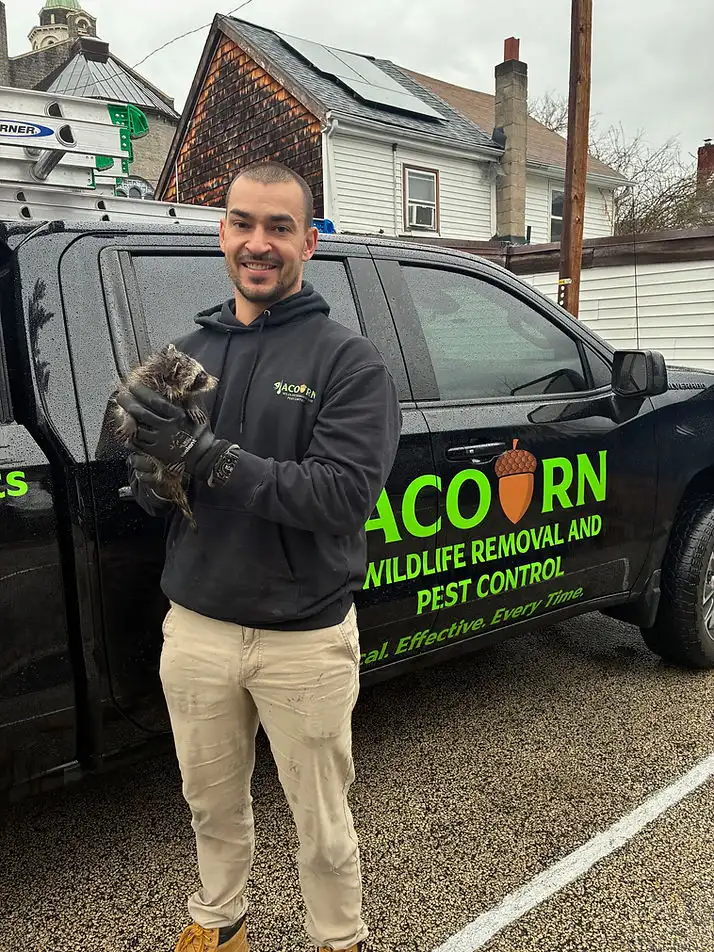
What Is That Noise in My Attic?
Every animal keeps a schedule, and none of them know you're listening. That makes the clock your best identification tool. Here's the table we work from, built on hundreds of South Jersey attic calls.
Short answer: Match the time of day first, then the sound. Heavy thumping after dark is a raccoon. Fast scampering at dawn and dusk is a gray squirrel. Soft nighttime scurrying is flying squirrels or mice. Steady gnawing is rodents. Fluttering or faint chirping near the roofline in summer is bats.
Two clarifying questions sharpen the guess. First: does the sound move fast or slow? Squirrels sprint; raccoons lumber. Second: is it one spot or all over? Rodents work a single travel route night after night, while a raccoon roams the whole attic like it owns the place. If the noise seems to come from inside a wall rather than overhead, start with our animals in walls guide instead.
Second Opinion: What the Droppings Say
If you can look into the attic safely from the hatch, droppings confirm what the clock suggested. Raccoon droppings are tubular, two to three inches long, and concentrated in one latrine corner. Squirrel droppings are barrel-shaped and scattered along travel routes. Mouse droppings look like dark grains of rice, everywhere at once. Bat guano collects in a pile directly under the roost and crumbles to a shiny dust when dry (don't touch or disturb it; the crumbling is exactly the problem). Look, note, and come back down: identification is a flashlight job, cleanup is a respirator job.
Once the noise table points to a suspect, the species page has the full story: signs, seasons, law, and method. Start with raccoons, squirrels, flying squirrels, bats, rats, mice, opossums, or birds. Not sure? That's what the inspection is for. Call or Text (856) 398-1028 and describe the sound; Brandon has probably heard it a hundred times.
What's in Your Attic Right Now? A Season-By-Season Guide
Spring (March–June)
Baby season. Gray squirrel litters are born February through April, raccoon kits March through June. Any springtime removal starts by checking for young, because removing a mother without her babies creates a far worse problem inside your insulation.
Summer (June–August)
Bat maternity season. Colonies of big brown bats raise pups behind gable vents and roofline gaps, and NJDEP restricts exclusion until the pups can fly. Squirrel activity dips in the heat; attics get too hot for most mammals by midday.
Fall (September–November)
The rodent rush. Mice and rats move indoors as nights cool, and gray squirrels have a second litter in August and September while stashing food for winter. This is our busiest sealing season for a reason.
Winter (December–February)
Survival mode. Raccoons den in warm attics without hibernating, mice run the wall cavities daily, and February brings raccoon mating season with all the noise that implies. If you only hear it in winter, the animal was probably there all along.
Season also explains the mystery of noise that comes and goes. Homeowners often tell us the attic "fixed itself" in July and relapsed in October. It didn't: the attic hit 130 degrees and the squirrels summered in the trees, then moved back in when the nights turned. The entry point stayed open the whole time. That's why Acorn Wildlife treats a quiet attic with a known hole as an active job, not a solved one.
What Happens If I Just Wait It Out?
Here's the honest damage timeline we see on real South Jersey jobs. Not every attic follows it exactly, but the direction is always the same.
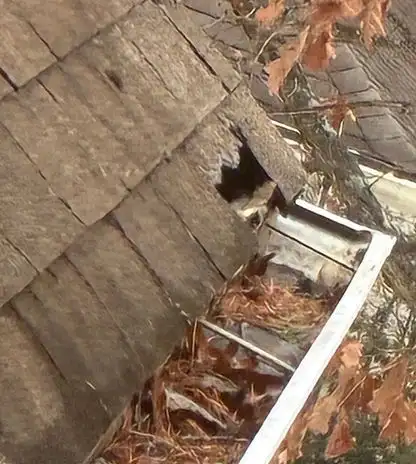
How Acorn Gets Animals Out of Your Attic
Every attic job at Acorn Wildlife follows the same four steps: Inspect, Remove, Seal, Protect. The species changes the tools, never the order.
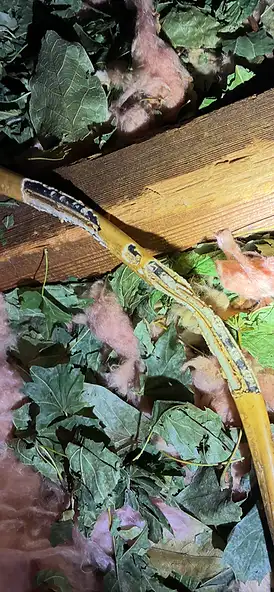
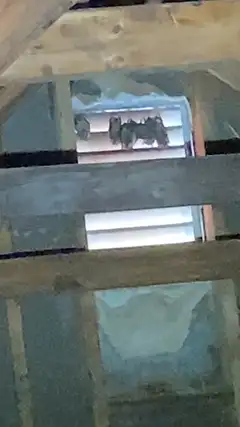
1. Inspect
We walk the attic, the roofline, and the full exterior, and we photo-document every entry point, active or not. You get the photos and a written quote. The inspection is included with every job; it's never a separate fee.
2. Remove
Method follows species and season. Raccoons get one-way doors, or hands-on family removal during baby season. Squirrels get one-way doors after every other gap is sealed. Bats get exclusion devices timed around the NJDEP summer blackout. Rodents get a trapping program, never poison in an attic (a poisoned rodent dies in a wall, and then you need our dead animal removal service too).
3. Seal
Removal without exclusion is a revolving door. We seal every entry point with steel, hardware cloth, and proper flashing, from roofline gaps to soffit returns to vents. The full approach is on our wildlife exclusion page, and the repairs carry the Acorn Seal-Tight Warranty.
4. Protect
After the animal is out, we assess what it left behind. Droppings, urine-soaked insulation, and nesting debris don't leave on their own, and the scent can advertise your attic to the next animal. Our attic cleanup and sanitization service handles removal, disinfection, and insulation replacement when it's warranted, and we'll tell you honestly when it isn't.
Attic Animal FAQs
Can I just seal the hole myself?
Will the animal leave on its own?
Is it safe to go up and look?
How fast can Acorn get here?
Does homeowners insurance cover attic animal damage?
Free · No obligation
Every Acorn Job Starts With a Free Inspection
Before we quote a dollar of work, a licensed technician walks the whole property — roofline, soffits, vents, chimney, the full foundation line, the attic or crawl space, the decks and the yard — and finds every opening an animal is using, plus the ones it would use next. It takes as long as it takes: often an hour, sometimes two. There is no charge for the visit.
✓ Free whether or not you hire us
✓ No call-out fee, no minimum, no signature on the day
✓ Every entry point photographed and shown to you
✓ A written quote priced off what was actually found
Ready for a Quiet Ceiling Again?
Free same-week inspection, photo-documented entry map, written quote. Humane, always.