Home › Wildlife Exclusion › Soffit & Eave Repairs
Hardware cloth backing · Rebuilt, not patched · Seal-Tight Warranty
Soffits & Eaves: Rebuilding the Attic's Weakest Ceiling
Soffits are the underside of your roof overhang, and to an animal they're the thin ceiling of a perfect den. This page covers one entry point within our full wildlife exclusion service: how animals defeat soffit panels and returns, what the damage looks like, and how Acorn Wildlife rebuilds them so it doesn't happen twice.
Short answer: Squirrels and raccoons tear open soffit returns (the boxed corners where two rooflines meet), bats slip behind loose panels, and birds nest in any gap. Acorn Wildlife rebuilds damaged soffits with galvanized hardware cloth backing behind new material, painted to match, under the Acorn Seal-Tight Warranty.
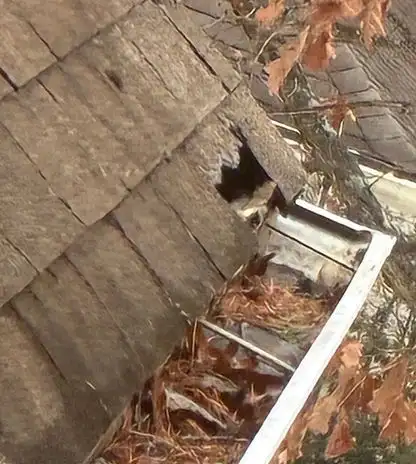
Which Animals Get in Through Soffits?
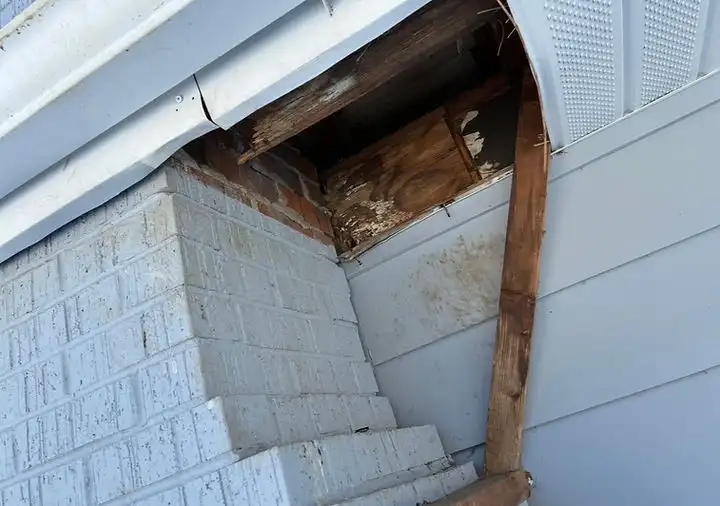
The soffit return deserves its special reputation. Where a lower roofline meets an upper wall (over a porch, a garage, a split-level step), the soffit is boxed into a corner that an animal can reach by standing on the lower roof. It's plywood or thin aluminum, often the oldest and dampest wood on the house, and it opens directly into the attic. A raccoon can peel one open in minutes; a squirrel needs a weekend of gnawing; a bat colony needs no damage at all, just the gap where the panel meets the wall. Birds take whatever's already open. The noises each makes overhead are decoded on our attic noise guide.
Short answer: Nearly all of them. Raccoons push soffit panels up like a trapdoor, squirrels gnaw through returns at the corners, bats slip through gaps as narrow as three-eighths of an inch behind loose panels, and starlings and sparrows nest in open returns. The soffit return is the single most-attacked square foot on many houses.
What Soffit Damage Looks Like
✓ A dark hole or lifted panel at a roof-to-wall corner, visible from the yard
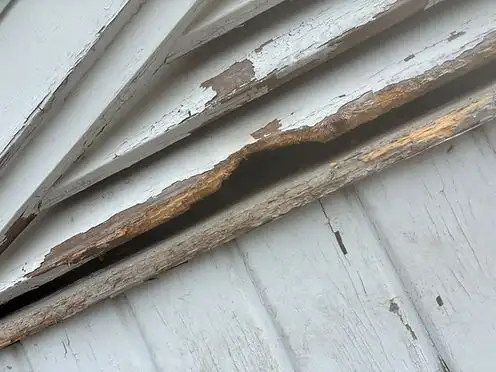
✓ Gnaw marks with fresh, lighter-colored wood exposed at the edges (squirrel work)
✓ A panel hanging or bowed out of its channel (raccoon work, done with one paw)
✓ Brown staining or a faint musty smell below a gap (bat activity above)
✓ Nesting material sprouting from a return, plus bird traffic at dawn
One diagnostic we always run before repair: is the soffit the entry, or just the symptom? Animals often enter at the roofline gap above and damage the soffit from inside, and sealing the visible hole while the real door stays open is how homeowners end up paying twice. The included inspection maps every opening before we quote.
How Acorn Rebuilds a Soffit Entry
The hardware cloth backing is the difference between a repair and a redecoration. New wood or aluminum alone is just a fresh surface for the same teeth; 16-gauge galvanized mesh fastened to framing turns the return into a dead end permanently. Around bats the sequencing gets legal as well as practical: NJDEP restricts bat exclusion during the summer maternity season, so soffit gaps above a roost get one-way exclusion devices timed to the calendar, and the full sealing follows. Materials list, per honest habit: 16-gauge galvanized hardware cloth, exterior-grade plywood or matched aluminum soffit stock, aluminum channel and trim, exterior fasteners and sealant, and paint matched to your trim. It's the same standard we bring to vents, chimney caps, and the foundation.
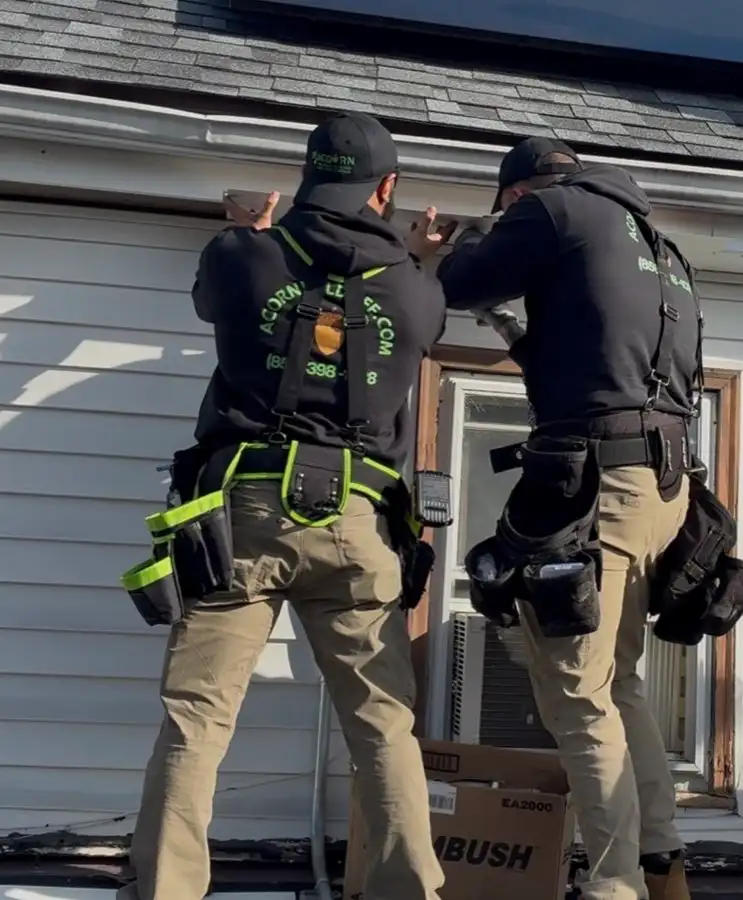
A real Acorn soffit rebuild: steel behind, new material in front, paint to match.
Free · No obligation
Every Acorn Job Starts With a Free Inspection
Before we quote a dollar of work, a licensed technician walks the whole property — roofline, soffits, vents, chimney, the full foundation line, the attic or crawl space, the decks and the yard — and finds every opening an animal is using, plus the ones it would use next. It takes as long as it takes: often an hour, sometimes two. There is no charge for the visit.
✓ Free whether or not you hire us
✓ No call-out fee, no minimum, no signature on the day
✓ Every entry point photographed and shown to you
✓ A written quote priced off what was actually found
Ready to Retire That Torn Corner?
Free photo-documented inspection, steel-backed rebuild, Seal-Tight Warranty. Same-week scheduling.