Home › Wildlife Removal › Snake Control
Honest ID · Safe removal · Sealed entry gaps
Snake Removal in South Jersey
Let's lower the temperature first: of the 22 snake species native to New Jersey, only two are venomous, and in the towns Acorn Wildlife serves you are overwhelmingly likely looking at a harmless garter, water, or rat snake. We remove snakes safely from basements, garages, and yards across Camden, Burlington, Gloucester, Mercer, and Cumberland counties, tell you honestly what you had, and seal the gaps that let it in.
Short answer: We identify the snake, remove it by hand or with snake tongs, and then fix the reason it was there: the foundation gaps it entered through and the rodents it was hunting. New Jersey has only two venomous species, timber rattlesnake and northern copperhead, and both are rare, protected, and almost never in a South Jersey basement.
How Do I Know What Snake I'm Looking At?
Short answer: In South Jersey, the snake in your yard is most often an eastern garter snake, northern water snake, eastern rat snake, or a tiny brown snake. The venomous two, timber rattlesnake and northern copperhead, are rare, state-protected, and tied to specific habitats like the Pine Barrens edge, not suburban lawns. Photograph from a distance and send it to us.
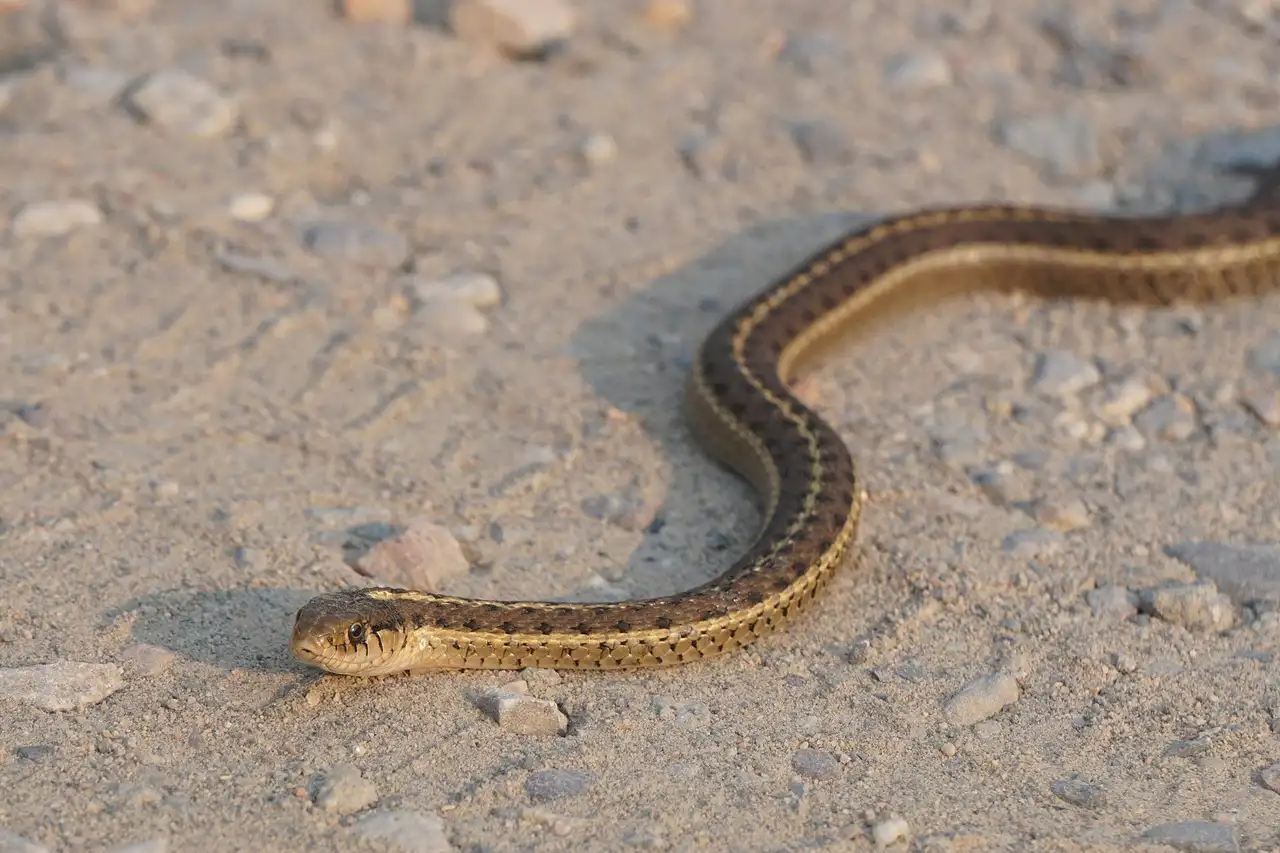
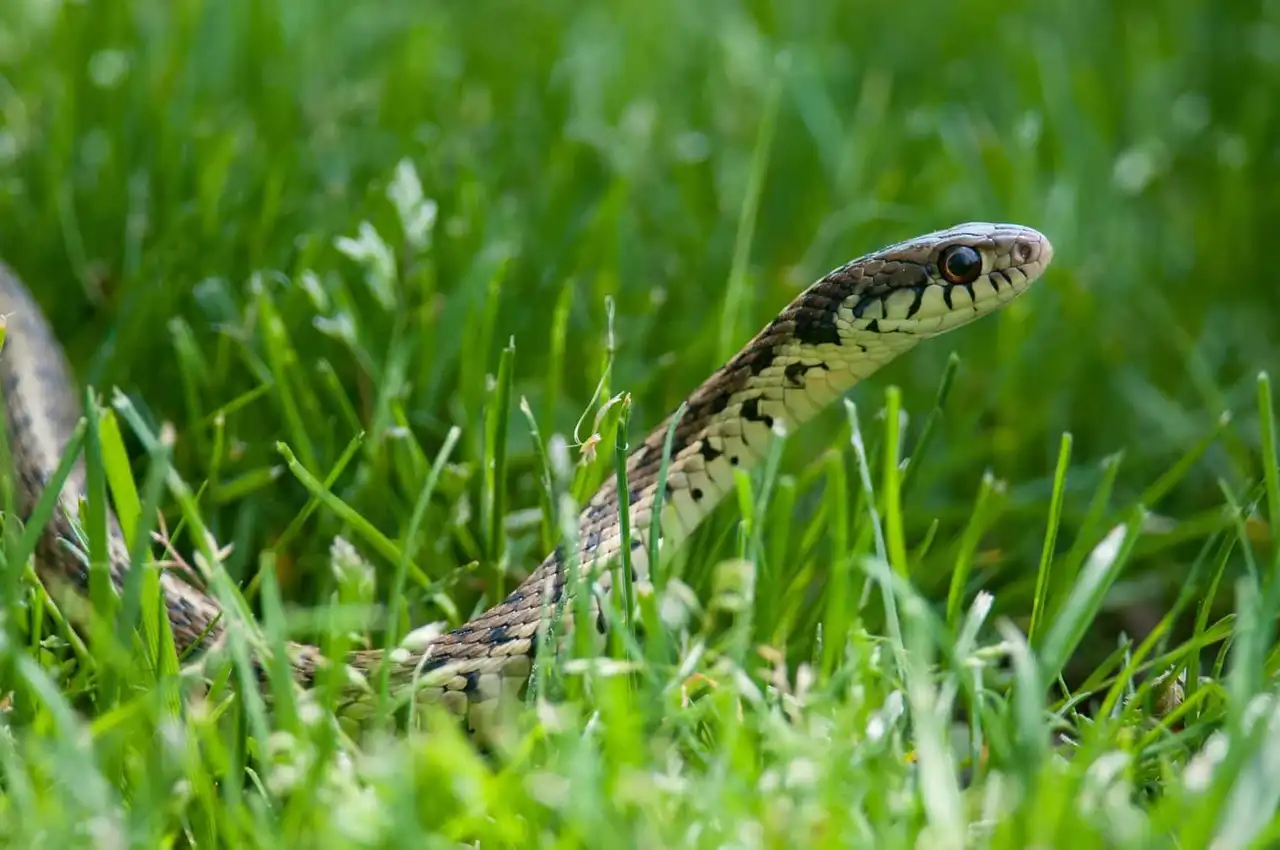
Garter Snake
The one in every South Jersey garden: slim, usually with three light stripes down a dark body, 1 to 2 feet, harmless, and eating your slugs and worms.
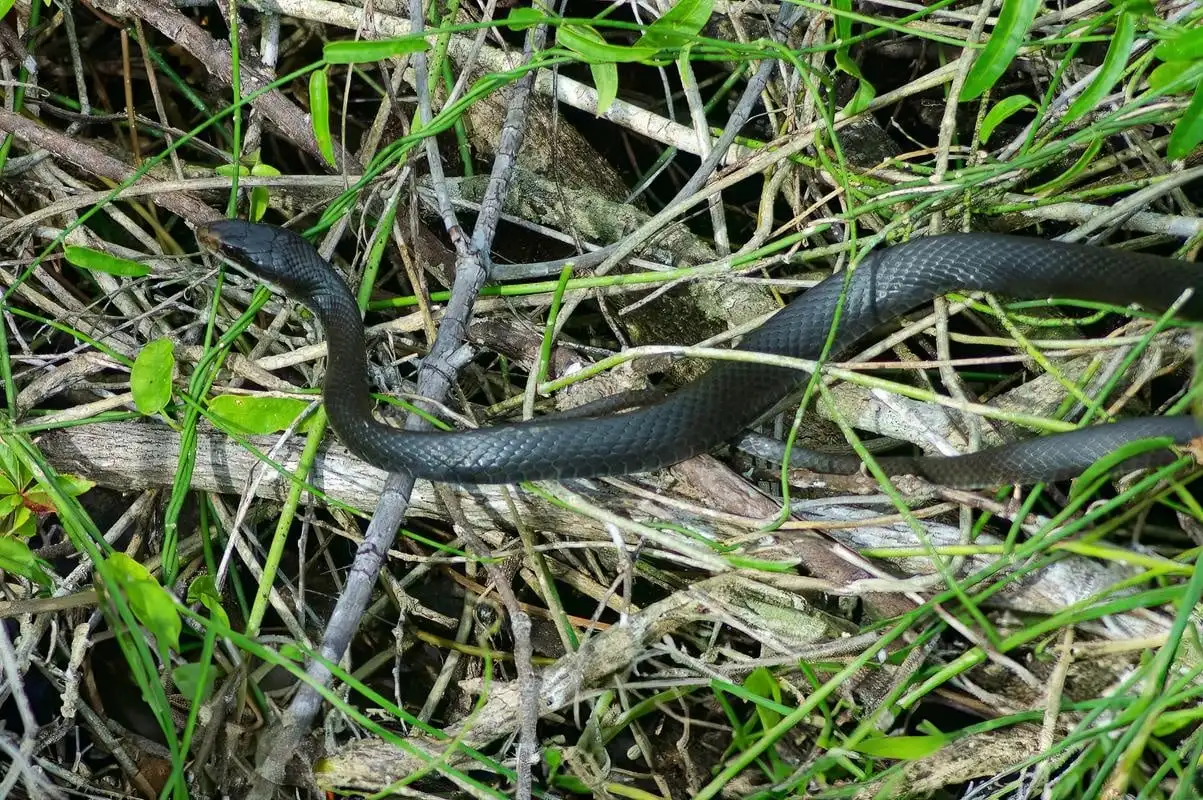
Eastern Rat Snake
The big black one that startles people: up to 5 feet or more, a strong climber found in barns, attics, and trees. Harmless, and death on rodents.
Northern Water Snake
Chunky, dark, blotched, always near creeks and ponds. Aggressive-looking and constantly mistaken for a cottonmouth. New Jersey has no cottonmouths.
The Venomous Two
Timber rattlesnake (Pine Barrens and northern ridges) and northern copperhead (rocky northern NJ, very rare this far south). Both protected. If you truly suspect one, keep pets and kids back and call us.
The quotable fact worth keeping: NJDEP Fish and Wildlife lists 22 native snake species, 2 venomous, and both venomous species are protected because their populations are in trouble. In Acorn Wildlife's service area, snake calls that turn out venomous are a rounding error. We will still treat every unidentified snake with distance and respect, and so should you.
How Acorn Removes Snakes Safely
Snake removal is the calmest job we do when it is done right, because the method is simple: identify first, then handle once, gently.
Hand Removal and Tongs
Harmless species are picked up by hand or with snake tongs, bagged in a ventilated snake bag, and released per New Jersey rules. Indoor snakes are usually found along walls, behind appliances, or in the sill area of basements, and most removals take one visit.
Suspected Venomous Snakes
Keep people and pets away, keep eyes on it from a distance if you safely can, and call us. Do not attempt to kill it: most snakebite incidents happen during kill or capture attempts, and New Jersey's venomous species are protected by law, so killing one is also illegal. We handle these with proper tools and involve NJDEP when the situation calls for it.
What New Jersey Law Says
All native, nongame snakes have legal protections in New Jersey, and the venomous two are specifically protected as species of concern. The practical version: relocation rules apply, killing protected snakes is prohibited, and a licensed operator (Acorn Wildlife holds NJDEP license #92411B) is the clean way through all of it.
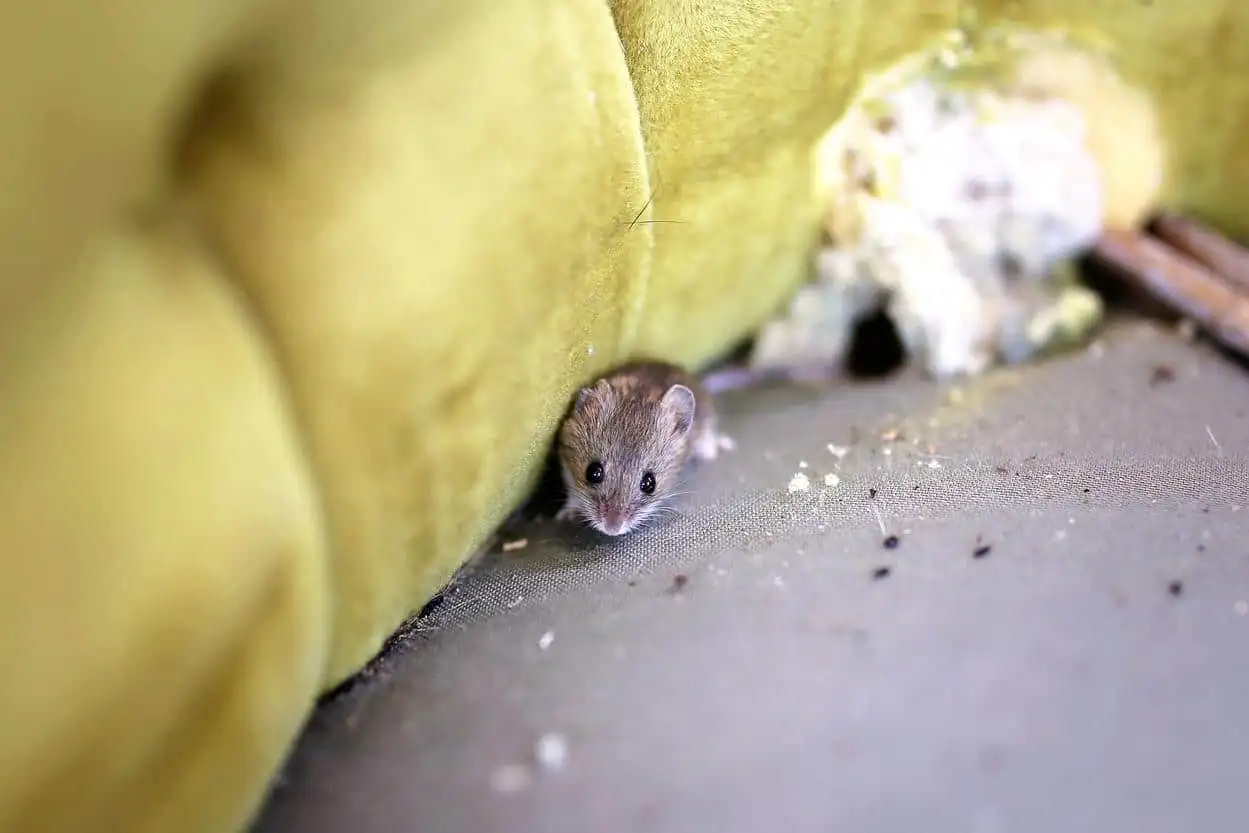
A Snake in the House Is a Message About Mice
This is the honest part most snake pages skip. Remove the snake and seal nothing, and you keep the mice. Remove the snake, seal the foundation gaps, and address the rodents, and you have fixed all three problems in the right order. It is also why snake repellent products disappoint: university extension testing has repeatedly found the sulfur and naphthalene granules ineffective, and none of them do anything about the gap or the mice. If a snake keeps showing up, something about the building is inviting it.
Sealing Snakes Out for Good
A snake needs surprisingly little: a gap under a door, a gap in the sill plate, a cracked crawl space vent. We seal at the same standard we use for mice, because a home sealed to mouse standard is sealed to snake standard automatically. The work carries the Acorn Seal-Tight Warranty: if animals get back in through a repair we made, we come back at no charge.
✓ Sill plate and foundation cracks sealed with mortar and steel-backed sealant
✓ Crawl space vents rebuilt in hardware cloth
✓ Garage and basement door gaps closed with sweeps
✓ Habitat notes in your report: wood piles, tall edge grass, and bird-feeder spill that feed the rodents that feed the snakes
Methods live on the foundation and crawl space page and our wildlife exclusion page. Seeing signs in the basement? Start at wildlife in basements and crawl spaces, and if mice are part of the story, mouse control is the companion fix.
Snake Removal Near You
Snake FAQs
Is the snake in my yard venomous?
Should I kill a snake I find?
Why do I keep finding snakes in my basement?
Do mothballs or snake repellent granules work?
What happens to the snakes you remove?
Free · No obligation
Every Acorn Job Starts With a Free Inspection
Before we quote a dollar of work, a licensed technician walks the whole property — roofline, soffits, vents, chimney, the full foundation line, the attic or crawl space, the decks and the yard — and finds every opening an animal is using, plus the ones it would use next. It takes as long as it takes: often an hour, sometimes two. There is no charge for the visit.
✓ Free whether or not you hire us
✓ No call-out fee, no minimum, no signature on the day
✓ Every entry point photographed and shown to you
✓ A written quote priced off what was actually found
Want the Snake Gone Today?
Same-week visits, honest species ID from a photo, and sealed gaps so it stays outside.