Home › Wildlife Removal › Woodpecker Control
Federally protected · Drumming vs. feeding · Repair & deterrent
Woodpecker Control in South Jersey
Woodpecker damage is the one bird problem where the legal answer shapes the whole job. Woodpeckers are native migratory birds and are federally protected, so they cannot simply be removed. What works is understanding why they are hitting your house, because there are three different reasons and each has a different fix. Acorn Wildlife handles woodpecker damage across South Jersey.
Short answer: Woodpeckers are protected under the federal Migratory Bird Treaty Act and cannot be trapped or killed without a federal permit. The effective approach is working out whether they are drumming, feeding, or excavating a nest, then combining physical deterrents with repair and dealing with any insect problem that is drawing them.
Three Reasons, Three Different Fixes
Short answer: Rapid rhythmic drumming on gutters, flashing, or a resonant board in spring is territorial display and is not damaging the wood. Scattered irregular holes are feeding, which means there are insects in the board. One large round hole is a nest cavity, which is the most serious version.
Drumming
Fast, rhythmic, repeated, usually at dawn in spring, and often on metal because it is loud. This is a mating and territorial signal. It is maddening but it does little real damage.
Feeding
Irregular, scattered holes and gouges, often along a fascia or trim board. The bird is after insects in the wood, and this one is telling you something important.
Nesting
A single clean round hole, roughly two inches across, opening into a cavity excavated in the siding or trim. The most structurally significant of the three.
The Usual Culprits
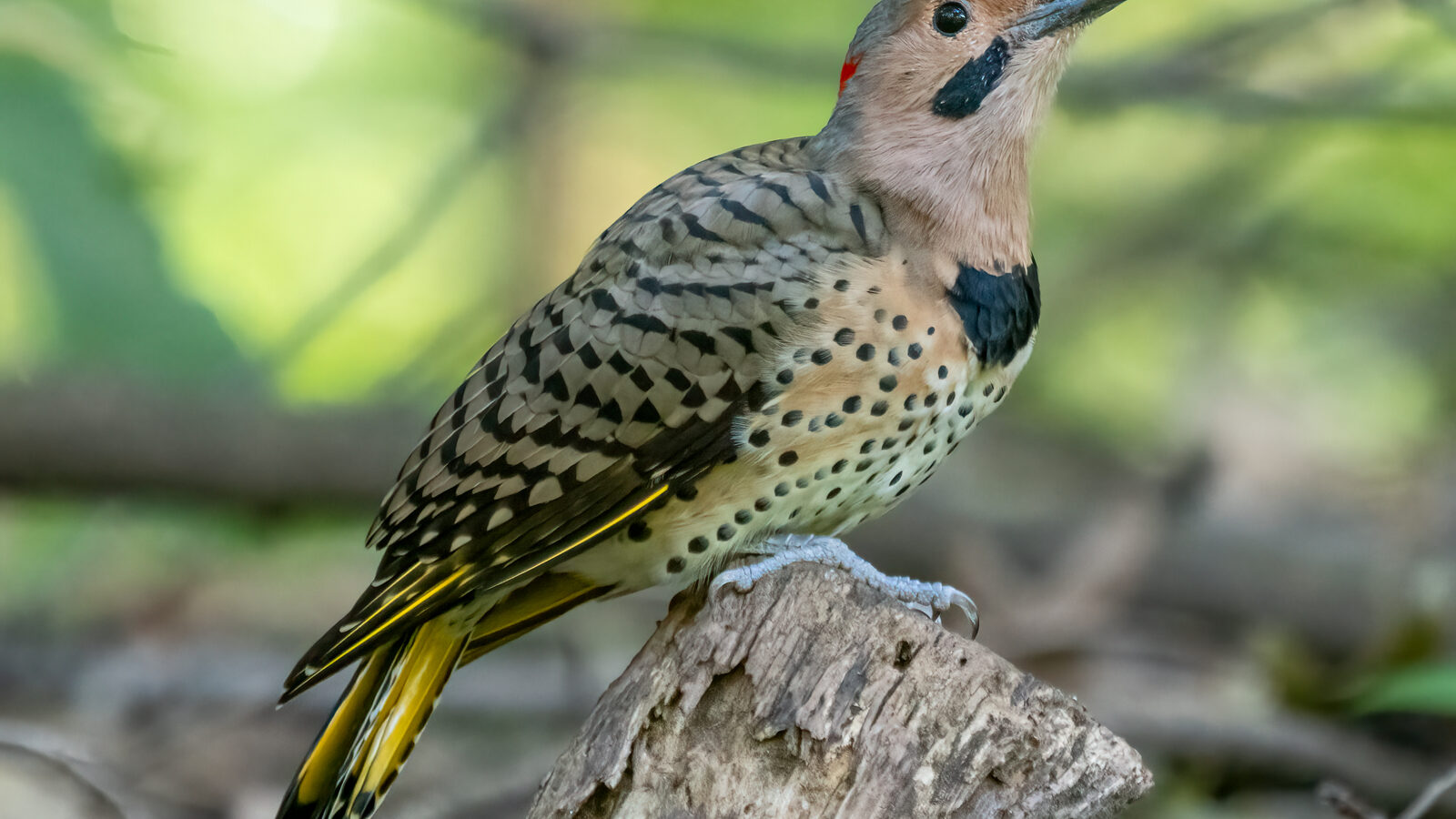
Northern flickers, downy and hairy woodpeckers, and red-bellied woodpeckers. Flickers do most of the siding damage we see.
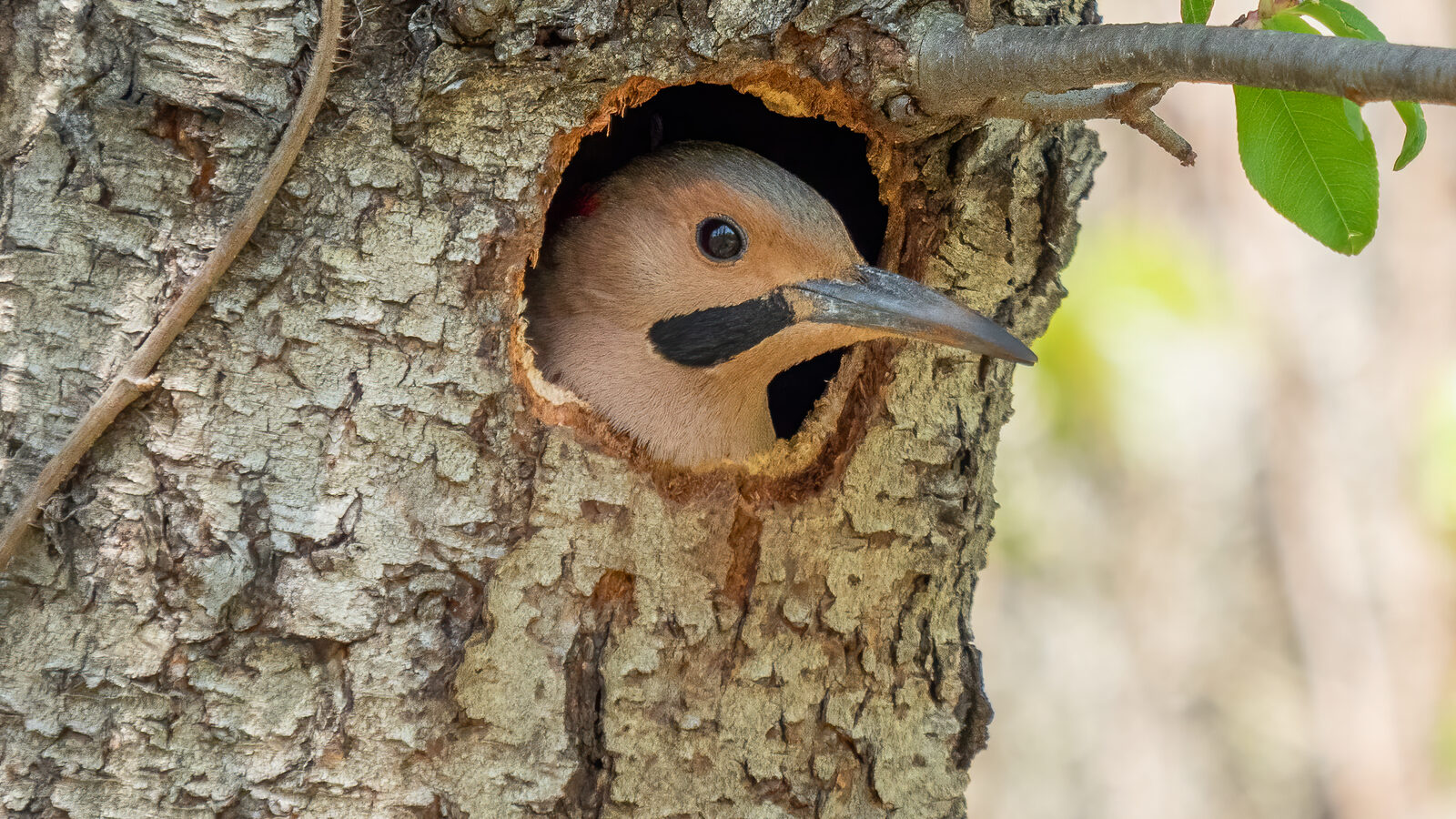
Cedar, redwood, and softwood siding and trim take the worst of it, along with stained rather than painted surfaces and anything with a hollow cavity behind it that resonates well.
If They Are Feeding, You Have an Insect Problem
This is the most useful thing on the page. A woodpecker working methodically along one board, leaving scattered irregular holes, is not vandalising your house; it is finding food. And the food is very often carpenter bee larvae.
The sequence is consistent and we see it every year. Carpenter bees bore galleries in a bare fascia or deck rail. The galleries fill with larvae. A woodpecker works out they are there and opens them up, converting neat half-inch round holes into long ragged trenches. By the time the homeowner calls about woodpeckers, the carpenter bees have usually been established for a season or two.
Treating this as a bird problem alone fails, because the food source is still in the board. Dealing with the carpenter bees and then repairing and finishing the wood removes the reason the bird is there. Grubs and other wood-boring insects produce the same pattern less commonly.
How Acorn Handles Woodpecker Damage
Work Out Which Behaviour It Is
Everything else follows from this. The damage pattern, the time of year, the time of day, and the surface all point to drumming, feeding, or nesting, and the three need different responses. We would rather spend the inspection on that than sell a deterrent that addresses the wrong problem.
Deal With the Insects, If There Are Any
Where the pattern says feeding, the insect problem gets addressed first. In South Jersey that is usually carpenter bees in fascia, rake boards, or deck framing, and it is work we do directly.
Repair and Finish the Wood
Damaged boards are repaired or replaced and the surface properly finished. This does two things at once: it closes the cavity so water does not get into end grain, and it makes the board less attractive to both the insects and the bird. Serious cases are roofline and fascia work, warrantied like the rest of our carpentry.
Physical Deterrents, Placed Properly
Netting held off the wall, sheet metal or hardware cloth over a favoured drumming surface, and visual deterrents at the specific spot being used. Placement is what decides whether these work. Deterrents also work far better early, before a bird has fully committed to a site.
The Legal Part, Plainly
Woodpeckers are protected under the federal Migratory Bird Treaty Act. They cannot be trapped, harmed, or killed, and an active nest cannot be destroyed, without a federal permit. Any company offering to simply remove your woodpeckers is offering to break federal law. We work with deterrence, exclusion, repair, and the insect cause, and we will be straight with you about the limits of that.
Woodpecker Control Near You
Woodpecker FAQs
Can you just trap and remove the woodpecker?
Why is it drumming on my gutter at six in the morning?
It has made a big round hole in my siding. What now?
They keep coming back to exactly the same board. Why that one?
Do those reflective tapes and plastic owls work?
Holes Appearing in Your Fascia or Siding?
Same-week inspection, the behaviour correctly diagnosed, the insect cause dealt with, and repairs that are legal, warrantied, and actually stop it.