Home › Wildlife Removal › House Sparrow Control
Small cavities · Persistent rebuilders · Screening
House Sparrow Control in South Jersey
House sparrows exploit the smallest gaps of any bird we deal with, and they are the most persistent about rebuilding. They nest in vent hoods, behind signage, in soffit corners, under solar panels, and in the gap above a porch light, and a pair will rebuild in the same spot repeatedly through a season. Acorn Wildlife closes the gaps rather than fighting the birds.
Short answer: House sparrow control is nest removal plus tight screening of the small gaps they use, because they will out-persist any deterrent. Like starlings, house sparrows are non-native and not federally protected, so exclusion is straightforward legally.
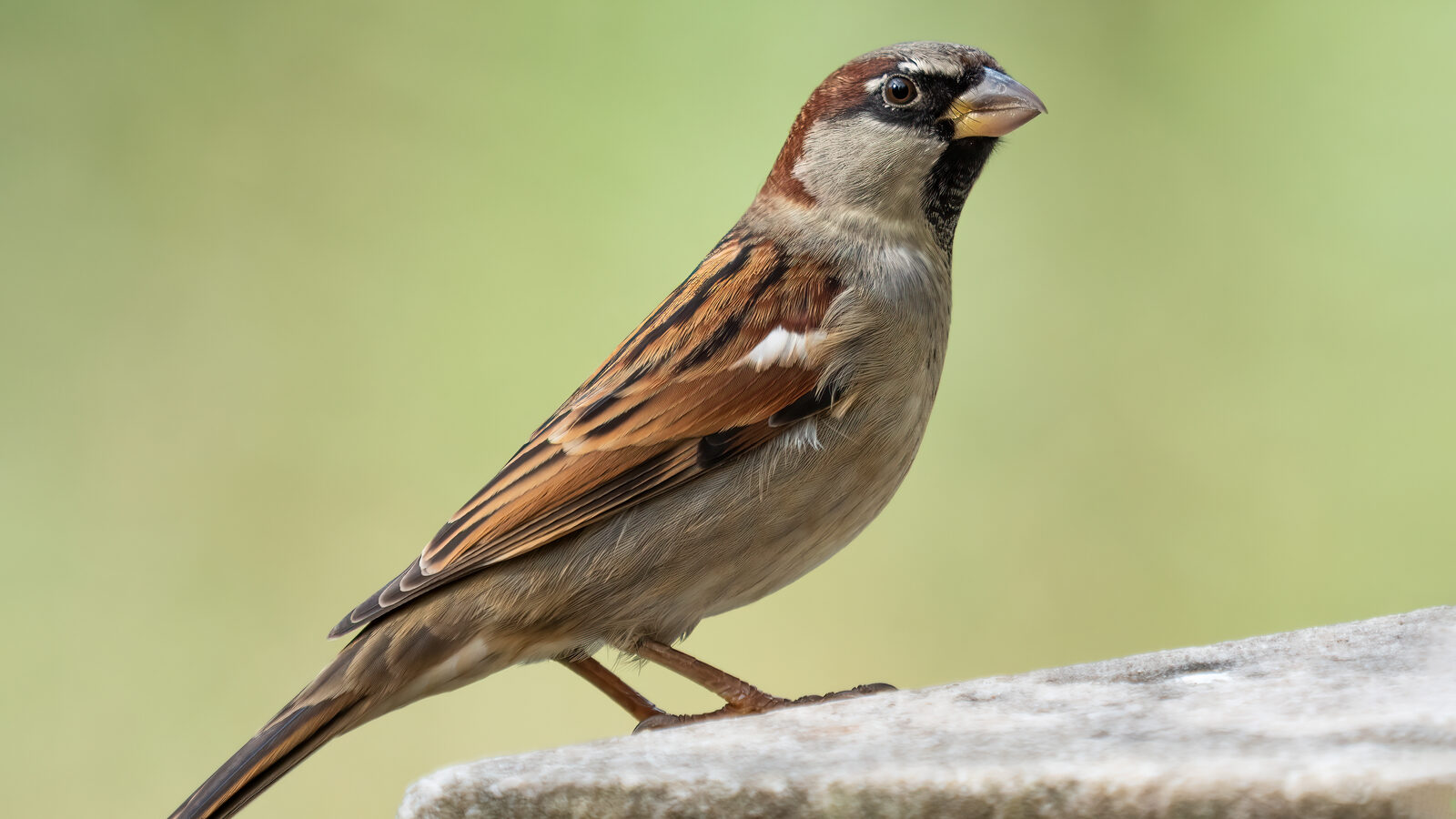
Where House Sparrows Get In
Short answer: Anywhere with a gap of an inch or two and a bit of shelter. House sparrows need far less space than a starling, so a gap you would not think twice about is a viable nest site, and there are usually several on a house.
Vent Hoods
Dryer, bathroom, and kitchen vent hoods, particularly older ones where the flap no longer seats. Smaller openings than a starling needs.
Soffit Corners & Returns
The mitred corner where a soffit meets the fascia is a favourite, especially where the return has opened up with age.
Behind Signage & Lights
Commercial signage, letterboxes, security light housings, and the space above a porch light fixture.
Under Solar Panels
Like pigeons, but they need far less room, so perimeter mesh has to be tighter than a pigeon job requires.
The nests themselves are untidy and bulky, made of grass, straw, litter, and feathers stuffed into the cavity. In a vent they obstruct airflow the same way a starling nest does. Around lighting and signage they are a fire consideration. And they carry mites, which is the complaint that most often gets us called to a bedroom window eave.
Why Deterrents Do Not Work on These
House sparrows are among the most successful birds on the planet for a reason: they are adaptable, they live alongside people by preference, and they are extremely persistent. A pair that has chosen a site will rebuild after the nest is removed, sometimes within days, and will keep doing so through a breeding season that runs from spring well into late summer with several broods.
That persistence is what defeats the usual approaches. Visual deterrents are ignored within a day. Removing the nest without closing the gap simply starts the cycle again. Even a partially closed gap tends to get worked at until it opens.
So the only approach that ends it is physical, and it has to be tighter than you would build for a starling or a pigeon. That is ordinary screening and soffit and eave work for us, just at a smaller tolerance.
How Acorn Handles House Sparrows
Find All the Sites, Not the One You Can See
Where there is one house sparrow nest there are commonly three or four on the same building, because the conditions repeat around the roofline. We survey the whole envelope, which is the only way to avoid the sequence of callbacks that otherwise follows.
Time It Around Nestlings
As with starlings, we establish whether there are young before anything is sealed. Closing a cavity with a brood inside is inhumane and leaves you with an odour problem in a wall. Where there are young, the nest is removed complete or the work is timed around fledging.
Remove and Clean
Nesting material comes out entirely, and where mites are a concern the cavity is treated. For nests above a bedroom or living space this matters more than the birds did.
Screen Tight
Gaps are closed with steel mesh and proper vent guards, sized for a bird considerably smaller than a starling. Vent hoods get animal-rated covers that maintain airflow, soffit returns get screened and repaired, and solar perimeters get a tighter mesh than a pigeon-only job would use. Warrantied like the rest of our exclusion work.
The Honest Note
House sparrows are a neighbourhood-scale bird, and we are not going to pretend that excluding them from your house reduces the local population. What it does is stop them nesting in your vents and eaves, which is the actual problem. They will carry on living in the hedge, which is fine.
House Sparrow Control Near You
House Sparrow FAQs
Are house sparrows protected?
I removed the nest and they rebuilt it in three days. Is that normal?
Why are there mites in my bedroom?
They are nesting under my solar panels. Is that the same job as pigeons?
Can you do this on a commercial building?
Sparrows Nesting in Your Vents or Eaves?
A full envelope survey, nests removed and cavities cleaned, and screening tight enough to actually hold against the most persistent bird on your house.