Home › Wildlife Removal › Vole Control
Lawn runways · Girdled shrubs · Trapping + habitat
Vole Control in South Jersey
Voles are the animal homeowners blame moles for. They run surface highways through the lawn, strip the bark off young shrubs at ground level, and hollow out bulbs you planted last fall, and they do almost all of it out of sight under mulch, ground cover, and winter snow. Acorn Wildlife runs vole programs across Camden, Burlington, Gloucester, Mercer, and Cumberland counties, and every one starts by confirming which animal you actually have.
Short answer: Voles are controlled with a trapping program set directly in their active runways, combined with the habitat changes that make the yard less attractive. Unlike moles, voles eat plants, so the damage shows up on your shrubs and bulbs as well as your lawn. Getting the identification right first is the whole job.
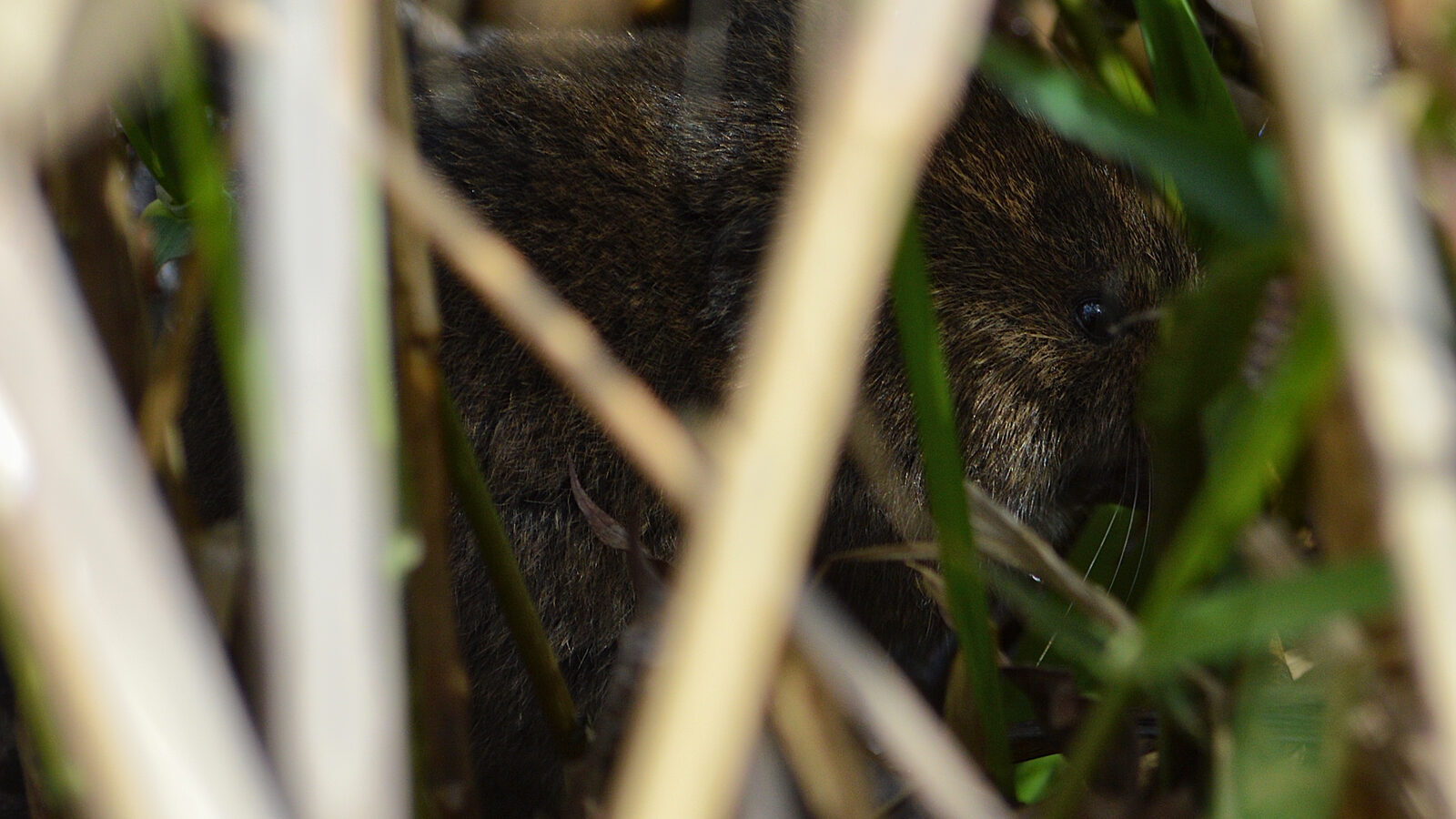
How Do I Know It's Voles?
Short answer: Look for narrow, open runways clipped through the grass about two inches wide, small round holes with no soil mound beside them, and chewed bark at the base of shrubs and young trees. If plants are being eaten, you have voles. If the lawn is being lifted but nothing is eaten, you have moles.
Surface Runways
Narrow paths clipped down to the soil, winding through turf and ground cover. They are most obvious the week the snow melts, because voles spend all winter travelling under it.
Open Holes, No Mound
Clean holes the width of a quarter opening straight into the ground, with no volcano of soil beside them. A mound means mole; a bare hole means vole.
Girdled Shrubs & Bark
Gnaw marks at the base of shrubs, young trees, and fruit trees, often hidden under mulch. A fully girdled stem kills the plant, and the damage is usually found in spring.
Missing Bulbs & Roots
Tulips and crocus that never come up, hostas that fail, root crops hollowed from below. Voles eat plants outright, which is the cleanest way to tell them apart.
Two vole species live in South Jersey. Meadow voles work the open lawn, field edges, and anywhere with heavy ground cover; pine voles work below the surface in mulched beds and orchards and are the ones most often blamed on moles. Both breed fast, and both run in multi-year population cycles, which is why a yard can go from no voles to obvious damage in a single season.
Vole or Mole? Get This Wrong and Nothing Works
If this table just told you the lawn is being lifted rather than eaten, our mole control page is the right door. It is common to have both at once, because voles happily move into tunnels the moles already dug, and we will make that call honestly at your inspection rather than selling you the wrong program.
How Acorn Clears a Vole Problem
Voles are a numbers animal. A single pair can produce several litters a season, so the goal is never to catch one vole; it is to drop the population and then take away the cover that let it build up. The program runs on both halves at once.
Mapping the Active Runways
First visit, we walk the lawn, beds, and shrub lines and separate the runs still in use from the ones that have been abandoned. Fresh runways are clipped clean and carry droppings; old ones fill with thatch. Traps set in abandoned runs catch nothing, which is why most DIY attempts fail.
The Trapping Program
Traps go directly into the confirmed runways and at burrow openings, covered so pets, children, and birds cannot reach them, and checked on a set schedule. The catch log tells you what the real population was, which is information you never get from a bait-only approach.
Habitat: the Part That Lasts
Voles need cover to move safely. Mulch piled against stems, heavy ground cover running to the foundation, tall grass at a fence line, and brush piles all read as safe highway. Pulling mulch back from trunks, cutting a clean edge between lawn and bed, and opening up the run lines does more for next year than any amount of trapping does this year.
Protecting the Plantings
Where you have young trees, fruit trees, or shrubs worth saving, hardware cloth guards sunk a few inches into the soil around the base stop girdling outright. That is the same buried-barrier work we do for other diggers, and it is the one part of a vole job that is genuinely permanent.
The Honest Notes
Two things we tell every vole customer. Poison bait scattered in a yard is the approach we will not take, because it puts hawks, owls, foxes, and pets at risk for a population that rebounds anyway. And vole numbers cycle on their own, so a quiet year is not proof that anything worked. What holds is the habitat change and the plant guards.
Can You Seal Voles Out?
Not the way we seal a house, and we will not pretend otherwise. A lawn cannot be excluded, which is why vole work is a trapping and habitat program rather than a sealing job. Where physical barriers genuinely earn their keep is at the edges that matter: hardware cloth around raised beds and young trunks, and buried barrier along the same deck, shed, and foundation lines we protect from other diggers. Voles do occasionally follow those voids into a crawl space or garage, and that part is ordinary exclusion carpentry, warrantied like the rest of our sealing work.
See how we build buried barriers on the foundation and crawl space page, and the full approach on our wildlife exclusion page. If the runways turn out to lead indoors, rodent control covers what happens next.
Vole Control Near You
Vole FAQs
How many voles are in my yard?
Will mothballs, castor oil, or sonic spikes move them along?
My shrubs were fine in November and dead in March. What happened?
Are voles dangerous to people or pets?
How long until the damage stops?
Eaten Plants, Not Just a Lumpy Lawn?
Same-week runway survey, an honest vole-or-mole call, and a program that goes after both the population and the cover it depends on.