Home › Wildlife Removal › Hornet Removal
Aerial grey nests · European hornets · Safe removal
Hornet Removal in South Jersey
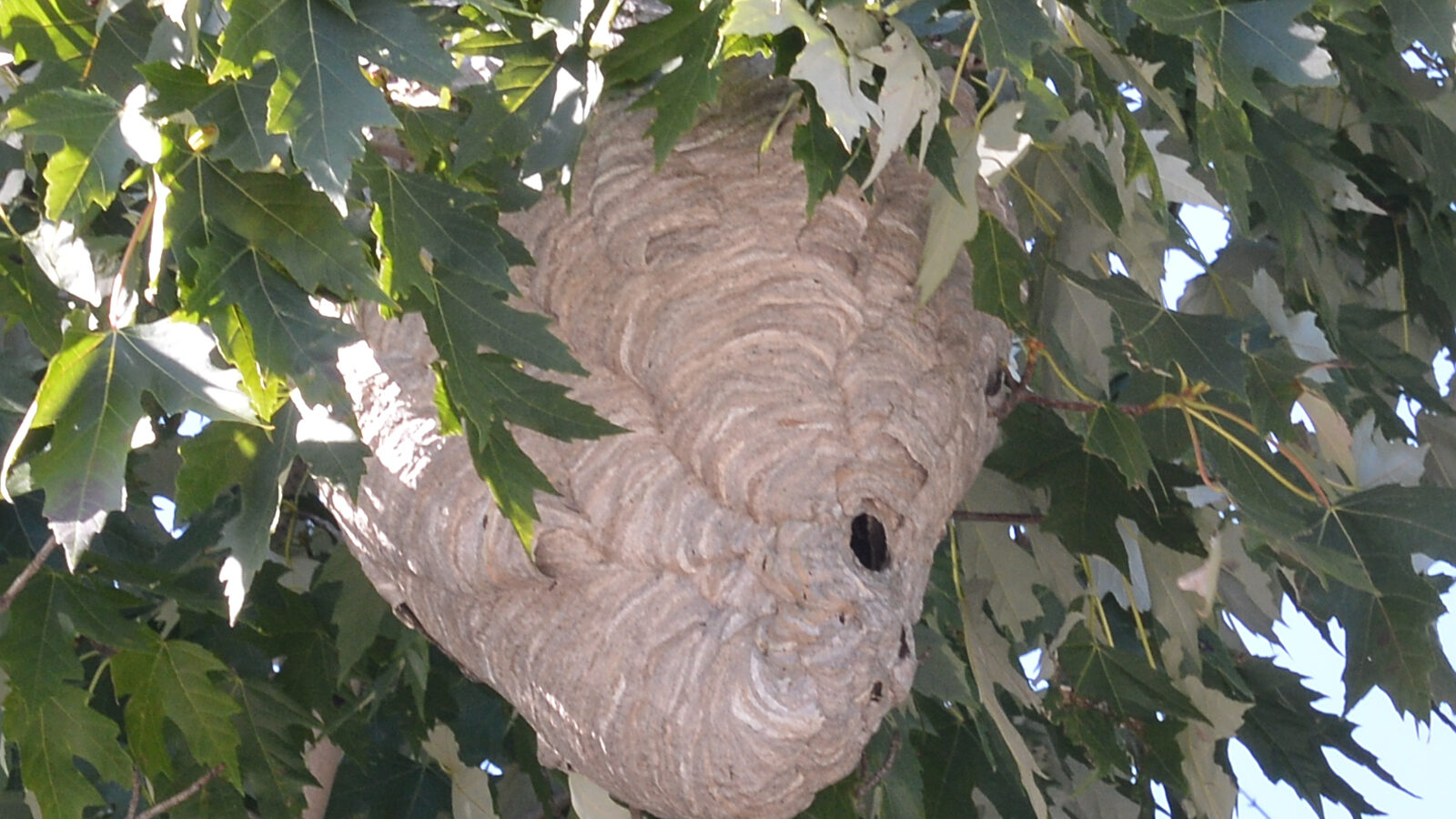
The grey papery football hanging in a tree or under a gable is a bald-faced hornet nest, and by late summer it can hold several hundred workers that defend it aggressively and from a considerable distance. South Jersey also has European hornets, which nest in cavities, fly at night, and are genuinely startling at a lit window. Acorn Wildlife removes both.
Short answer: Hornet nests are removed at the nest, in protective gear, with the approach matched to the species: bald-faced hornets build the exposed aerial nest everyone recognises, while European hornets nest inside hollow trees, wall voids, and soffits. Neither is a do-it-yourself job once the nest is established.
Which Hornet Do You Have?
Short answer: A closed grey papery ball with a single entrance near the bottom and no visible cells is a bald-faced hornet nest. A large brown-and-yellow hornet flying at night, often bumping a lit window, is a European hornet, and its nest is hidden in a cavity rather than hanging in the open.
Bald-Faced Hornet
Black with a striking white face and white markings. Builds the exposed grey ball in trees, shrubs, under eaves and gables. Highly defensive within several feet of the nest.
European Hornet
Large, brown and yellow, up to about an inch and a half. Nests in hollow trees, wall voids, attics, and soffits. Active after dark and attracted to lights.
The Nest Shape
A closed envelope with one entrance hole. If you can see open cells from underneath, it is a paper wasp, not a hornet.
Season
Nests grow through summer and are at their largest and most defended in late summer and early autumn, which is when most are noticed.
Despite the name, the bald-faced hornet is technically a yellowjacket rather than a true hornet, which matters only in that it behaves like one: fast, defensive, and willing to sting repeatedly. The European hornet is New Jersey's only true hornet. Both are worth respecting.
Why This One Is Not a DIY Job
We are usually happy to tell homeowners which jobs they can reasonably handle themselves. This is not one of them, and the reasons are specific rather than dramatic.
Bald-faced hornets defend a perimeter around the nest rather than just the nest itself, and they will pursue. They can sting repeatedly. The nests are almost always overhead, which means a ladder, and a ladder is where this goes wrong: the injuries that matter in stinging-insect incidents are usually falls. A canned spray fired upward from the ground at a nest ten feet up mostly returns to the person holding the can.
European hornets add their own problem, because the nest is inside a cavity you cannot see. Treating the opening does not reach the colony, and sealing it while the colony is alive pushes them through the wall the same way yellow jackets come through. If they are in a wall or attic, the job needs someone who works in those voids routinely.
How Acorn Removes a Hornet Nest
Identify and Locate First
Species and exact nest position decide the approach, so both get confirmed before anything else. For European hornets that means tracing the cavity, because the entrance and the nest are rarely the same place.
Timing and Protective Gear
Work is done when the colony is least active, typically at dusk or after dark when foragers are home, in full protective equipment. Night timing is particularly relevant for European hornets, which forage after dark, so their schedule is the reverse of everything else.
Removing the Nest Itself
Exposed aerial nests are taken down once the colony is dealt with, rather than left hanging. An abandoned nest is not reused, but it stays a visible worry and can shelter other insects, and most people would rather it were gone.
Closing Cavity Nests
For hornets in a wall, soffit, or attic, the entry point is sealed and repaired after the colony is out. That is the same exclusion work we do for wildlife, and it carries the same warranty. A hollow that suited a hornet colony will suit the next thing that comes looking.
The Honest Note
A bald-faced hornet nest high in a tree at the back of the property, well away from the house and any path, is genuinely doing more good than harm: they are predators that spend the summer clearing other insects, and the colony dies with frost. We will tell you when that is the case. The nest under your gable, over the back door, is a different conversation.
Hornet Removal Near You
Hornet FAQs
How close can I safely get to a bald-faced hornet nest?
Something big and brown is hitting my window at night. Is that a hornet?
Do hornets reuse last year's nest?
Is a hornet sting worse than a wasp sting?
Can you remove the nest the same week?
Grey Papery Nest Under Your Gable?
Same-week service, the species identified before anyone climbs, full protective gear, and cavity nests sealed afterwards.