Home › Wildlife Exclusion › Attic Insulation Replacement
Contaminated insulation · Removal & sanitizing · R-value restored
Attic Insulation Replacement in South Jersey
Insulation that has had animals living in it is not insulation any more. It is compacted, soiled, tunnelled through, and often holding droppings and urine, and it has lost much of the R-value you are paying to heat and cool your house through. Acorn Wildlife removes contaminated attic insulation and replaces it, as the last step of a job that starts with getting the animals out.
Short answer: Contaminated insulation is removed, the attic is cleaned and sanitized, and new insulation is installed to current depth recommendations. The order matters: this is the final step after removal and exclusion, because new insulation in an attic that is still open is money spent on the next animal's bedding.
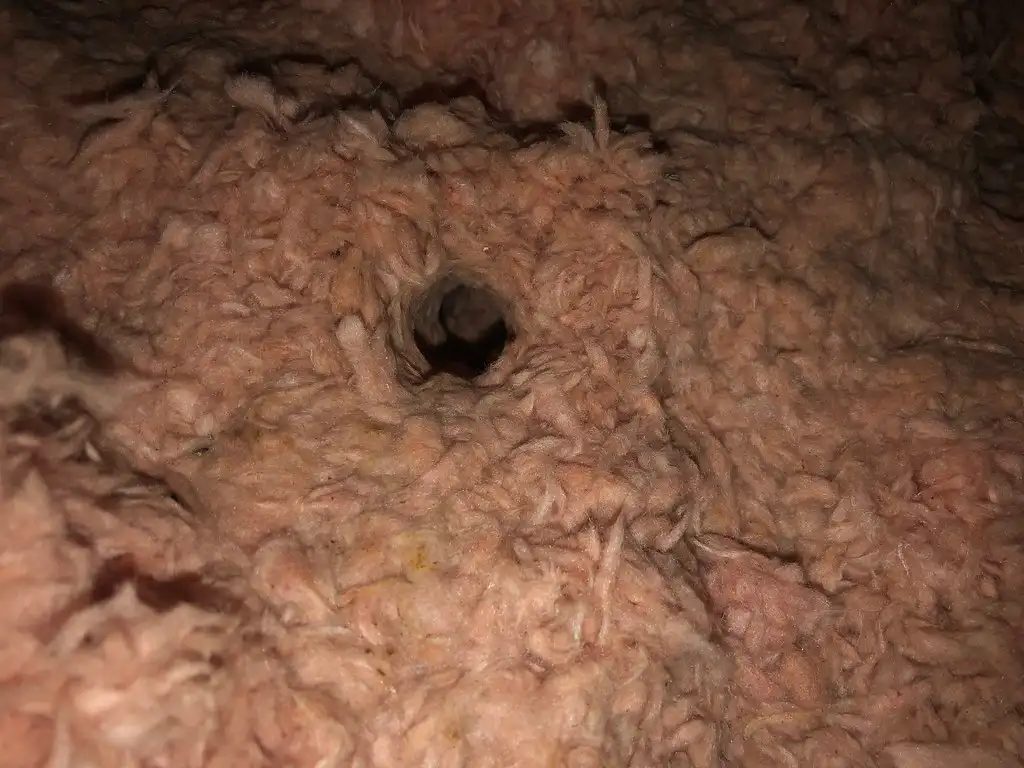
How Animals Destroy Insulation
Short answer: Three ways at once. They compress it by travelling and nesting in it, which destroys the trapped air that does the insulating; they soil it with droppings and urine; and they tunnel through it, leaving channels that let heat straight past.
Compaction
Insulation works by trapping air. Matted, flattened insulation along runways and around nests has lost most of its R-value even where it looks intact.
There is a comfort symptom that brings a lot of people to this before they ever see the attic: rooms that will not hold temperature, a system that runs constantly in August, and bills that have crept up without explanation. An attic that has housed a squirrel colony for a few years can be substantially down on its original performance, and most homeowners have never been up there to see why.
Do the Steps in the Right Order
This is the part we care most about, and it is where we most often disagree with what a homeowner has already been quoted. Replacing insulation in an attic that still has an open entry point, or still has animals in it, is wasted money. New insulation is warm, clean, undisturbed nesting material, and it will be occupied.
The correct order is: get the animals out, seal every entry point, then remove the contaminated material, sanitize, and only then insulate. Any company willing to blow new insulation into an attic without first confirming the envelope is closed is selling you a product rather than solving the problem.
That sequence is why this service sits with us rather than with an insulation contractor. The removal and exclusion are the hard part and they come first. Cleanup and sanitizing are covered on our attic cleanup and sanitization page, and insulation replacement is the step after that.
How Acorn Replaces Attic Insulation
Assess What Is Actually Up There
Not every attic that has had animals needs a full replacement, and we will tell you when it does not. Localised contamination around one nest site can sometimes be dealt with without stripping the whole attic. Widespread droppings, a bat colony, a raccoon latrine, or years of rodent tunnelling are a different matter.
Remove and Contain
Contaminated material is removed under containment with appropriate protective equipment and disposed of properly. This is the part homeowners should not attempt themselves: disturbing dried droppings, particularly bat guano, is precisely the activity that creates an inhalation risk.
Clean, Treat, and Sanitize
The attic deck is cleaned, droppings and nesting debris removed, and surfaces treated to deal with odour and scent marking. This is what stops the attic advertising itself to the next animal.
Confirm the Envelope Is Closed
Before anything new goes in, we verify every entry point is sealed, including the ones nobody has used yet. Fresh insulation is an investment and it should not be laid over an open soffit return.
Install to Current Depth
New insulation is installed to current recommended depth for our climate zone, which is considerably more than most South Jersey homes built before the 1990s were given. Baffles are kept clear so soffit ventilation still works, because an attic that cannot breathe develops a moisture problem, and moisture is what starts the wood damage that lets the next animal in.
The Honest Note
Where wildlife damage is involved, homeowners insurance sometimes contributes to attic remediation and sometimes does not, depending on the policy and the animal. We document the damage with photos as a matter of course so you have what you need to ask the question, but we will not tell you what your policy covers.
Insulation Replacement Near You
Insulation FAQs
Does insulation always need replacing after animals?
Can I just add new insulation over the top?
Is the mess in my attic actually a health risk?
Will this actually lower my energy bills?
Do you do the animal removal and the insulation, or do I need two companies?
Insulation Ruined by Whatever Was Living Up There?
One inspection covering the animals, the entry points, and the attic, with the insulation replaced only once the envelope is properly closed.