Home › Wildlife Removal › Ant Control
Carpenter ants · Moisture & wood · Entry sealing
Ant Control in South Jersey
Most ant calls are a nuisance. Carpenter ant calls are a building problem, because they excavate galleries in wood that is already damp and they are usually telling you about a leak you did not know you had. Acorn Wildlife handles ants across South Jersey with the same instinct we bring to wildlife: find where they are getting in, find what is drawing them, and fix the structure.
Short answer: Ant control starts with identifying the species, because a carpenter ant in a damp sill and a pavement ant on a patio are entirely different problems. Carpenter ants mean finding the moisture and the damaged wood. Nuisance ants mean finding the trail and the entry point. Both end with sealing the way in.
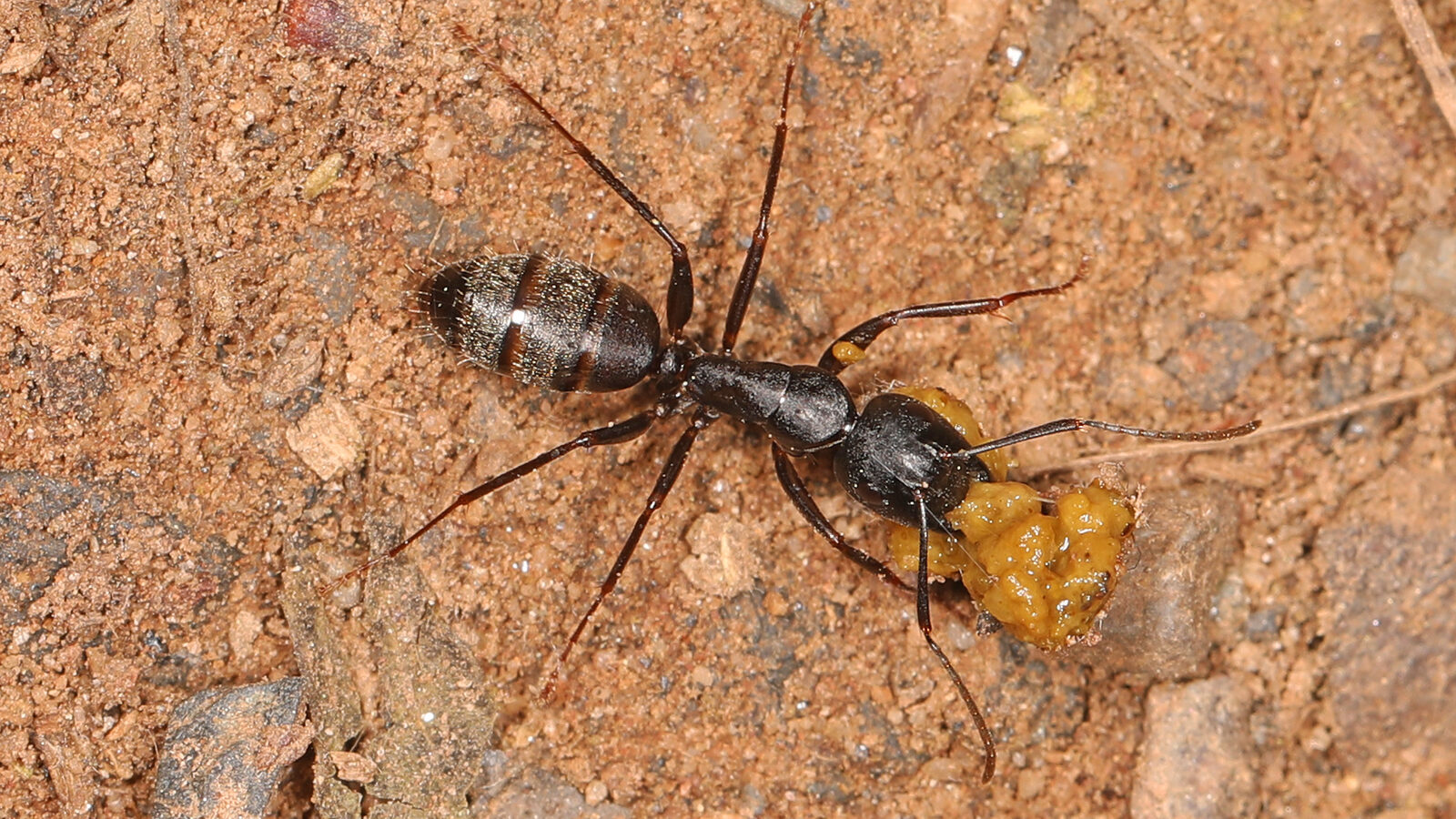
Which Ant Are You Dealing With?
Short answer: Big black ants, a quarter inch or more, especially at night and especially near a window, door, or roofline that has ever leaked, are carpenter ants and they deserve attention. Small ants trailing along a counter or patio edge are a nuisance problem: annoying, but not structural.
Carpenter Ants
Large, mostly black, often seen at night. They do not eat wood, they hollow it out to nest in, and they choose wood that is already damp or decayed.
The Sawdust Tell
Small piles of what looks like pencil shavings, sometimes with insect parts mixed in, below a wall void, window frame, or sill. That is excavated wood pushed out of a gallery.
Winged Swarmers Indoors
Winged ants inside in spring usually mean a nest inside, not outside. It is the single most useful sign a homeowner can report to us.
Nuisance Ants
Pavement ants, odorous house ants, and the rest. Trails to a food source, nests under slabs and in the yard. A real annoyance, not a threat to the structure.
The distinction changes everything about the plan, which is why we will not quote an ant job over the phone without at least a photo. Treating a carpenter ant problem as a trail-and-bait nuisance job leaves the nest and the wet wood exactly where they were.
Carpenter Ants Are Really a Moisture Story
Carpenter ants do not eat wood; they excavate it to make galleries, and they strongly prefer wood that is already softened by moisture. That single fact is why a carpenter ant call is worth taking seriously, and why treating the ants alone is only ever half the job.
The nest sites we find most often in South Jersey homes tell the same story every time: a sill plate under a long-term window leak, a rim joist behind a failed gutter, fascia and roof sheathing under an ice-dam or flashing leak, a porch column standing in water, and the wall below a bathroom or kitchen that has been weeping quietly for years. Wherever the ants are, water got there first.
This is the same diagnostic we run for crawl space wildlife and for every exclusion job: the animal or the insect is the symptom, and the building condition is the problem. We would rather tell you about the leak than sell you an annual contract that treats the ants over and over.
How Acorn Handles an Ant Problem
Identify the Species
First, because everything downstream depends on it. Carpenter ant, nuisance ant, and the occasional termite mistaken for an ant all get sorted at the inspection. Termites are not our work, and if that is what you have we will tell you plainly and point you to a termite contractor.
Find the Nest, Not Just the Trail
Ants you see are foragers, and they may be a long way from the nest. We trace trails back, check the moisture-damaged wood, and use the sawdust and swarmer evidence to work out whether the nest is inside the structure or outside in a tree or stump with the house as a feeding ground. The answer changes the treatment entirely.
Treat the Colony
Treatment is directed at the colony and the galleries rather than sprayed along the visible trail, because killing foragers does nothing to a nest that keeps producing them.
Fix the Wood and Seal the Way In
This is the half that lasts and the half we are actually specialists in. Damaged wood gets identified, the moisture source gets called out, and the entry points get sealed: gaps at the sill, utility penetrations, failed caulk lines, and the roofline and soffit gaps we already close for wildlife exclusion. Repairs carry the Seal-Tight Warranty.
The Honest Notes
We are not a general pest control company and do not sell quarterly spray programs, so if what you want is a recurring contract we are the wrong call. What we do is find the nest, deal with it, and fix the conditions that produced it. We also do not treat termites, bed bugs, or cockroaches, and we will say so on the phone rather than at your kitchen table.
Ant Control Near You
Ant FAQs
Are carpenter ants as bad as termites?
I see a few big black ants indoors in winter. Does that mean a nest inside?
Will store-bought spray around the baseboards fix it?
Do you spray for ants on a schedule?
How do I tell a carpenter ant from a termite swarmer?
Big Black Ants and Sawdust on the Sill?
Same-week inspection, the species identified, the nest found rather than the trail treated, and the wet wood that caused it called out.