Home › Groundhog Trapping › Marlton
Humane trapping · Burrow closure · Buried barriers
Groundhog Trapping in Marlton, NJ
In Marlton's sandy ground, groundhog burrows go deeper and longer than anywhere else we trap: the digging is easy, the field edges are close, and a burrow that starts at the fence line ends up under the shed by July. Here's how trapping and closure work in this soil.
Short answer: Acorn Wildlife live-traps Marlton groundhogs with covered, daily-checked traps, then excavates and closes the burrow with buried mesh barriers trenched deep for sandy soil. Field edges near the Black Run Preserve and the open commons of Kings Grant keep the town's burrow pressure steady from March to October.
The notes here are Marlton's. The full trapping playbook and burrow science are on our groundhog trapping in South Jersey page, and the rest of our local services start at wildlife removal in Marlton.
Easy Digging on the Pine Barrens Edge
Length is the practical problem. In heavy clay a burrow tends to stay compact; in Marlton sand a groundhog extends tunnels season after season, adding exits as it goes. We've traced systems here that started at a split-rail fence and surfaced under a shed forty feet away, with three exits between. That's why a Marlton closure job begins with mapping every hole before any trapping starts, and why we probe along fence lines and shed skirts the homeowner hasn't checked. Gardens take the visible hit, a groundhog eats more than a pound of vegetation a day, but the burrows themselves are the lasting damage.
Short answer: Groundhogs prefer well-drained soil at a field edge, and Marlton is practically built from that sentence: sandy Pine Barrens-edge ground, mowed commons and detention basins in Kings Grant, and yard-to-woods transitions in Marlton Lakes and along the Greentree corridor. Burrow systems here commonly run twenty feet or more.
The Marlton Season to Watch
March, first. Marlton groundhogs emerge from hibernation as the sandy ground warms, earlier than in colder clay towns, and post-hibernation males dig hard. Then July and August, when the year's pups disperse from preserve-edge burrows and every juvenile needs a territory. If a burrow appears beside your shed in midsummer, it's almost always a dispersing juvenile, and early trapping beats letting it dig in for winter.
A Recent Groundhog Job in Marlton
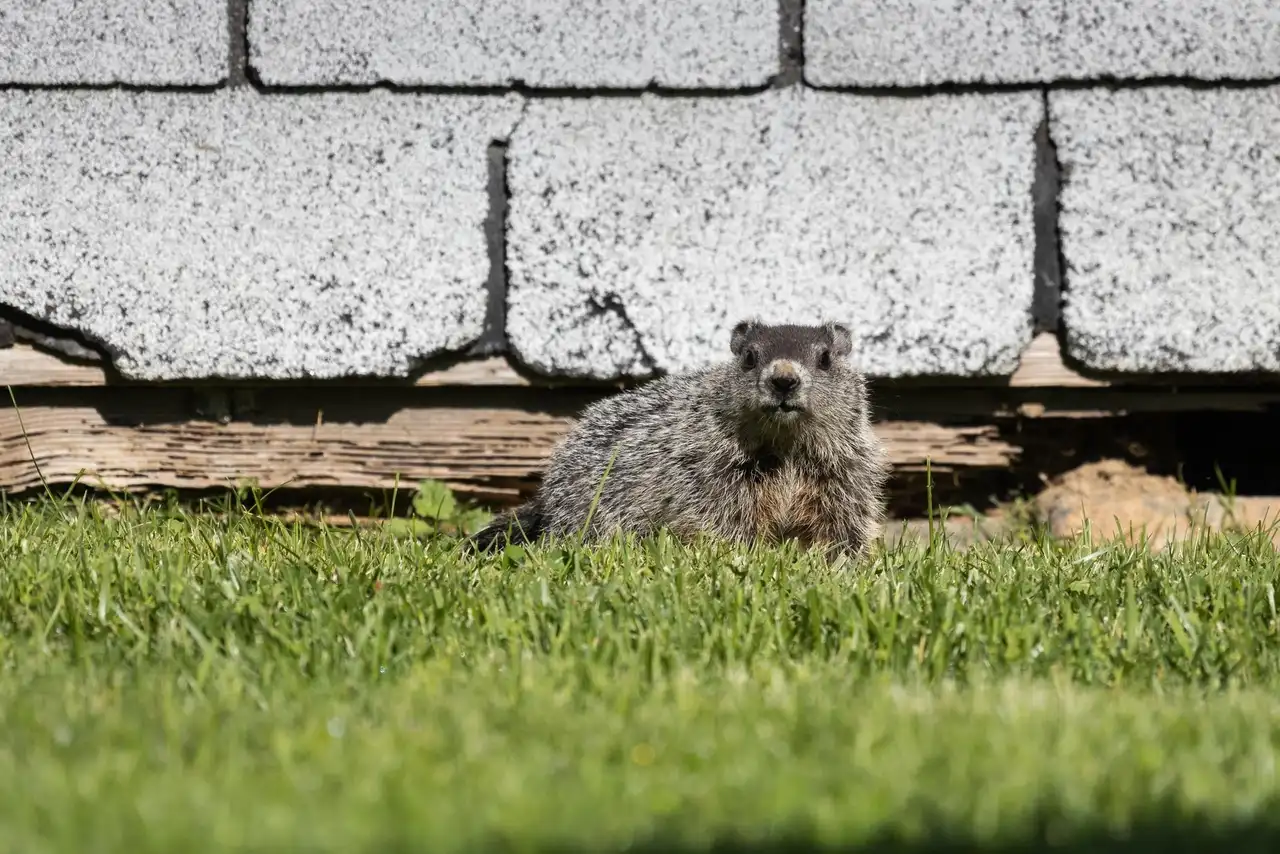
A Kings Grant property against the tree line: the owner's garden vanished in stages through June, and the shed developed a lean. Our probe found a three-exit system running from the split-rail fence to the shed slab, classic Marlton sand tunnel. Covered traps at two exits, cantaloupe and apple, adult female by day two, and a camera check confirmed no pups, mid-July, dispersal age. We collapsed and packed all three tunnel legs, then trenched an L-shaped mesh footer around the shed, eighteen inches down because sand demands the extra depth.
Free · No obligation
Every Acorn Job Starts With a Free Inspection
Before we quote a dollar of work, a licensed technician walks the whole property — roofline, soffits, vents, chimney, the full foundation line, the attic or crawl space, the decks and the yard — and finds every opening an animal is using, plus the ones it would use next. It takes as long as it takes: often an hour, sometimes two. There is no charge for the visit.
✓ Free whether or not you hire us
✓ No call-out fee, no minimum, no signature on the day
✓ Every entry point photographed and shown to you
✓ A written quote priced off what was actually found
Ready to Close the Burrow in Marlton?
Every exit mapped, humane trapping, sand-depth barriers that hold.