Home › Wildlife Removal › Animal in the Chimney
No smoke, ever · Humane removal · Capped for good
There's an Animal in Your Chimney: Don't Light a Fire
Before anything else: do not light a fire, and don't open the damper. Chimney animals in South Jersey are usually a raccoon mother with kits on the smoke shelf, chimney swifts glued to the flue wall, or a squirrel that fell in and can't climb out. Each has its own removal path, one of them is federally protected, and every one of them ends the same way: with a proper cap. Acorn Wildlife handles all of it.
Short answer: Never smoke an animal out of a chimney: it kills babies that can't climb and can drive a panicked adult into your house. Acorn Wildlife identifies the animal by sound, removes raccoon families and stuck squirrels by hand, waits out federally protected chimney swifts when the law requires it, and installs a stainless cap so it never happens again.
Why You Should Never Light a Fire to Drive an Animal Out
We put this section first because it's the most common bad advice on the internet, and we've been called to houses where it went wrong in every direction at once: dead kits on the smoke shelf, a soot-covered raccoon loose in a kitchen, and a nest fire that scorched the flue tiles. Keep the damper closed, skip the fire, and figure out what you're dealing with. The sounds tell you.
Short answer: Smoke and heat rise faster than most chimney animals can escape. Baby raccoons and swift nestlings physically cannot climb out, so a fire kills them in the flue, and a panicked adult may bolt down through the damper into your living room. You also risk igniting a nest and starting a chimney fire.
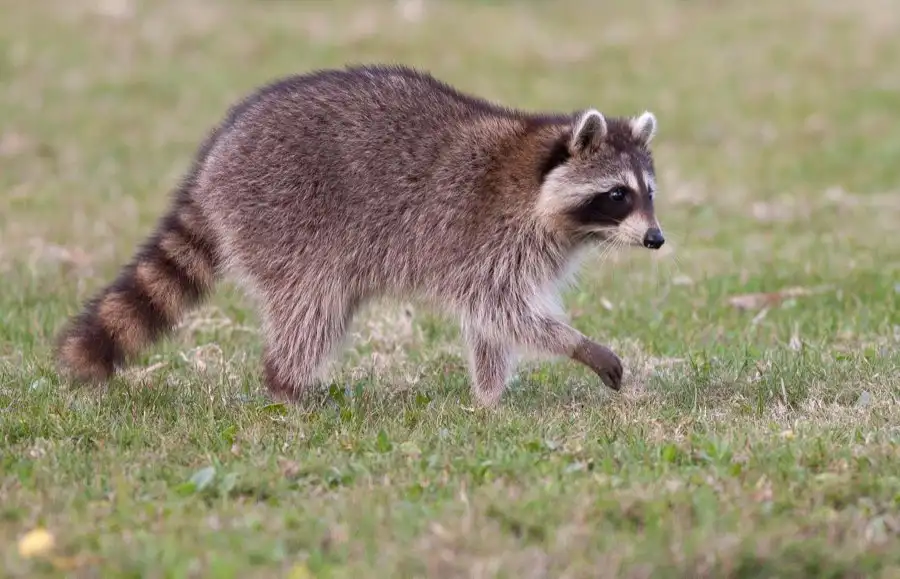
Chittering and Rustling (Spring)
Almost always a raccoon mother with kits denned on the smoke shelf, the ledge just above your damper. The chirping-cooing sound of kits is unmistakable once you've heard it. See raccoon removal.
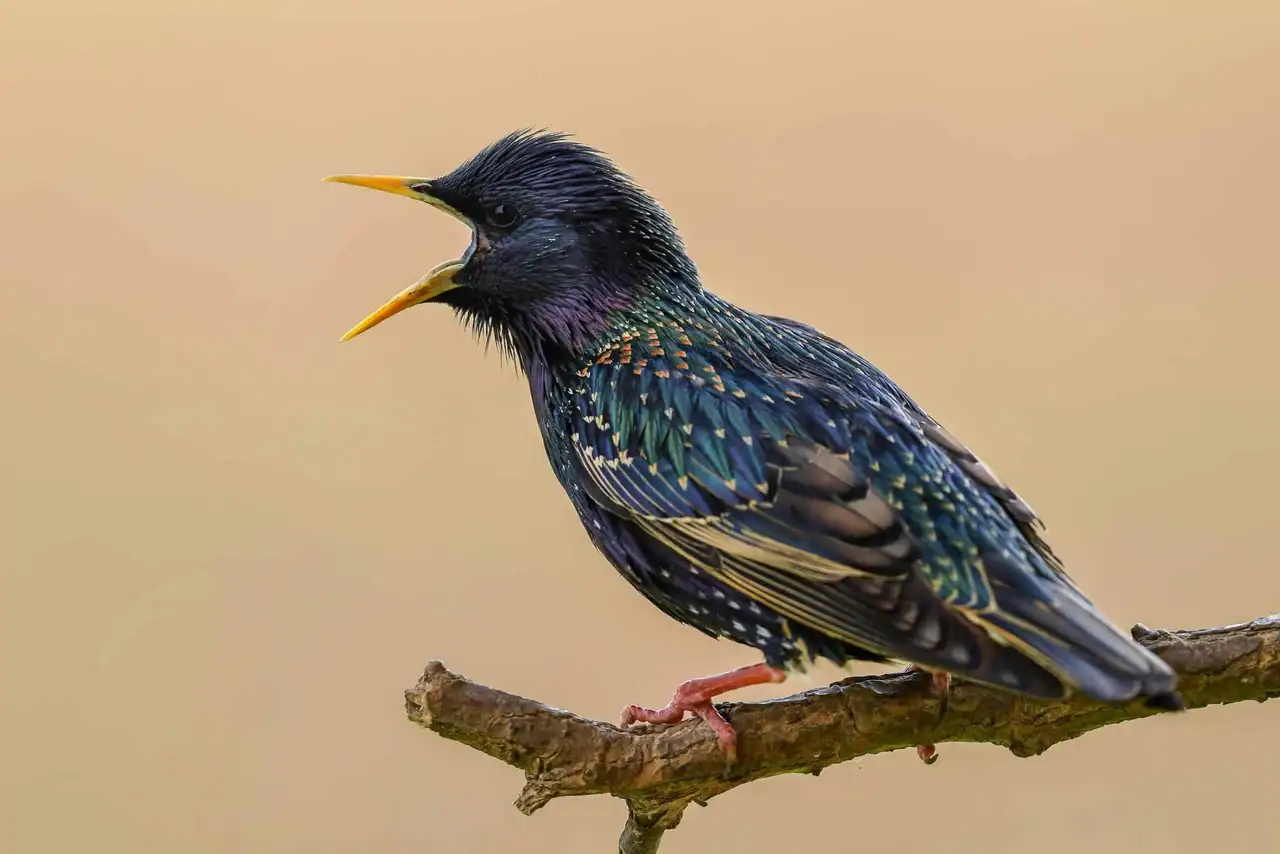
Loud Mechanical Chattering (Summer)
Chimney swifts: small, federally protected birds whose nests are glued to the flue wall. The whole flue erupts in chatter when a parent arrives with food. See bird removal.
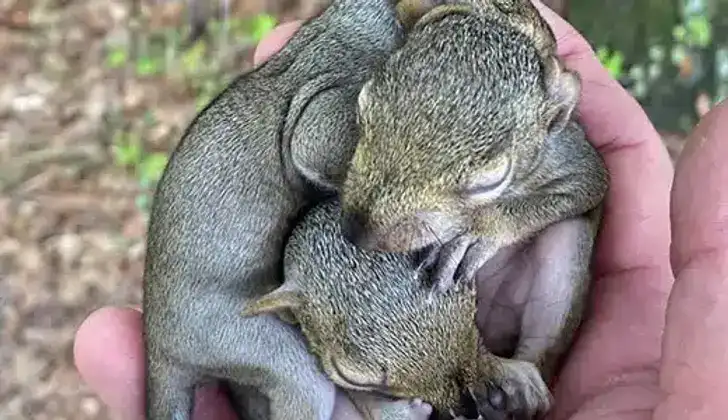
Frantic Scratching (Anytime)
A squirrel that fell in and can't climb the slick flue tiles back out. This is an emergency for the animal; it will exhaust itself within a day or two. Same-day call. See squirrel removal.
Raccoon Mothers Love Chimneys. Here's How We Remove Them
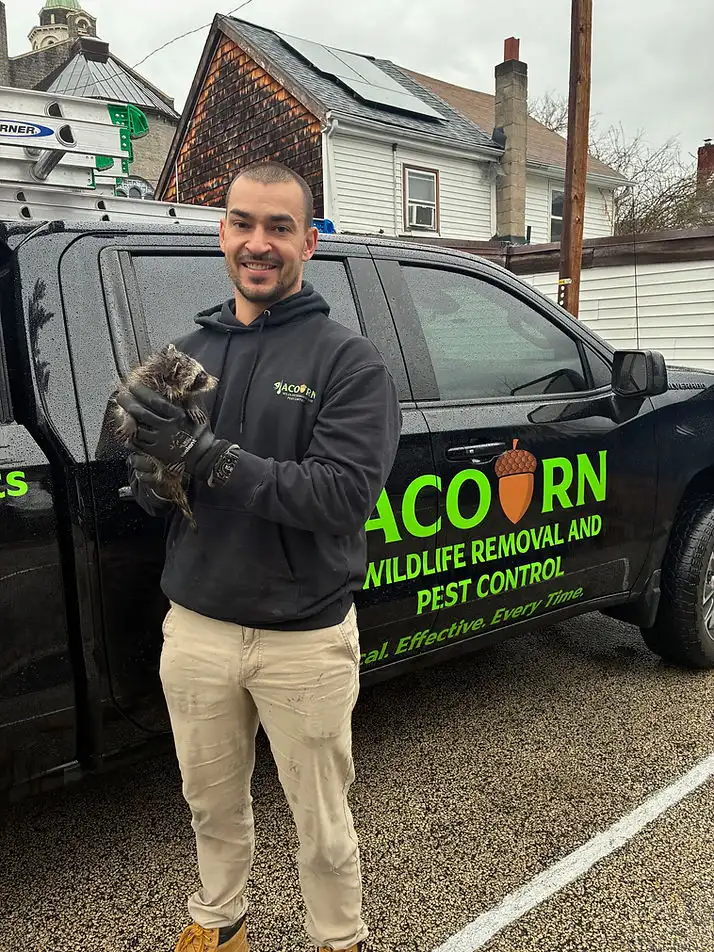
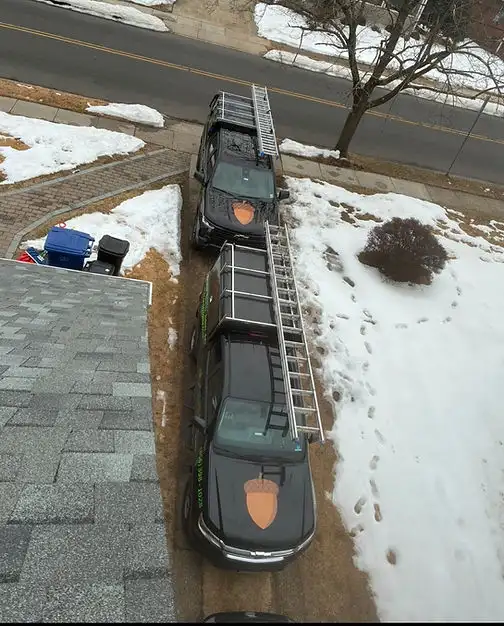
The removal itself is careful, unglamorous work: kits are lifted from the smoke shelf by hand or with a chimney-adapted retrieval tool, staged securely at the base of the house, and the mother relocates them one by one to her backup den, which she always has. It takes a night, sometimes two, and it's the only version of this job we'll do. Trapping the mother off the roof and leaving kits in the flue turns your fireplace into a dead animal odor problem inside two weeks, and it's cruel besides. New Jersey also tightly restricts relocating raccoons as a rabies-vector species, which is one more reason this is a job for a licensed operator (NJDEP #92411B), not a rented trap.
Chimney Swifts: The Honest Version
We know that's not the answer anyone wants to buy, and plenty of companies will happily sell you something illegal instead. Here's what waiting actually looks like: swifts nest inside the flue, one nest per chimney, and the noisy phase (that loud mechanical chattering at feeding time) lasts about two weeks before the young fledge and the family moves on for good in late summer. We can inspect to confirm it's really swifts, close the damper so nothing ends up in your living room, and schedule the cap install for the week they're gone. Swift populations have declined for decades partly because capped chimneys removed their habitat, so if you're feeling generous, hosting them for a month is a real contribution. If you're not, the cap still goes on in September either way.
Squirrels That Fall in, and How the Job Ends: A Proper Cap
A squirrel scratching in a flue is genuinely stuck: the tile is too slick to climb and the animal will exhaust itself fast. We treat these as same-day calls, lowering a knotted rope or retrieval tool so it can climb out, or lifting it out by hand from the firebox when it has dropped past the damper. No fire, no waiting, no charge for drama.
Then comes the part every chimney story shares. Whatever the animal was, the fix is the same: a stainless steel cap with mesh sides, sized and anchored to your flue, installed the day the chimney is confirmed empty. It ends raccoon dens, swift nests, and squirrel falls permanently, and it keeps rain and leaves out as a bonus. Specs, materials, and pricing are on our chimney cap installation page, part of our full wildlife exclusion service. Cap installs carry the Acorn Seal-Tight Warranty.
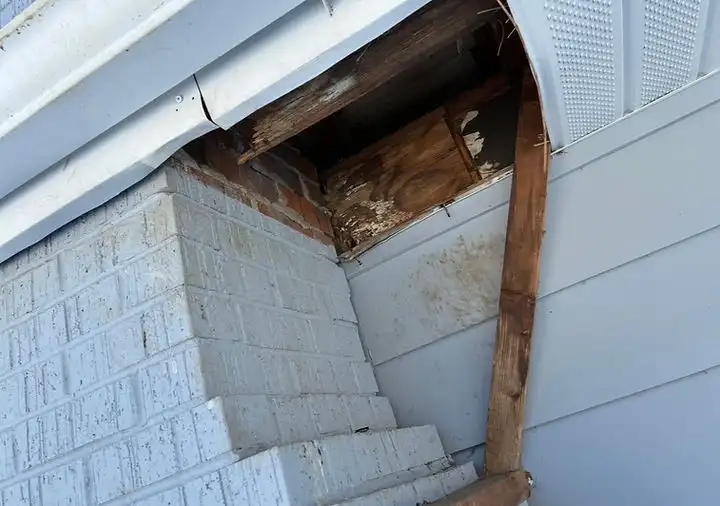
Every chimney job ends with steel: a mesh-sided cap anchored to the flue.
Free · No obligation
Every Acorn Job Starts With a Free Inspection
Before we quote a dollar of work, a licensed technician walks the whole property — roofline, soffits, vents, chimney, the full foundation line, the attic or crawl space, the decks and the yard — and finds every opening an animal is using, plus the ones it would use next. It takes as long as it takes: often an hour, sometimes two. There is no charge for the visit.
✓ Free whether or not you hire us
✓ No call-out fee, no minimum, no signature on the day
✓ Every entry point photographed and shown to you
✓ A written quote priced off what was actually found
Ready for a Quiet, Capped Chimney?
Free same-week inspection, humane removal, stainless cap install. No smoke, no shortcuts.