Identification
Scratching in the Ceiling at Night? Here's How to Tell What It Is
By Brandon Stein, NJDEP-Licensed Wildlife Control Operator · 8 min read
Short answer: Scratching in the ceiling at night is usually mice, rats, flying squirrels, or a raccoon. Scratching at dawn and dusk is usually gray squirrels. Note the time, the weight of the sound, and where it moves. Those three details identify the animal correctly in most of the calls Acorn Wildlife takes.
When someone calls Acorn Wildlife in Cherry Hill, NJ about a noise in the ceiling, we ask three questions before anything else: what time do you hear it, how heavy does it sound, and does it move or stay in one spot? Those three answers identify the animal correctly far more often than a photo of the roof does. This post walks you through the same questions so you can narrow it down tonight, from your bed, with your phone as a voice recorder.
What time are you hearing it? Start there.
Time of night is the single most reliable clue. Gray squirrels are active at dawn and dusk and sleep through the night. Mice, rats, and flying squirrels are truly nocturnal, busiest between roughly 10pm and 4am. Raccoons are nocturnal too, but they sound like a person crawling, not a scurry.
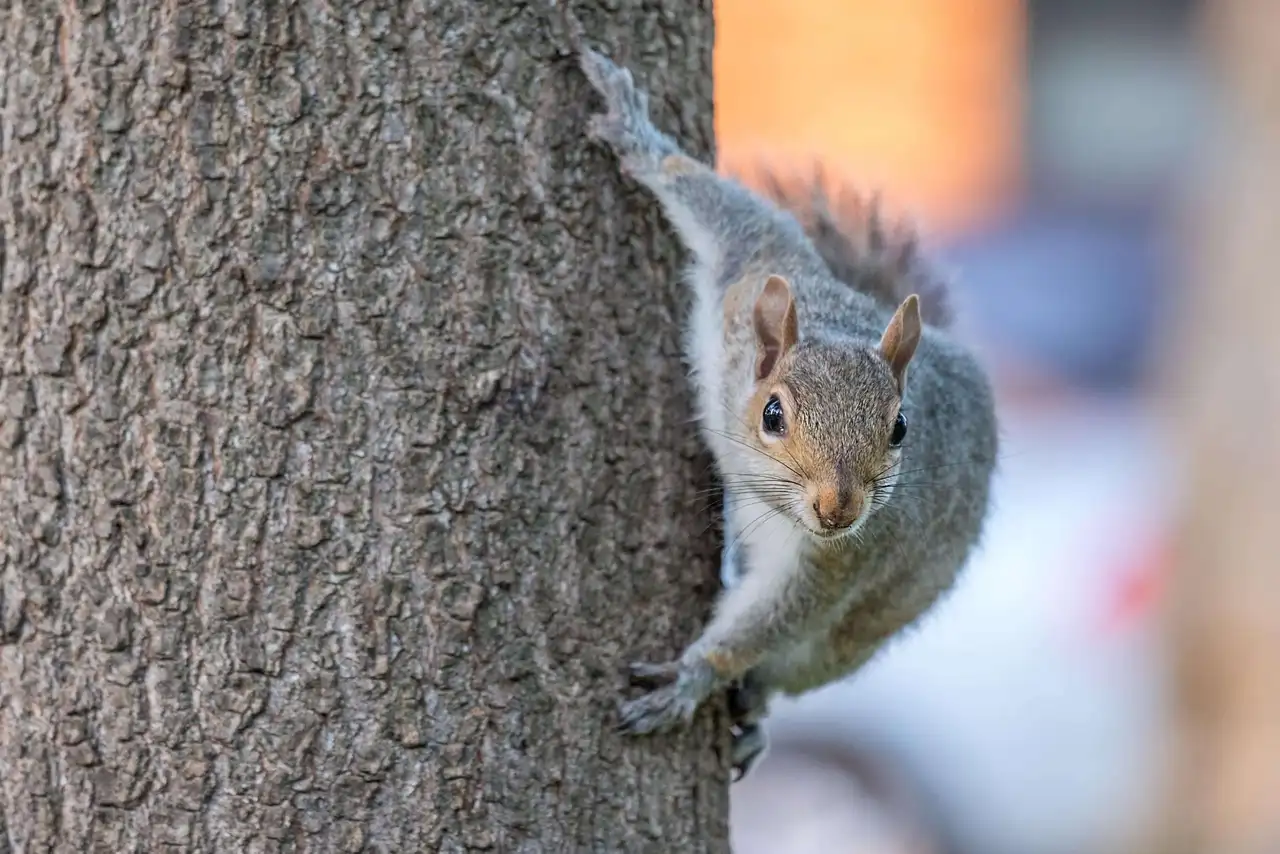
Here is what that means in practice. If the scratching wakes you at 2am, you can almost rule out gray squirrels. They are in their nest asleep at 2am, the same as you are trying to be. If instead the ceiling erupts right around first light, 5:30 to 7am, and again in the last hour before dark, that schedule is classic gray squirrel: they leave to forage at dawn and come home at dusk, and the racket is loudest at the commute times.
| When you hear it | What it sounds like | Most likely animal |
|---|---|---|
| Dawn (5:30–8am) and dusk | Fast scampering, rolling (nuts), gnawing | Gray squirrel |
| 10pm–4am, light and fast | Scratching, skittering, soft landing thumps | Flying squirrels or mice |
| 10pm–4am, constant light scratching | Gnawing, papery rustling in one area | Mice or rats |
| After dark, slow and heavy | Thumping, dragging, walking you can track | Raccoon |
| Daytime chirping plus flutter | Wing beats, baby birds begging | Birds in a vent or soffit |
| Dusk in summer, high-pitched | Chirping, crawling in a wall top plate | Bats |
What does 2am scratching actually sound like?
At 2am the house is silent, so light animals sound bigger than they are. Mice make a thin, dry scratching, like a fingernail on cardboard, usually in one spot near a wall edge. Flying squirrels make sudden soft thumps and marble-rolling sounds as a group of them lands and chases. Rats are heavier and slower, with audible gnawing.
Mice and rats
Rodent noise is small, persistent, and localized. You will hear scratching or gnawing that goes on for minutes in the same square yard of ceiling, often near an exterior wall or a corner. Gnawing is the giveaway: a rhythmic, gritty rasp, sometimes on wood, sometimes an unnerving scrape on metal or plastic pipe. Mice sound like whispering paper. A Norway rat sounds like a mouse that hit the gym: the same kind of noise, but you can feel a little weight behind it.
Flying squirrels
Southern flying squirrels are the great impostor of South Jersey attics because they are colonial and fully nocturnal. The signature is activity in bursts: a soft thump as one lands after a glide, then several seconds of fast chase scampering, then silence, then again. People describe it as marbles rolling or kids running, at midnight, in winter. If your night noise involves several animals at once, think flying squirrels before you think mice. We wrote a full guide to identifying flying squirrels in New Jersey.
Raccoons
A raccoon in the attic does not scurry. An adult female weighs 10 to 20 pounds, and the sound is a slow, deliberate thump... thump... drag. You can often follow her path across the ceiling with your finger. Vocal sounds seal it: chittering, growls, or, in spring, the unmistakable bird-like chatter of kits. If your ceiling sounds like a person crawling, it is a raccoon until proven otherwise.
And what about the dawn shift?
Dawn noise is the gray squirrel's alibi, and it is very consistent. From roughly first light, you get five to twenty minutes of energetic scampering, the rolling sound of nuts or acorns being moved across drywall, and sharp bursts of gnawing. Then it stops almost completely for the day, because the squirrels have left the attic to forage. The evening version runs in reverse in the hour before dark. If your noise follows sunrise as the seasons shift (earlier in June, later in December), that is a diurnal animal, and in a South Jersey attic that means squirrels. Squirrels chew constantly because their incisors never stop growing, which is why we treat squirrel removal in South Jersey as an urgent job, not a someday job: the things they gnaw include wiring.
When could it honestly be either?
We will be straight with you: sound alone does not always settle it. Rats and flying squirrels overlap badly, both nocturnal, both light, both fast. A juvenile raccoon can sound like a squirrel. A squirrel that gets trapped in a wall void will scratch frantically at any hour, breaking the schedule rule completely. And a mother squirrel with a late-winter litter will sometimes move around at night, because babies do not respect anyone's sleep, hers included.
When the sound is ambiguous, the tiebreakers are physical evidence: droppings (size and location), entry holes (a 1.5 to 2 inch chewed circle points to squirrels, a dime-size gap to mice, a torn soffit to raccoons), and smell. That is exactly what an inspection is for. Acorn Wildlife includes a full attic and exterior inspection with every job, so you are not paying us to guess from the driveway.
What should you do tonight?
You can gather most of the evidence we need without leaving your bedroom. Do these four things over the next 24 hours and you will have a strong ID, or at least a strong shortlist, before anyone climbs a ladder.
- Record the noise on your phone with a timestamp. Ten seconds of audio at 2:14am tells us more than a paragraph of description.
- Write down every time you hear it for one day: exact times, not "at night."
- In daylight, walk the outside of the house and look up: chewed holes at the roofline, torn soffit panels, staining under gable vents, droppings on the ground below.
- Do not seal anything yet. Sealing an animal inside turns a noise problem into a dead animal or chewed-out-of-the-wall problem.
Why you should not just wait it out
Attic noise almost never resolves itself, because the animal is not visiting. It is living there. Squirrels and rodents gnaw wiring and wood, raccoons compress insulation and build latrines, and every week of residency adds cleanup cost. There is also a calendar problem: from roughly March through June, and again in late summer for squirrels, the animal in your ceiling is often a mother with young, which changes how removal has to be done. Identifying the animal early keeps your options open and the job smaller.
Could scratching at night just be the house settling?
Houses tick and pop as framing expands and contracts, but that sound is random and does not move. Animal noise has direction, rhythm, and a schedule. If it travels across the ceiling or repeats at the same time daily, it is alive.
Why is the noise louder in winter?
Cold pushes mice, rats, and flying squirrels indoors, and a quiet, closed-up house carries sound better. Squirrels also spend more hours in the den in winter. More animals, more hours, less background noise.
How fast can Acorn identify what it is?
Usually within one inspection. We check the attic for droppings, trails, and nest material, and the exterior for entry points. Call or Text (856) 398-1028 and we will schedule it, inspection included with the job.
Related: Animals in the Attic · Scurrying vs. Rolling vs. Flapping: Attic Sounds Decoded · Squirrels in the Attic in New Jersey: Signs, Risks, and What to Do