Species Guides
Big Brown vs. Little Brown Bats in NJ Attics
By Brandon Stein, NJDEP-Licensed Wildlife Control Operator · 9 min read
Short answer: The bat colony in a South Jersey attic is almost always big brown bats, a hardy building-roosting species that often hibernates in structures. Little brown bats, once the common attic bat, lost over 90 percent of their NJ hibernating population to white-nose syndrome. The species matters because big browns require winter-aware exclusion planning.
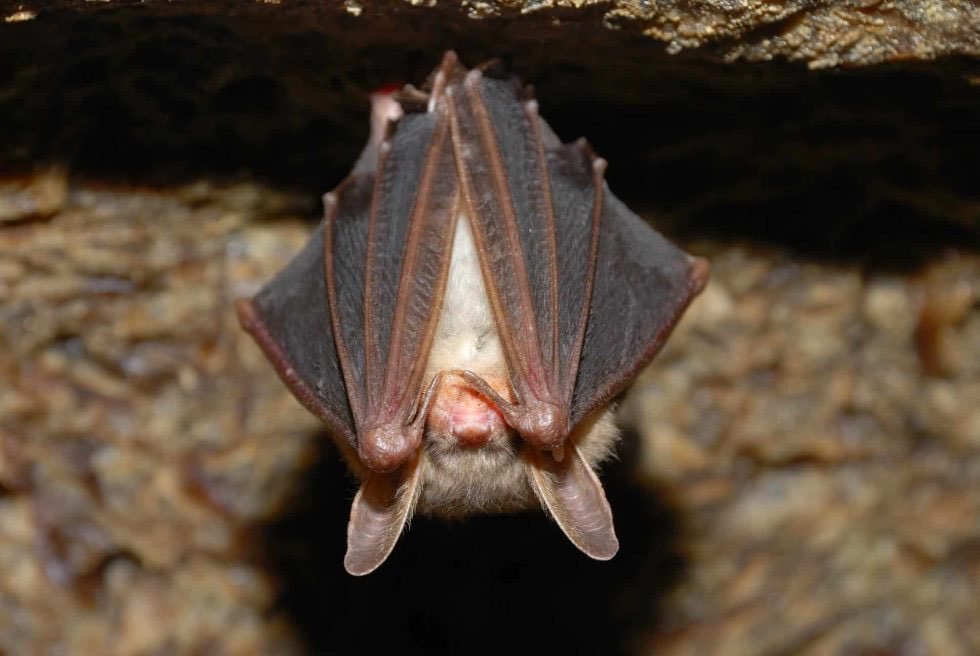
When Acorn Wildlife inspects an attic colony anywhere in Camden, Burlington, Gloucester, or Mercer counties, the species question has two realistic answers, and one of them has become rare enough to be a surprise. This guide covers both bats properly: how to tell them apart, how each uses your house across the year, what the law protects, and why the species changes the exclusion plan.
Which bat is actually in my attic?
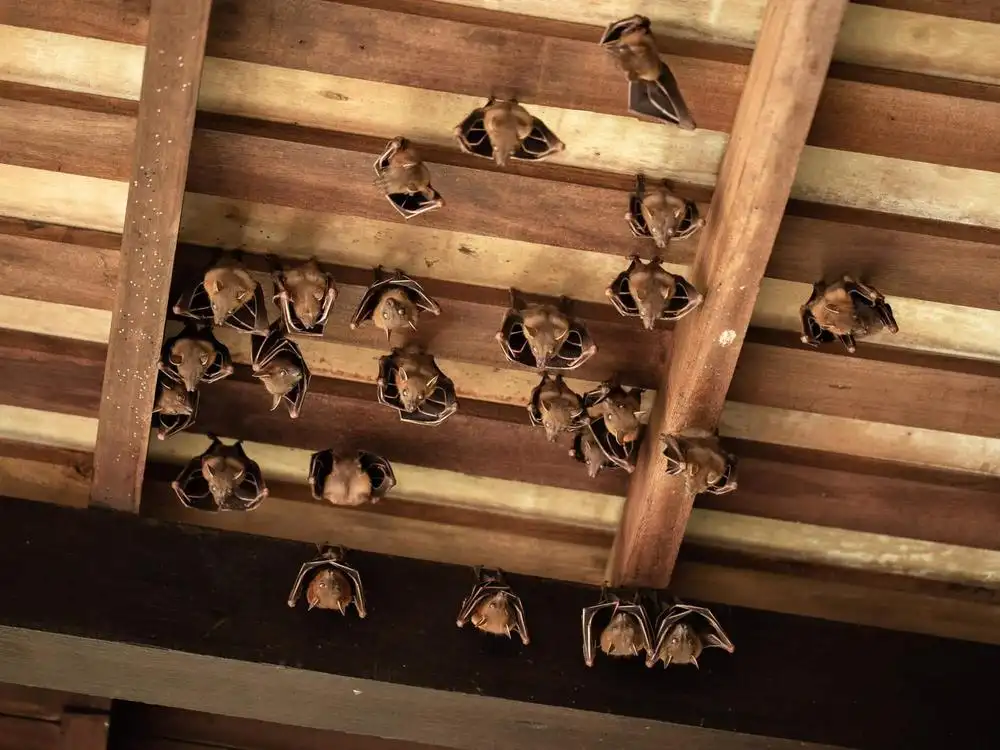
Statistically, big browns. The big brown bat is the dominant building-roosting bat in New Jersey today: large (12 to 16 inch wingspan), cold-tolerant, and loyal to structures year-round. The little brown bat, historically the classic attic bat, has become an uncommon find since white-nose syndrome collapsed its population.
Size separates them in the hand and roughly at the roost. A big brown runs 4 to 5 inches of body and weighs about as much as three quarters; a little brown is closer to 2.5 to 3.5 inches and weighs about as much as one. In practice, homeowners rarely get a clean look, so we identify from evidence: droppings size, roost location, season of activity, and exit counts at dusk.
The evidence differences
- Big brown droppings are noticeably larger (about rice-and-a-half size) and shinier with insect fragments
- Winter activity in the structure points to big browns; little browns leave to hibernate in caves and mines
- Big browns tolerate hot gable ends and cold wall voids; little browns favor tight, hot maternity spots
- A colony discovered in January inside a wall is essentially always big browns
- Exit counts: little brown maternity colonies historically ran large; modern attic colonies of 20 to 60 are typical big brown numbers
What happened to the little brown bat?
White-nose syndrome happened. The fungal disease, first documented in New York caves in 2006 and confirmed in New Jersey by 2009, kills hibernating bats by repeatedly waking them and burning their winter fat. NJDEP surveys of the state's hibernation sites documented declines exceeding 90 percent for little brown bats within a few years.
That collapse rewired attic wildlife work in one decade. Little browns went from the default attic species to a special case, and every bat interaction picked up conservation weight: the bats that remain matter more, individually, than they ever have. It is also why the big brown, which hibernates in buildings and rock crevices rather than the infected cave environment, weathered the epidemic far better and now dominates the calls we run. When a little brown colony does turn up, we treat it as the conservation event it is, and the exclusion planning gets extra care around timing and alternative roosts.
How do the two species use a house across the year?
A big brown colony can occupy a structure in all four seasons: females form maternity colonies in spring, pups are born in June, everyone forages from the roost through summer, and a portion of the colony often hibernates in the same building's walls or attic from November to March. Little browns use buildings mainly as summer maternity roosts and leave for winter.
The pup calendar is the legal calendar. Pups born in June cannot fly for several weeks, which is why New Jersey's exclusion blackout covers roughly May 1 through July 31, with the working window running August 1 to about October 15. Both species share that summer schedule. Where they diverge is winter: a little brown roost empties itself by November, but a big brown building may never be fully empty, and that fact drives the plan in the next section.
What does the law protect, exactly?
All bats in New Jersey are protected nongame wildlife: no lethal control, no poisons (none exist legally for bats anywhere in the U.S.), and no exclusion during the maternity blackout. The little brown bat carries additional state conservation status since white-nose syndrome, and the northern long-eared bat, occasionally found in NJ structures, is federally endangered.
For homeowners, the practical meaning is simple: the only legal removal method is properly timed one-way exclusion, and the only legal season for it is the fall window (with a narrow early-spring possibility in some years, weather depending). Anyone offering to fumigate, poison, or same-day-seal a bat colony is describing an illegal act that will also fail. We put that bluntly because people deserve to know it before comparing quotes.
Why does the species change the exclusion plan?
Because big browns hibernate in buildings. A fall exclusion executed late, after cold weather starts, can lock hibernating big browns inside the walls, where they die or emerge into living spaces on warm winter days. Species identification during inspection is what tells us how hard the fall deadline really is for your specific house.
The plan differences in practice: for a confirmed big brown building, we front-load the work into August and September, verify with repeated dusk counts that the roost has fully emptied before final sealing, and inspect wall voids for hibernation sign. For the now-rare little brown roost, the colony departs on its own by late fall, so the sealing can safely finish later, and we coordinate timing so the returning colony finds the building closed in spring rather than being displaced mid-season. Acorn Wildlife in Cherry Hill, NJ builds this species logic into every bat removal in South Jersey, with the inspection included, dusk-count evidence attached to the quote.
What about droppings, health, and cleanup?
Both species produce guano that accumulates below the roost, and the health questions are identical: undisturbed guano mostly sits there, while dry disturbance aerosolizes it, and the CDC associates disturbed droppings accumulations with Histoplasma exposure. Cleanup belongs after exclusion, with containment, HEPA filtration, and protective equipment.
- Never sweep or shop-vac dry guano; that is the exposure route
- Guano is distinguishable from mouse droppings: it crumbles to shiny insect fragments when crushed with a gloved finger
- Accumulations under a roost map the colony location for the inspector, so photograph before cleanup
- Any bat found in a room with a sleeping person means calling the county health department per CDC rabies guidance
- Most bats are healthy; the protocols exist for the exceptions
Does the species change what I pay?
Indirectly. Price follows roofline complexity, entry count, and colony size more than species, but a big brown building that needs winter-aware verification and wall-void inspection carries more verification work than a summer-only roost. The dusk counts that come with our quote are the same either way.
I found one bat flying in the house in February. What is it?
Almost certainly a big brown woken from hibernation inside your walls by a warm spell, which is diagnostic: little browns are in caves in February. Contain it, do not release it if anyone was sleeping in the room (health department first), and book an inspection: a winter bat usually means a winter roost.
Are bat houses a good idea after exclusion?
As a landing spot, yes: a properly mounted bat house gives a displaced colony a local alternative, which is good for the bats and for the neighborhood's insect control. As a removal method, no; colonies do not voluntarily leave an attic for a box. We cover that myth fully in a separate post.
How many bats does my attic actually hold?
Dusk counts answer it: typical South Jersey big brown colonies run 20 to 60 animals, though older colonies can exceed 100. A 30-minute exit count on two calm evenings gives a solid number, and it is the number that sizes the exclusion, the netting, and the cleanup quote.
Could my colony be something other than these two species?
Occasionally. Evening bats and northern long-eared bats turn up in NJ structures rarely, and the northern long-eared's federal endangered status changes the handling requirements immediately. This is one more reason inspection precedes every quote: the species sets the rules.
If something is exiting your gable end at dusk, Call or Text (856) 398-1028. Acorn Wildlife will identify the species, count the colony, and build the exclusion plan around the right calendar, with every step documented.
Related:Bat Removal in South Jersey · South Jersey Bat Removal: April Is the Last Chance Before the Blackout · Bat Exclusion Cost Explained