Comparisons
Chimney Caps vs. DIY Screening: What Keeps Animals Out
By Brandon Stein, NJDEP-Licensed Wildlife Control Operator · 7 min read
Short answer: A properly fastened stainless chimney cap beats DIY screening for anything with hands or persistence: raccoons pry, squirrels chew, and weather destroys improvised mesh within a few seasons. DIY screening can be adequate on a rarely-used flue against birds alone. Either way, never cover a flue until you have confirmed nothing is living inside it.
Bias on the table: Acorn Wildlife in Cherry Hill, NJ installs chimney caps as part of exclusion work, so we profit when this comparison favors the professional option. We have kept the DIY case honest, because there is one, and flagged the single mistake that makes either option dangerous, because it puts animals and homeowners at real risk every spring.
Why is an open chimney such a reliable animal entry?
An uncapped flue is an 8-to-13-inch vertical door, warm, sheltered, and hollow, which reads to wildlife as a hollow tree, the most valuable den structure in any forest. Raccoon mothers in particular treat open flues as premium maternity dens, and chimney swifts, a federally protected bird, nest in open masonry flues across South Jersey every summer.
The chimney also fails differently from other entry points: animals fall in as often as they move in. Squirrels and screech owls misjudge the opening, drop past the damper ledge, and cannot climb the slick tile liner back out. Those calls are urgent, the animal is exhausted and audible in the firebox, and every one of them was preventable by a cap. Add the non-animal benefits, keeping out rain that spalls masonry and embers that exit, and capping is one of the rare upgrades where the wildlife argument is only the third-best reason to do it.
How do a fitted cap and DIY screening compare?
The fitted cap wins on attack resistance, lifespan, and code-friendliness; the DIY screen wins on price, and only holds where the attacker is a bird and the fastening is better than most DIY fastening. The table is the honest scorecard from the repairs we run.
| Factor | Fitted stainless cap | DIY hardware cloth screen |
|---|---|---|
| Cost installed | $300–700 typical single flue, roof height matters | $20–50 materials, your ladder time |
| Stops raccoons | Yes, when bolted or clamped to the flue tile | Rarely; pried or torn off |
| Stops squirrels and birds | Yes | Birds yes; squirrels eventually chew or pry |
| Stops bats | Yes, with proper mesh sizing | Only if edges seal tight; usually they don't |
| Survives weather | Stainless lasts decades | Galvanized mesh degrades; wind works fasteners loose |
| Draft and spark safety | Designed for airflow and ember control | Improvised; can choke draft if mesh too fine |
| Warranty | Ours is covered under exclusion warranty | None |
When is DIY screening genuinely good enough?
DIY screening holds up when three things are true: the target is birds and falling debris rather than raccoons, the flue is on a low roof you can work on safely, and you fasten mechanically rather than with adhesive or gravity. A half-inch hardware cloth wrap, clamped to the flue tile with a stainless band clamp, is a legitimate two-year solution on a rarely used flue.
We will even give you the spec, since half of DIY failure is materials: use half-inch galvanized or stainless mesh, not window screen, which clogs with soot and chokes draft, and not chicken wire, which raccoons open barehanded. Leave 6–8 inches of mesh height above the flue for airflow, band-clamp the base, and inspect it every fall. If your chimney is two stories up on a steep roof, the math changes before the animal even arrives; a roof fall is a far worse outcome than any wildlife problem, and this stops being a sensible Saturday project.
What makes the fitted cap worth 10x the price?
Fastening and engineering. A quality cap bolts or band-clamps to the flue tile, presents no free mesh edge to pry, sizes its mesh for draft and ember control, and shrugs off decades of weather in stainless. The raccoon that removes a DIY screen in one night has nothing to grab on a properly installed cap.
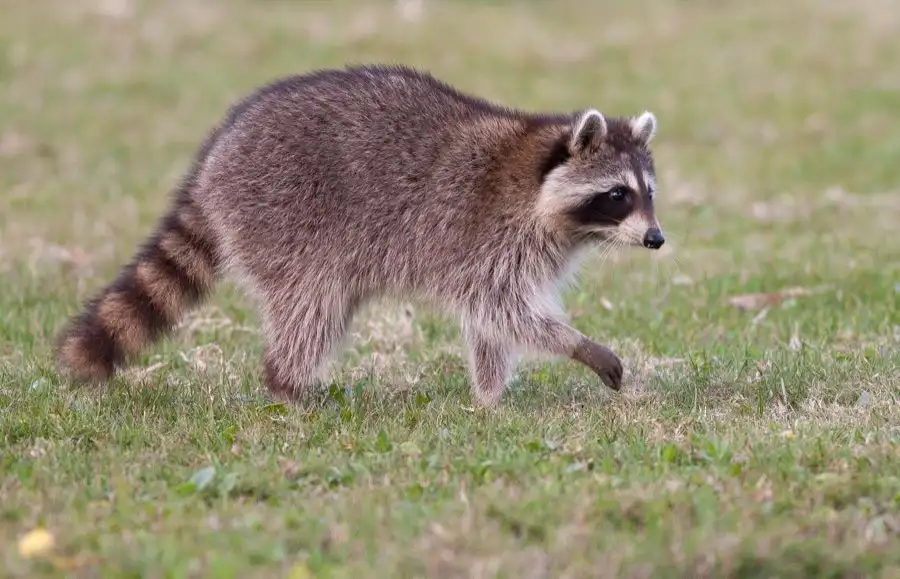
Prying force is the number that matters. An adult raccoon weighs 15–25 pounds and applies it with dexterous hands that open latched coolers and trash cans; any cover that merely rests, sticks, or staples on is a puzzle, not a barrier. The failed DIY screens we replace fail at the edges, peeled back like a sardine lid, almost never through the mesh itself. A cap converts that edge into a bolted joint. On multi-flue chimneys, a full-coverage multi-flue cap often costs less than capping each flue separately, which is worth asking about no matter who does the work.
The one rule that outranks the whole comparison
Never cover a flue until you have confirmed it is empty. Every spring we get calls where a cap or screen was installed over an active den, sealing a raccoon family or a swift nest inside the chimney. Now there are frantic or dying animals in the flue, a legal problem if the species is protected, and eventually a dead animal odor in the living room.
Confirming empty is harder than shining a phone light down from the top. Raccoon kits sit on the smoke shelf behind the damper, invisible from above and below; chimney swift nests are palm-sized cups glued to the flue wall. Our protocol before any cap goes on: full-length flue inspection, listen for chittering (raccoon kits sound like birds to most people), and in spring, treat every chimney as occupied until proven otherwise. Chimney swifts add a legal layer: they are protected under the Migratory Bird Treaty Act, so an active nest means the cap waits until the young fledge, usually a few weeks, and we tell homeowners exactly that even when they would rather not hear it.
This is also why capping is bundled into our chimney cap installation service rather than sold as a drive-by accessory: the inspection before the cap is most of the value. If an animal is in residence, removal comes first, then the cap goes on the same week so the vacancy never gets advertised.
There's something in my chimney right now. Cap or removal first?
Removal first, always. Capping an occupied flue traps the animal. If you hear movement or chittering above the damper, keep the damper closed, do not light a fire, and call. Raccoon mothers with kits are the most common spring case. Call or Text (856) 398-1028.
Can I just keep the damper closed instead of capping?
A damper protects your living room, not your chimney. Animals still den on the smoke shelf above it, rain still enters the flue, and a raccoon on the wrong side of a damper is exactly as loud as you imagine. The damper is a good second line, not a substitute.
Will a cap hurt my fireplace draft?
A properly sized cap does not meaningfully affect draft, and by keeping out nest debris it usually improves it over time. What hurts draft is fine window-screen mesh sooting shut, which is a DIY-materials mistake rather than a cap problem.
Do gas flues and B-vents need animal protection too?
Yes, and they get overlooked. B-vent and furnace flue terminations admit birds and bats, and a nest in a combustion flue is a carbon monoxide risk, not just a wildlife issue. Purpose-made caps exist for those terminations; generic screening is not appropriate on them.
Should smoking or lighting a fire be used to clear a chimney?
No, never. Smoke does not give animals an exit path they can use; it kills kits on the smoke shelf and can drive a panicked adult into the house. It is also illegal where the occupant is a protected species like a chimney swift. Removal is a hands-on job.
Get the flue checked, then covered, in that order
Whether you buy our cap or clamp on your own mesh, get the inspection first and the cover on before the next denning season. Acorn Wildlife in Cherry Hill, NJ handles the inspection, the removal if one is needed, and a warrantied stainless cap if you want it. NJDEP license #92411B. Call or Text (856) 398-1028.
Related: Chimney Cap Installation · Do Bat Houses Help Solve Bat Infestations? · Trapping vs. One-Way Doors