Species Guides
Getting Flying Squirrels Out of a South Jersey Attic: A Colony Removal Guide
By Brandon Stein, NJDEP-Licensed Wildlife Control Operator · 9 min read
Short answer: Flying squirrel removal is colony work: southern flying squirrels den communally, often 6 to 20 animals, entering through gaps as small as a nickel. Ending an infestation means verifying every entry at dusk, excluding the whole colony with one-way devices, and sealing the entire roofline in steel, not just patching the obvious hole.
We keep a full identification guide to New Jersey's flying squirrels (northern versus southern, life cycle, damage signs), linked at the bottom of this post. This companion guide answers the question that follows identification: how do you actually get a colony of flying squirrels out of an attic, and keep them out?
The answer is different from gray squirrel work in almost every step, because the southern flying squirrel, the species in virtually every South Jersey case, is the only squirrel here that lives communally. Remove it like a solo animal and you fail. Here is the colony playbook Acorn Wildlife runs, start to finish.
Why is flying squirrel removal a different job?
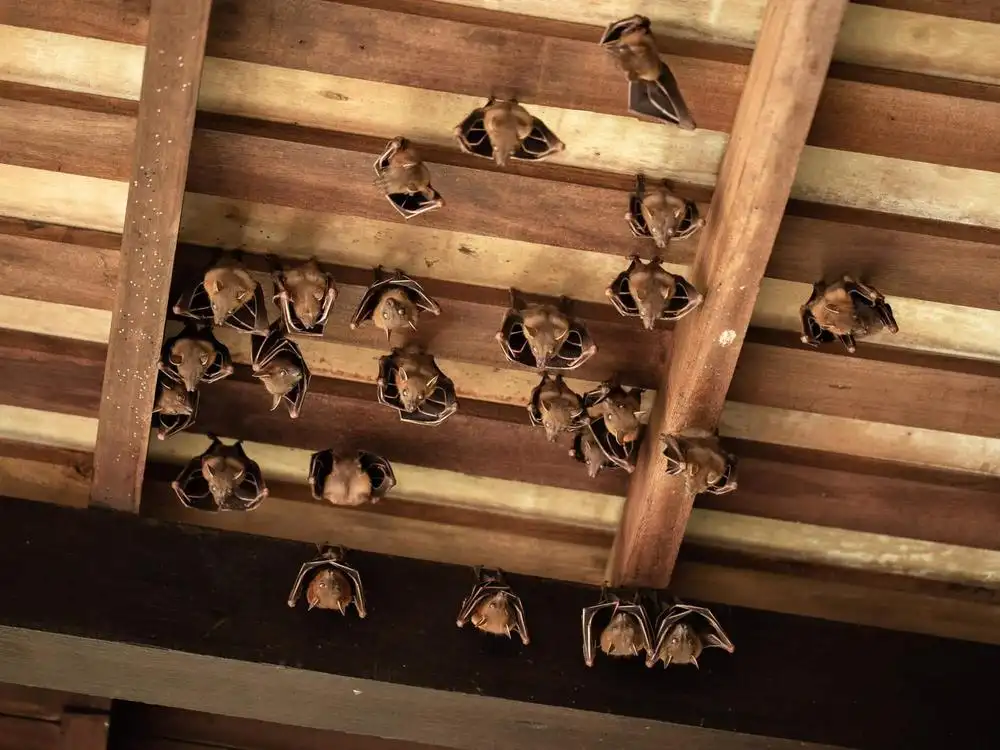
Three species facts change the work. Flying squirrels den in groups, with winter aggregations of 6 to 20 animals common in one attic. They fit through openings as small as a nickel, roughly half what a gray squirrel needs. And they are strictly nocturnal, so all verification happens at dusk and by evidence, never by daytime observation.
Each fact has a job consequence. Colony living means a one-way door on a single hole evicts some animals while the rest keep using entries you have not found; partial exclusions are why homeowners tell us the problem "came back" after another company left. The nickel-sized entry standard means the inspection has to treat gaps that look laughably small as doors: knot holes, ridge-vent end plugs, flashing corners, the gap where a cable enters the fascia. And nocturnality means the noise signature (fast, light skittering and marble-rolling sounds between roughly 10 p.m. and 4 a.m.) is often the only sign for months, while droppings quietly accumulate at latrine corners.
How do you confirm the colony before any exclusion?
Confirmation is a two-part protocol: an attic inspection reading the evidence (latrine corners, gnawed nut caches, insulation tunnels, a distinctive musky odor), then a dusk emergence watch on the roofline to count animals and map every active entry. We do not mount hardware until the count and the entry map agree.
The dusk watch is the step homeowners can preview themselves: sit where you can see the suspect roofline starting at full dark and watch for 45 minutes. Flying squirrels emerge fast and glide to nearby trunks; even seeing two or three tells you it is a colony operation. Inside, the latrine habit separates flyers from mice: flying squirrel colonies concentrate droppings in shared corners, sometimes decades deep in older homes, where mouse droppings scatter along routes. In several Haddonfield and Moorestown attics we have inspected, the latrine, not the noise, was what finally identified a colony that had been misdiagnosed as mice for years.
How does a colony exclusion actually run?
The exclusion sequence: seal every potential entry except the two or three the colony actively uses, mount one-way exclusion devices on those, leave them working for several nights so every animal exits for its nightly foraging and cannot re-enter, verify zero activity with a follow-up dusk watch, then remove the devices and seal the last openings in steel.
The order is the whole trick. Sealing the passive gaps first is what makes the one-way doors decisive: the colony's only way out funnels through hardware that will not let them back. Rushing to seal everything at once traps animals inside (they die in walls, and flying squirrels can also chew back in through soft spots), while doors without perimeter sealing just redirect traffic to the next nickel-sized gap. Timing matters too: flying squirrels raise litters roughly February into April and again in late summer, so exclusions during nursing windows wait for young to become mobile or the young are removed and reunited by hand. Fall and early winter, when the colony is aggregated and every animal is flight-capable, is the cleanest season for the work, though it can be done carefully most of the year.
What does sealing a roofline against flying squirrels involve?
Flying squirrel sealing is the most detailed exclusion work we do, because the standard is a nickel: every construction gap, vent, and corner on the roofline gets metal. Half-inch hardware cloth behind gable and ridge vents, steel flashing at soffit returns and fascia gaps, chew-resistant sealant at flashing joints, and screened caps where needed.
- Ridge vents: end plugs and the full run screened from beneath
- Gable vents: hardware cloth fastened mechanically, not just caulked
- Soffit returns and roof-wall junctions: flashed in metal
- Fascia gaps behind gutters: the most-missed entry on colonial rooflines
- Utility and cable penetrations at the roofline: collared and sealed
- Nearby launch points: limbs within glide range trimmed where practical
That last item needs a flying squirrel footnote: these animals arrive by glide, commonly 20 to 30 feet from a launch trunk, so the branch-clearance rule that works for gray squirrels only reduces traffic rather than ending it. The sealing has to stand on its own, which is why we warranty it. On a typical Acorn Wildlife flying squirrel removal in South Jersey, the exclusion devices plus full roofline sealing are quoted after the inspection, with heavy latrine cleanup quoted separately when the inspection finds it.
What about the attic after the colony is out?
Post-exclusion, the attic gets assessed for three things: latrine cleanup (droppings and urine-saturated insulation at the concentrated corners), insulation repair where tunneling and caching flattened it, and odor neutralization, because scent left behind advertises a proven den site to the next colony gliding the neighborhood.
Not every job needs full restoration and we say so: a colony caught in its first season often leaves damage that amounts to spot-cleanup. Multi-year colonies are a different story, with latrines that have soaked framing and insulation across whole corners. The honest way to decide is photographs, which our inspection provides, and wildlife attic cleanup is scoped from those photographs, from spot work up to full insulation replacement. If you are weighing that decision, our attic cleanup and sanitization page breaks down what each level involves and costs, and the post below on restoration pricing gives the full numbers.
How many flying squirrels are actually up there?
In winter, more than you think: southern flying squirrels aggregate for warmth, and South Jersey attic colonies of 6 to 20 are routine, with larger ones documented. Summer counts run smaller as groups disperse. The dusk emergence count before exclusion is what turns the guess into a number.
Can I just trap them instead of doing an exclusion?
Cage-trapping a colony one animal at a time is slow, stressful for the animals, legally constrained on relocation in New Jersey, and pointless while the entries stay open, because flying squirrels re-colonize proven dens. One-way exclusion moves the whole colony in a few nights and the sealing makes it permanent.
Will they come back after the exclusion?
Not through sealed entries, and that is the point of doing the whole roofline: the colony's memory of your attic is only useful to them if a gap reopens. This is exactly the work our warranty covers, and why we photograph every sealed point so you know what is protecting you.
Are flying squirrels dangerous to my family?
Not meaningfully. They are gentle animals that avoid contact, and rabies is essentially unrecorded in them. The real issues are cumulative: latrine contamination, gnawed wiring risk shared with all rodents, and sleep disruption from a colony's night shift. It is a property problem, not a safety emergency.
Why did the noise get worse right after cold weather hit?
Aggregation. The first hard cold snap consolidates the neighborhood's flying squirrels into the best winter den available, and if that is your attic, the nightly traffic multiplies overnight. A sudden late-fall surge in midnight skittering is one of the most reliable colony indicators we know.
If your midnight skittering is starting to sound like a team sport, Call or Text (856) 398-1028. Acorn Wildlife will count the colony at dusk, map every nickel-sized entry, and move them all out through one-way doors, with the sealed roofline under warranty.
Related: Flying Squirrel Removal in New Jersey · Flying Squirrels in New Jersey: How to Identify Them · What Does Attic Restoration Cost After Wildlife?