Identification
Nests in the Soffit: Bird or Squirrel?
By Brandon Stein, NJDEP-Licensed Wildlife Control Operator · 7 min read
Short answer: Look at the opening. Birds use existing gaps and you will see grass or straw poking out, streaked droppings below, and daytime chirping. Squirrels chew their own entrance, a clean round hole 1.5 to 2 inches wide with gnaw marks, and carry leaves and insulation inside where you cannot see them.
The soffit is the busiest wildlife real estate on a South Jersey house: sheltered, elevated, warm, and usually the oldest, softest material on the exterior. When something nests in it, homeowners usually notice one of two things, straw sticking out of a gap or a hole that was not there last month. Those two sights point to different animals, different fixes, and, importantly, different legal rules. Here is how Acorn Wildlife in Cherry Hill, NJ tells the tenants apart from the driveway.
What does a bird nest in a soffit look like?
Birds exploit existing openings: a popped soffit seam, a gap at the fascia return, an uncapped vent. The tells are visible nesting material (grass, straw, feathers) bristling from the gap, dropping streaks fanning down the siding below, and traffic: adults arriving every few minutes at daybreak, chirping nestlings in spring.
In our service area the soffit birds are overwhelmingly European starlings and house sparrows, both cavity nesters that treat a soffit bay like a hollow tree. Starlings in particular pack astonishing volumes of material into a bay; we have pulled nests the size of a bed pillow out of a two-foot soffit section in Pennsauken. The problems they bring are mess (droppings stain siding and carry the same histoplasmosis concern as any accumulated bird waste), noise, blocked vents, and mites that wander into the house when nestlings fledge. One more bird worth naming: if the activity is at a bathroom or dryer vent rather than the soffit itself, with grass jammed behind the flap, that is classic starling work too, and the vent duct is now a chimney-shaped fire hazard full of dry grass.
What does a squirrel entry in a soffit look like?
Squirrels make their own door: a gnawed, roughly circular hole 1.5 to 2 inches across, often at a corner, a construction gap, or soft, water-damaged trim. Edges show paired tooth marks and fresh wood color. You rarely see nest material from outside, because the nest is deeper in the soffit bay or attic.
Squirrel evidence is subtractive where bird evidence is additive: wood removed rather than straw added. Supporting signs include dawn-and-dusk scampering overhead, gnawed acorn debris in the gutter below the hole, and a smudged, worn look at the hole's lower rim from repeated body contact. Timing matters too: gray squirrels raise litters roughly February–April and again July–September, so a new soffit hole in those windows very likely has babies behind it within weeks. That changes the removal method completely, which is why the how of squirrel removal in South Jersey is built around one-way doors and reunion timing rather than just plugging the hole. Plugging an occupied soffit is the single most expensive mistake homeowners make here: a locked-out mother will peel open a new section, and a locked-in litter becomes a dead-animal job.
| Clue | Bird (starling/sparrow) | Squirrel |
|---|---|---|
| The opening | Existing gap or vent, unmodified | Chewed round hole, 1.5–2 in, tooth marks |
| Visible material | Straw and grass poking out | Usually none visible outside |
| Below the site | Dropping streaks on siding | Gnawed nut debris, wood chips in gutter |
| Sound | Chirping, peaks early morning | Scampering and gnawing, dawn and dusk |
| Traffic pattern | Constant short trips in nesting season | Two commutes daily, out at dawn, home at dusk |
| Season | April–July nesting | Litters Feb–Apr and Jul–Sep; active year-round |
Does the law treat birds and squirrels differently?
Yes, meaningfully. Native birds, their nests, and eggs are protected under the federal Migratory Bird Treaty Act, so an active native-bird nest generally cannot be removed without a permit. Starlings, house sparrows, and pigeons are non-native and not protected. Squirrels are game animals under NJ rules, handled through legal exclusion, not poison.
Practically, that means step one is species confirmation before anyone touches a nest. Starling and house sparrow nests can be removed at any stage; a house finch or chickadee nest in the same gap cannot, until the young fledge. With squirrels, New Jersey's framework (NJ Division of Fish and Wildlife) means no poisons, and trapping comes with relocation restrictions, so professional work runs on one-way exclusion doors and sealing. If a contractor's plan for either animal is "we'll just rip it out and foam the hole," ask what species it is and what month it is. If they cannot answer both, keep dialing.
When could it honestly be either (or both)?
Soffits host serial tenants. A gap opened by squirrels in March gets inherited by starlings in May after the squirrels move to a leaf nest, and we regularly find both kinds of evidence at one opening: chewed edges and straw. Flying squirrels blur the picture too, colonizing soffit bays through smaller gaps with no daytime traffic at all, and paper wasps claim quiet bays and change the job entirely (we check before reaching in, and so should you).
The tiebreaker is a traffic watch: 20 minutes at dawn and 20 minutes at dusk, from a lawn chair with coffee. Birds show themselves constantly in daylight. Gray squirrels commute at the edges of the day. Flying squirrels appear only after full dark. No traffic at all across two days suggests the nest is old and vacant, which converts this from a removal job into a repair-and-seal job, the cheap version. Whatever you conclude, resist sealing until you have watched, because every one of these species can have flightless or furless young deeper in the bay that a traffic watch will not show you.
- Photograph the opening close enough to show tooth marks or their absence.
- Check the siding below for dropping streaks (birds) or wood chips and nut debris (squirrels).
- Run a dawn and dusk traffic watch for two days and log every arrival.
- Listen from inside the nearest room for chirping (birds) vs. scampering (squirrels).
- Do not seal anything until the species and any babies are accounted for. Call or Text (856) 398-1028 and send the photos.
The nest is old and nothing visits. Can I just clean it out?
A confirmed-inactive nest of a non-protected species can be removed with gloves and a mask (dried bird waste should not be inhaled). The important half of the job is repairing and screening the opening afterward, or you have just cleaned the unit between tenants.
Why do animals keep choosing my soffit specifically?
Soffits fail from above: clogged gutters wick water into fascia boards, the wood softens, and soft wood is an open invitation to chew or pry. Houses with mature trees within jumping distance (about 8 feet) get squirrel pressure; houses near open lawns get starling pressure. Gutter maintenance is quiet wildlife prevention.
What does Acorn actually do for a soffit nest job?
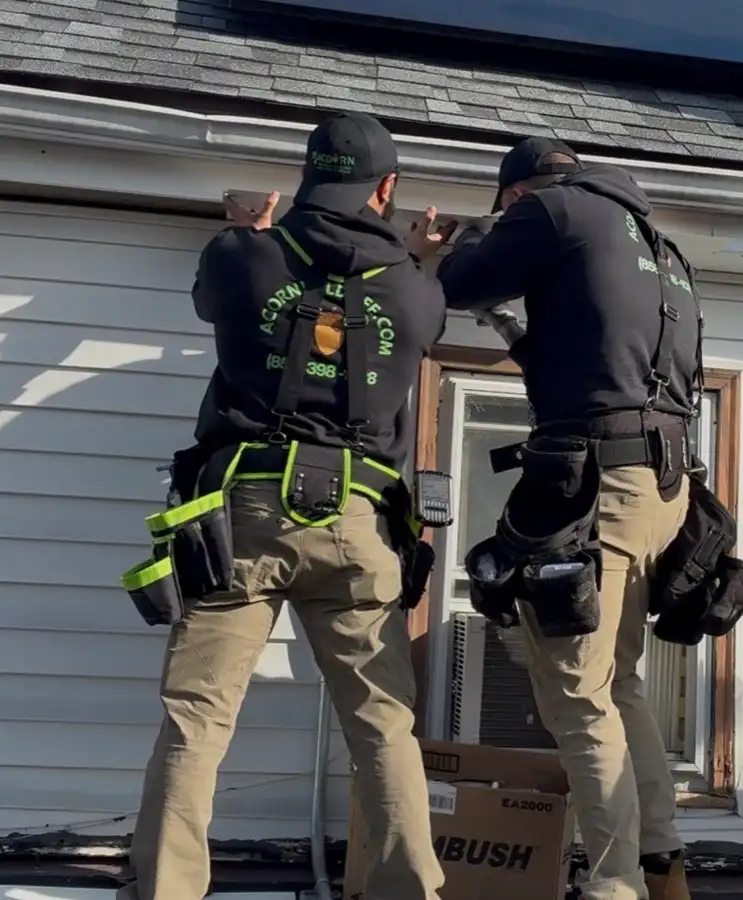
Confirm species, remove or evict the right way for that species and season (one-way doors for squirrels, nest removal for unprotected birds after fledge checks), repair the wood, and screen every equivalent gap along the soffit run so the story does not repeat one bay over. The repair-and-screen half is what the warranty stands on.
How fast do I need to act on a new soffit hole?
Faster than feels natural. A fresh chew-through in February or August sits at the front edge of a squirrel litter window, which means the difference between a simple one-way door job now and a mother-with-babies job three weeks later. Bird season moves just as fast: starlings can fully pack a soffit bay within days of claiming it, and a blocked bay traps moisture against the fascia besides. The same week you notice the hole is the right week to have it looked at, even if the fix itself gets scheduled later.
Related: Bird Removal & Control in South Jersey · How Wildlife Gets Into NJ Homes: Roofline, Soffit, Vent, and Chimney Entry Points · Scratching in the Ceiling at Night? Here's How to Tell What It Is