Identification
What's That Thumping in My Walls at Dawn?
By Brandon Stein, NJDEP-Licensed Wildlife Control Operator · 7 min read
Short answer: Thumping in your walls at dawn is most often gray squirrels leaving a den, using the wall void as a stairwell between the attic and their exit hole. Steady, brief, and daily is commuting. Frantic, continuous scratching that lasts hours means an animal is trapped in the void and needs help today.
Wall noise scares people more than ceiling noise, and honestly, it should get your attention. A ceiling has an attic above it, a big open space animals live in. A wall void is a narrow chute, and the two reasons an animal is in one are very different: either it is using the void as a highway, or it fell in and cannot climb out. The dawn timestamp actually narrows things down a lot. Here is how Acorn Wildlife in Cherry Hill, NJ reads a dawn wall-thumper over the phone.
Why dawn? What does the timing tell you?
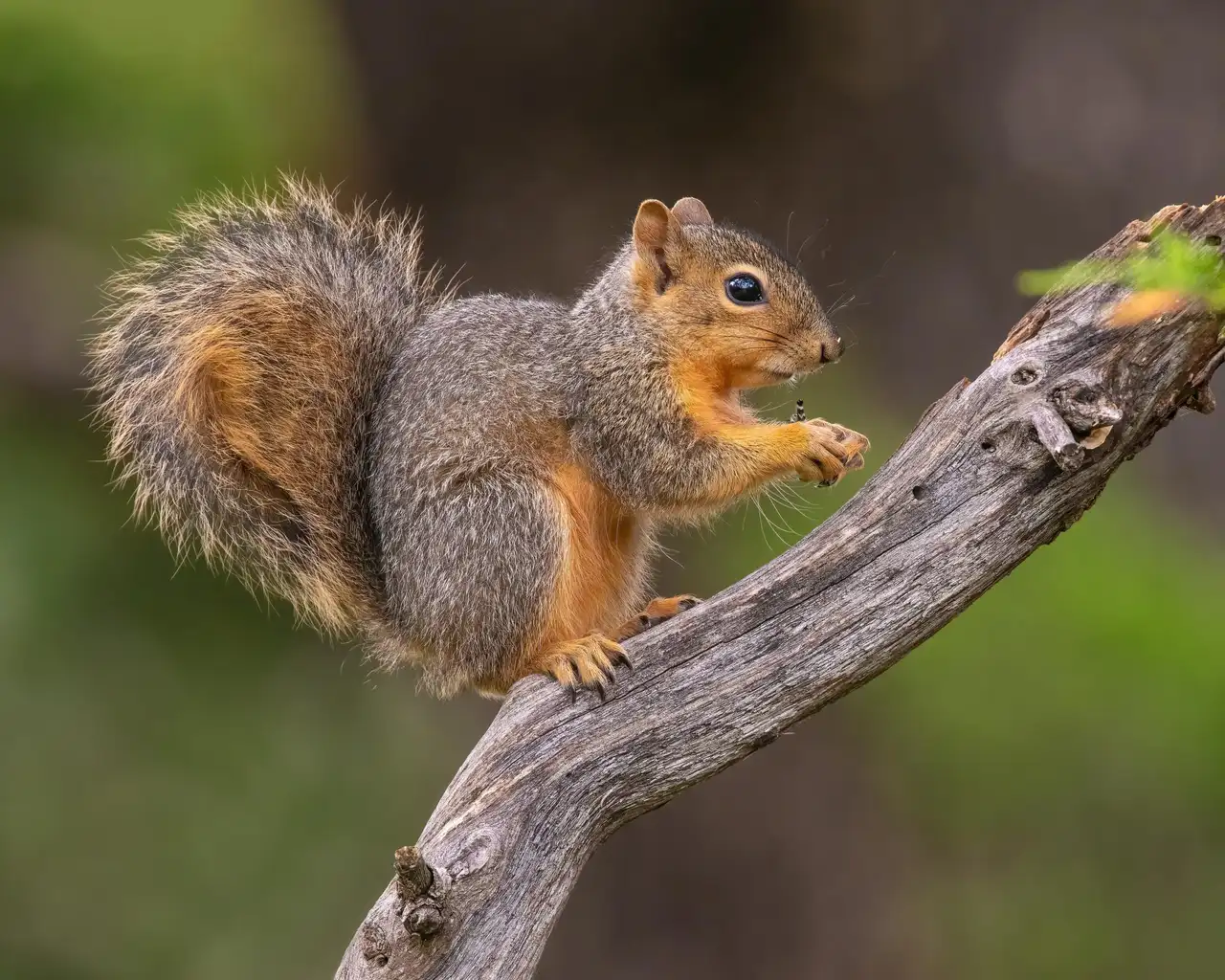
Dawn activity points to a diurnal animal starting its day, and in a South Jersey wall that means gray squirrels almost every time. Squirrels denning in an attic or soffit often travel down a wall void to reach an exit lower on the house. The thumping you hear at 6am is the morning commute.
The commuting pattern has a recognizable shape: a few solid bumps and a rapid scrabbling slide, maybe ten to sixty seconds total, at roughly the same time each morning, often with a repeat performance in the hour before dusk when they come home. It tracks sunrise, so it drifts earlier through spring and later through fall. Birds are the other dawn candidate: starlings and house sparrows nesting in a wall-vented dryer duct or gable end wake up loud, but they give themselves away with chirping and wing flutter, a papery rapid buzz nothing furry makes. Raccoons and mice can be in walls too, but their noise peaks at night; a raccoon shifting in a wall at dawn is settling in to sleep, and it sounds like slow, heavy repositioning, not scampering.
| What you hear at dawn | Pattern | Most likely |
|---|---|---|
| Bump-bump, fast scrabble, silence | Under a minute, same time daily, repeats at dusk | Squirrels commuting through the void |
| Chirping, flutter, high scratchy buzz | Starts at first light, continues off and on all morning | Birds nesting in a vent or wall cavity |
| Slow heavy shifting, then quiet all day | After sunrise, no repeat during the day | Raccoon bedding down (nocturnal, heading to sleep) |
| Continuous frantic scratching at one height | Hours without stopping, weakening over days | Trapped animal, emergency |
| Light gnawing, papery rustle | Intermittent, more at night than dawn | Mice in the wall or a wasp/carpenter ant issue |
How do I tell commuting from trapped?
Commuting is brief, purposeful, and scheduled: the animal enters the wall, travels, and exits, so the sound moves vertically and stops. Trapped is continuous and stationary: frantic clawing at the same spot, often low on the wall, going on for hours, because the animal is at the bottom of a smooth-sided chute it cannot climb.
This distinction is the whole reason to take wall noise seriously the first morning you hear it. Squirrels and birds fall down wall voids. So do young raccoons that wander from a chimney den. Modern wall cavities lined with drywall and house wrap give no claw purchase, and an animal that cannot get out has days, not weeks. If the scratching is constant, centered low, and increasingly weak, treat it as today's problem: a trapped animal that dies in a wall becomes a smell you will live with for weeks and a cut-open-the-drywall job either way. Better to cut the drywall while it is alive, or better still, call someone who does this daily. Our animals in walls page covers how we locate and extract them, usually through a small, patchable opening.
Why are they in my walls at all?
Animals rarely target walls; they end up there from somewhere else. The wall void connects three real destinations: an attic den above, a soffit or roofline entry at the top, and warmth. Find the wall noise and you have found a hallway. The front door is almost always higher on the house.
On inspections we trace dawn wall-thumping back to a short list of entries again and again: chewed roofline gaps and construction returns, gable vents with torn screening, soffit panels pushed up by raccoons, and the gap where a deck ledger or porch roof meets siding. That is why just patching a hole mid-wall fails. The animal still has its front door and simply picks a different hallway. The durable fix is finding and sealing the actual entries, which is the exclusion half of the job.
What should you do this morning?
- Record the noise with your phone and note the exact time and which wall (which room, which side of the house).
- Put your ear or a drinking glass against the drywall and follow the sound up: does it fade toward the ceiling? That points to an attic connection.
- Outside, look up the same wall line for entry evidence: chewed holes, torn vent screens, staining, droppings on the ground.
- Knock firmly on the wall. Commuters go quiet and move on. A trapped animal usually scratches harder in place. That response difference is diagnostic.
- If the scratching is constant and stationary, call today, not next week. Call or Text (856) 398-1028.
When it could honestly be something else
We will name the impostors, because not every dawn thump is wildlife. Plumbing lines can knock when a morning shower or heating cycle starts, and the timing feels suspiciously biological until you notice it follows water use, not sunrise. Loose shutters, downspout straps, and awning hardware bump in morning wind. Carpenter ants in a moist wall make a faint dry rustling that fools people in a quiet room. And a house's framing does creak as morning sun warms the east-facing side, right at the same hour a squirrel would be leaving.
The test that separates all of these from an animal is a simple one: mechanical and thermal sounds do not react to you and do not track sunrise across the seasons. Keep a three-day log. If the noise moves with the sun's schedule, responds when you knock, or ever includes vocal sounds, it is alive. If it happens at exactly 6:40am regardless of season and matches the heating system kicking on, we would tell you to call a plumber before a wildlife company, and we do actually say that to callers when the recording sounds mechanical. Wild animals only, and only when it is actually an animal.
Will the animal chew through the drywall into my room?
Rarely, but it happens, usually a trapped squirrel gnawing toward light. A commuting animal has no reason to enter your living space. If you ever hear gnawing concentrated on one interior spot, put something solid against that wall section and call the same day.
Can I just leave a trapped animal and let nature take its course?
You can, but you will regret it. A dead squirrel in a wall void produces a strong odor for two to four weeks, attracts flies, and still requires opening the wall to remove. Extraction while alive is a smaller, cheaper, and kinder job.
How do you get an animal out of a wall without wrecking it?
We locate it precisely by sound and sometimes a thermal camera, open a small access hole sized to be patched, and remove the animal by hand or drop-line. Then we trace and seal the entry point above so the hallway closes for good.
Related: Animals in Walls · Scratching in the Ceiling at Night? Here's How to Tell What It Is · How Wildlife Gets Into NJ Homes: Roofline, Soffit, Vent, and Chimney Entry Points